




Abstract
The development of accurate control systems for underwater robotic vehicles relies on the adequate compensation of thruster dynamics. Without compensation, the closed-loop positioning system can exhibit limit cycles. This undesired behaviour may compromise the overall system stability. In this work, a fuzzy sliding-mode compensation scheme is proposed for electrically actuated bladed thrusters, which are commonly employed in the dynamic positioning of underwater vehicles. The boundedness and convergence properties of the tracking error are analytically proven. The numerical results suggest that this approach shows a greatly improved performance when compared with an uncompensated counterpart.
Introduction
The dynamic behaviour of a remotely operated underwater vehicle (ROV) can be greatly influenced by the nonlinear dynamics of the vehicle thrusters. In this way, the implementation of a proper control strategy for the thruster subsystem is essential for the accurate control of the entire robotic vehicle.
A growing number of papers dedicated to the dynamic positioning of ROVs confirms the necessity of the development of a controller, that could deal with the inherent nonlinear system dynamics, imprecise hydrodynamic coefficients, and external disturbances [4]. Many of these works [12, 25–27] address the problem of the influence of thruster dynamics on overall vehicle behaviour, and the importance of considering this effect in the dynamic positioning system.
Traditionally, some mathematical models of the thruster are used directly to estimate, in a feed-forward manner, the required voltage (or current) to produce the desired thrust force. This strategy has simplicity as an advantage and the fact that it does not require the angular velocity of the propeller to be measured. On the other hand, it can only be used with a precise mathematical model of the thruster system. The adoption of a standard model, available in the literature but not perfectly suited to the actual thrusters, is in many situations the reason for the poor tracking performance of a ROV. It has been previously reported [27], that this approach can lead to limit cycles in the closed-loop positioning system. As also shown in [27], this degradation in the controller performance is specially critical during low-speed manoeuvres with the vehicle. In such cases, the dynamic behaviour of underwater robotic vehicles can be dominated by thruster dynamics.
An alternative approach that may be considered, specially when a precise mathematical model for the thruster system cannot be obtained, is the design of a feedback compensation scheme for thruster dynamics. In this work, a sliding-mode compensator with fuzzy gain is proposed to calculate the required voltage for each thruster. The choice of a variable gain, defined by a fuzzy inference system, makes a better trade-off between reaching time and tracking precision possible. The adoption of a saturation function (instead of a relay function) within the control law leads to a boundary layer, that can minimize or, when desired, even completely eliminate chattering. Through a Lyapunov-like analysis, the boundedness and convergence properties of the closed-loop compensation subsystem is proven. Numerical simulations are carried out to demonstrate the robustness and improved performance of the compensation strategy.
Vehicle Dynamics Model
An adequate model to describe the dynamic behaviour of an underwater robotic vehicle must include the rigid-body dynamics of the vehicle and a representation of the surrounding fluid dynamics. In this context, the ideal mathematical model would be composed of a system of ordinary differential equations, to represent rigid-body dynamics, and partial differential equations to represent fluid dynamics.
In order to overcome the computational problem of solving a system with this degree of complexity, in the majority of publications [1, 3, 4, 7, 13–16, 23, 28] a lumped-parameters approach is employed to approximate the vehicle's dynamic behaviour.
The equations of motion for underwater vehicles can be presented with respect to an inertial reference frame or with respect to a body-fixed reference frame, Fig. 1. On this basis, the equations of motion for underwater vehicles can be expressed, with respect to the body-fixed reference frame, in the following vectorial form:

Underwater vehicle with both inertial and body-fixed reference frames.

where ν = [νx, νy,
z
,ωx,ωy, ωz] is the vector of linear and angular velocities in the body-fixed reference frame,
It should be noted that in the case of remotely operated underwater vehicles (ROVs), the metacentric height is sufficiently large to provide the self-stabilization of roll (α) and pitch (β) angles. This particular constructive aspect also allows the order of the dynamic model to be reduced to four degrees of freedom,
In this context, considering that control forces and moments are produced by the thrusters of the vehicle, the dynamic model of the thruster subsystem is discussed in the following subsection.
The steady-state axial thrust (T) produced by marine thrusters is commonly presented as proportional to the square of the angular velocity Ω of the propeller [18]. This quadratic relationship can be conveniently represented by

where Ct is a function of the advance ratio and depends on the constructive characteristics of each thruster.
Taking the dynamical behaviour of the thruster system into account, Yoerger et al. [27] presented a first order nonlinear dynamic thruster model with propeller angular velocity as the state variable. This dynamic model, that can be represented by Eq. (3) and Eq. (4), is referred to here as Model 1.


where Jmsp is the motor-shaft-propeller inertia, Kv stays for a model parameter, and Qm is the input motor torque.
In later works [2, 10, 12], more accurate models employing lift and drag curves, and that also incorporate some other hydrodynamic effects, such as those caused by the rotational fluid velocity, are proposed. In all of these models, a second order dynamic system with propeller angular velocity and axial fluid velocity as state variables is used. However, during real operations with an underwater robotic vehicle, the axial fluid velocity cannot be measured with the required precision, which compromises its application for control purposes as a model state variable.
Nevertheless, if the following physically justified assumptions could be made:
Magnitude and direction of axial fluid velocity are mainly determined by the propeller's rotational velocity, Interference of the flow from one thruster to another is negligible, Ambient fluid velocity and the ROV's manoeuvring speed are negligible, when compared with the axial fluid velocity generated by the propeller's rotation,
the simplified first order dynamic model proposed by Yoerger et al. [27], Model 1, can satisfactorily be used as a part of the compensation strategy in thrust control. The use of only propeller angular velocity (Ω) as a state variable is advantageous because it can easily be measured (or estimated) during real-time operations with a sensor coupled to the motor's shaft.
However, considering recent experimental results, marine thrusters may also exhibit non-smooth nonlinearities such as dead-zones. A dead-zone is a hard nonlinearity, frequently encountered in many industrial actuators, and its presence can drastically reduce control system performance and lead to limit cycles in a closed-loop system. The experiments were carried out in a wave channel with the thruster units of a small remotely operated underwater vehicle, developed at the Institute of Mechanics and Ocean Engineering of the Hamburg University of Technology. The ROV is equipped with eight thrusters for dynamic positioning and a passive arm for position and attitude measurement. A picture of the experimental underwater vehicle is presented in Fig. 2.

The experimental remotely operated underwater vehicle.
Therefore, taking the experimental data into account, we propose a variation of Model 1 by incorporating some limitations of the actuator. This modified version, identified here as Model 2, can be mathematically represented by equations (5)–(6):


where Vm is the input voltage and D(Ω|Ω|) represents a dead-zone nonlinearity with a quadratic input Ω|Ω| and output T, which can be mathematically described by:

The constants Kt and Rm, which represent the motor torque constant and winding resistance, respectively, can be obtained from the data-sheet. The values of Kv1, Kv2, Kl, Kr, δ l and δ r depend on the constructive characteristics of each thruster and must be experimentally determined. For control purposes, these parameters are treated here as constants for each thruster unit. This simplification is acceptable, as shown in the next section, due to the robustness of the proposed controller to parametric uncertainties.
By incorporating the term Kv1Ω in Eq. (5), Model 2 takes the back electromotive force and the viscous damping, due to mechanical sealing, into account. The term Kv2Ω|Ω| represents the propeller rotational torque due to hydrodynamic loading. By adopting Eq. (6) to describe the relationship between the propeller's angular velocity and thrust force, the modified model also considers friction losses during the propeller's rotation. In the majority of works, the effect of friction losses is neglected.
The experimental data obtained in a wave channel with the thruster unit of the ROV can be used to validate the proposed modifications to Model 1. Figure 3 shows a comparative analysis between Model 1 [27], Model 2 (modified model) and the experimental thruster's response. The required parameters for both models are obtained using the Levenberg–Marquadt algorithm [17].

Comparative analysis between Model 1, Model 2 and the experimental data.
As observed in Fig. (3), Model 2 is better suited than Model 1 to representing the response of the thruster unit. This improvement is due to the incorporation of some of the thruster's electro-mechanical characteristics and the effect of friction losses during the propeller's rotation in the model. Such effects, that probably may be neglected in optimized thrusters, must be considered with the application of low-cost units.
The dynamic positioning of underwater robotic vehicles is essentially a multivariable control problem. Nevertheless, as demonstrated by Slotine [21], the variable structure control methodology allows different controllers to be separately designed for each degree of freedom (DOF).
Over the past decades, decentralized control strategies have been successfully applied to the dynamic positioning of underwater vehicles [6, 8, 15, 20, 23, 28].
Considering that the control law for each degree of freedom can be easily designed with respect to the inertial reference frame, Eq. (1) should be rewritten in this coordinate system.
Remembering that
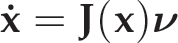
where

and

Therefore, the equations of motion of an underwater vehicle, with respect to the inertial reference frame, becomes

where
In order to develop the control law with a decentralized approach, Eq. (10) can be rewritten as follows:

where
For notational simplicity the index i will be suppressed in Eq. (11) and, in this way, the equation of motion for each degree of freedom (DOF) becomes:

In order to facilitate the analysis of the influence of thruster dynamics on the overall system behaviour, a 1-DOF underwater vehicle model with exactly known parameters is considered here. Otherwise, the actual effect of thruster dynamics over the vehicle dynamics would be masked by some variable parameters and cross-coupling effects.
Therefore, based on the assumption of well-known parameters and to highlight the influence of thruster dynamics, a feedback linearization approach is adopted for the dynamic positioning of the underwater robotic vehicle. The proposed control law can be written as

where xd is the desired trajectory,
For this closed-loop system, composed by Eq. (12)–(13), we have the following error dynamics:

with coefficients that satisfy a Hurwitz polynomial and ensure exponential convergence to zero.
Now, considering the required thrust to make the vehicle follow a prescribed trajectory, defined by Eq. 13, we can calculate the desired force that should be produced by each thruster by Td = τ/NT, where NT is the available number of thrusters to actuate within the desired direction.
Finally, considering Eq. (6), a dead-zone inverse is used to compute the desired propeller angular velocity Ω d . It should be highlighted that, in order to define the dead-zone inverse, parameters Kl, Kr, δ l and δ r must be exactly known. If these parameters are uncertain or could not be experimentally obtained, a robust dynamic positioning system [3, 4] or a dead-zone compensation scheme [5] should be taken into account.
In order to develop the compensation scheme, Eq. (5) can be rewritten as follows:

where u is the input voltage and a, b and c are variable but positive and bounded parameters. If these parameters were perfectly known, then the following compensator would be enough to deal with the thruster's dynamic:

Considering that only the estimates â,

where
Regarding the development of the control law, the following assumption must be made:
In this work, the desired propeller angular acceleration (
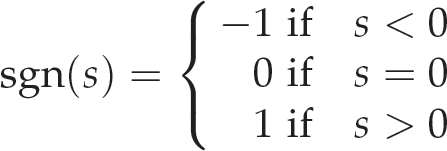
The compensator established in Eq. (17) is based on the classical sliding-mode control that originally appeared in Soviet literature [24]. It is able to deal with the parametric uncertainties but, as a drawback, leads to high control activity and chattering. To overcome these limitations, the relay function sgn(·) in Eq. (17) can be replaced by a saturation function [22], defined as:

The substitution of sgn(·) by sat(·) leads to the appearance of a boundary layer (Φ) with width ϕ, which turn perfect tracking into a tracking with guaranteed precision problem.
In order to demonstrate that the proposed compensation scheme can deal with unstructured uncertainties, the term bΩ is treated as unmodelled dynamics and not taken into account within the design of the control law:

Figure 4 shows the block diagram of the resulting dynamic positioning system.

Block diagram of the ROV controller with fuzzy sliding-mode compensation for thruster dynamics.
On this basis, a variable gain, defined by a fuzzy inference system, is chosen in order to make a better trade-off between reaching time and tracking precision. The adopted fuzzy inference system is the zero order TSK (Takagi–Sugeno–Kang), whose rules can be stated in a linguistic manner as follows:

where Sn are fuzzy sets, and Kn is the output value of each one of the N fuzzy rules, with Kn > Kn–1. Triangular (in the middle) and trapezoidal (at the edges) membership functions could, for instance, be adopted for the fuzzy sets.
Considering that each rule defines a numerical value as output Kn, the final output 𝒦 can be computed by a weighted average:

where wn is the firing strength of each rule.
According to Lemma 1, Eq. (19) implies that 𝒦 is bounded.
Proof. Equation (19) may also be written as 𝒦 = KTΨ(s), where K = [K1, K2,…, KN] is the vector containing attributed values to each rule, with K
n
> Kn–1, and
The boundedness and convergence properties of the proposed compensation scheme relies on the following theorem.
Proof. To establish boundedness of the closed-loop signals, let us first define a Lyapunov function candidate V, where
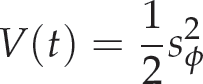
and sϕ is a measure of the distance of the current state to the boundary layer (Φ), that can be defined as

Noting that sϕ = 0 inside the boundary layer and

where

If the parameters a, b and c are unknown but assumed to be positive and bounded, which is physically coherent, and their estimates â and ĉ are both positive constants, so that


>From Lemma 1, defining
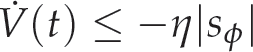
implying that V(t) ≥ V(0), and, therefore, that sϕ is bounded. From the definition of sϕ, Eq. (21), we can conclude that s is also bounded. Considering Eq. (22), Lemma 1 and Assumption 1, it can be easily verified that
Integrating both sides of (26) between 0 and treach, where sϕ(treach) = 0, shows that

This ensures the finite time convergence to the boundary layer and the boundedness of the closed-loop signals, completing the proof.▪
Theorem 1 also implies that the boundary layer is an invariant set, i.e., every system trajectory which starts from a point in Φ remains in Φ for ∀t ≥ 0. Inside the boundary layer Φ, the error dynamics takes the following form:
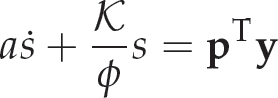
where
The simulation studies were performed with a numerical implementation in C, with sampling rates of 500 Hz for ROV states and 1 kHz for propeller rotational velocity. The chosen parameters for the thruster model are: kr = kl = 2.25×10⁴, δ
r
= −δ
l
= 5.75 × 10⁻⁵, a(t) = 1.0 × 10⁻² · ∊(t), b(t) = 4.0 × 10⁻² · ∊(t) and c(t) = 1.4 × 10⁻⁵ · ∊(t), with ∊(t) = 1 + 0.25 sen (|Ω|t). The ROV model is defined with
The performance of the proposed compensator, Eq. (18), is evaluated first in comparison with a conventional sliding-mode compensator. The chosen parameters for the FSMC are â = 1.0 × 10⁻², ĉ = 1.1 × 10⁻⁴ and ϕ = 7.0. For the fuzzy gain (K), triangular (in the middle) and trapezoidal (at the edges) membership functions are adopted for Sn, with the central values defined as C = {7.0; 15.0; 25.0; 50.0; 100.0; 200.0; 400.0} and associated crisp outputs Kn = {1.0; 1.5; 2.0; 3.0; 4.0; 6.0; 10.0} × Kmin, where

Propeller's angular velocity (top) and the related input voltage (bottom) for both the fuzzy sliding-mode compensator (FSMC) and the conventional sliding-mode compensator (SMC).
Figure 5 shows that the fuzzy sliding-mode compensator (FSMC) is capable of providing the stabilization of the desired propeller angular velocity even in the presence of both structured and unstructured uncertainties. It could also be observed that the FSMC shows a better and almost constant rising time for different values of Ω d , without increasing control activity and chattering.
Now, in order to demonstrate the improved performance of the dynamic positioning system with the FSMC over the commonly adopted feed-forward approach, we show a comparison of both strategies for two different trajectories: xd = 0.05[1 – cos(0.25πt)] (Fig. 6) and xd = 0.25[1 – cos(0.5πt)] (Fig. 7). In both cases, the input voltage in the feed-forward approach was directly estimated, based on thruster Model 2, with

Comparative analysis of the ROV positioning system with the proposed FSMC and with a feed-forward approach based on Model 2 (M2BC) for the tracking of x d = 0.05[1 – cos(0.25πt)] m.
Note that despite the better suited parameters of the feed-forward approach (M2BC), the proposed compensation scheme (FSMC) shows an improved performance. This is due to the ability of the FSMC to track the necessary angular velocity for the propeller, Fig. 6(c) and Fig. 7(c). Comparing Fig. 6(b) with Fig. 7(b), it could also be verified that the degradation in the controller performance, caused by the influence of thruster dynamics, is specially critical during low-speed manoeuvres with the vehicle. This result confirms that, in such cases, the dynamic behaviour of an underwater robotic vehicle can be dominated by thruster dynamics.

Comparative analysis of the ROV positioning system with the proposed FSMC and with a feed-forward approach based on Model 2 (M2BC) for the tracking of xd = 0.25[1 – cos(0.5πt)] m.
The present work addresses the compensation of thruster dynamics in the dynamic positioning system of underwater robotic vehicles. A sliding-mode compensator with fuzzy gain is proposed to enhance the tracking performance. The boundedness of the closed-loop signals' compensation subsystem, as well as the finite time convergence of the error to the boundary layer, is proven using Lyapunov's stability theory. By means of numerical simulations, the improved performance and the robustness to both structured and unstructured uncertainties, namely parametric uncertainties and unmodelled dynamics, are confirmed.
Footnotes
6. Acknowledgements
The authors would like to acknowledge the support of the Brazilian National Research Council (CNPq), the Brazilian Coordination for the Improvement of Higher Education Personnel (CAPES) and the German Academic Exchange Service (DAAD).