




Abstract
In recent years, metal companies have devoted increasing attention to environmental sustainability and the metal sector has become one of the industries with a higher propensity to certificate ISO 14001. However, at present, only limited research has analysed the implementation of ISO 14001 among metal companies, exploring the dynamics associated with the choice of companies to certificate. This paper aims to fill this gap, analysing motivations and benefits of the implementation of ISO 14001 in the metal industry. Data collection was performed through a survey among certified companies competing in the Italian metal industry. Overall 119 certified companies were contacted and we obtained 46 usable questionnaires (final response rate: 39%). The results of the analysis show priorities for the implementation and benefits of ISO 14001, and also a few areas where there was a decoupling between the importance assigned by companies to the potential benefit and the results achieved.
1. Introduction
In recent years, the issue of sustainability has attracted considerable attention in the metal sector due to both some specific features of metal production processes and some recent trends that have characterized the industry as a whole [1]–[4]. First, metal production processes imply relevant environmental impacts related to material, energy and water consumption, polluting emissions, and waste disposal. Considerable costs are associated with these factors (cost of materials and energy, cost of waste disposal, environmental taxes, etc.) that account for a large part of metal production costs. This circumstance induced production managers and management controllers to pay particular attention to those initiatives that can potentially reduce these costs. In addition, the recent financial crisis has severely weakened the competitiveness of the metal industry, in particular in Europe and North America. In 2009, crude steel production in Europe fell 30% to 139 million tons, from 198 million tons in 2008, and the share of Europe in total global production was reduced to below 12%. In 2010, though the world metal production started to rise again, European producers continued to struggle due to the intense competition of emerging countries and the rise of metal imports into Europe. To respond to this situation, many metal companies have refocused their strategies on environmental sustainability, exploiting it as a source of competitive advantage to differentiate themselves from those competitors that try to enter the market thanks to the so-called environmental dumping.
In this context, several metal companies have implemented certified Environmental Management Systems (EMS), meaning that the metal sector has become one the industries with a higher propensity to certificate ISO 14001 [5]. The idea at the root of an EMS is to guide companies in the evaluation of barriers and key drivers for environmental improvement, in the definition of action plans to improve their environmental performances, in the assessment of the efficiency and effectiveness of these action plans, and, in the definition of new targets. ISO 14001 is generally considered the most influential standard concerning the requirements of an EMS [6]. It provides companies with a methodology to evaluate and monitor the environmental impacts of their processes, products and services, though without defining the target values of their environmental performances [7].
Given the widespread adoption of EMS (and ISO 14001 registration) in different business sectors, researchers and practitioners have dedicated much attention to the issue. They explored the motivations for their adoption [8, 9], the critical success factors for their implementation [10, 11] and their impact on companies' performances [12, 13]. However, the existing research has shown contrasting results in relation to the actual contribution of ISO 14001 to performance improvement [14]. Furthermore, relevant variations in the motivation and benefits associated with ISO 14001 can be related to the industry sector in which companies compete.
Moving from these considerations, this paper aims to analyse the motivations leading to the implementation of ISO 14001 and the perceived benefits associated with its implementation in the Italian metal industry. Data collection was performed through a survey involving the top certified companies competing in the Italian metal industry, with a final response rate of 39%. The paper is arranged as follows. Section 2 identifies the main motivations and perceived benefits associated with the adoption of an EMS based on the literature in the field. Section 3 presents the method used for data collection, with specific reference to the sample selection and the construction of the questionnaire. Section 4 presents the results of the survey and discusses the implications for practitioners; finally we draw some conclusions in section 5.
2. Literature Review
In this section, we explore the most up to date literature in order to identify the motivations and benefits that are at the heart of the implementation of ISO 14001. The literature analysis led to the identification of ten broad categories often mentioned in prior research in the field.
2.1 Improved environmental performance
First of all, the core objective of ISO 14001 is to provide companies with a pro-active and systemic approach to manage the ‘environmental variables’, reducing the negative impact of their business activities on the environment. The implementation of a certified EMS may contribute to the improvement of the environmental performance, fostering compliance with all applicable environmental regulations; supporting the documentation and analysis of the plant's environmental impacts; and the adoption of systematic, written and standardized checklist-type procedures to reduce and prevent pollution [14]. Empirical work carried out in different settings and industries has highlighted the potential contribution of ISO 14001 to the reduction of toxic emissions [15]–[18], the reduction of materials and energy consumption and the reduction of waste [19, 20].
2.2 Cost reduction
The second issue that emerged from the literature analysis deals with cost reduction. The literature relates the implementation of certified EMS with regard to the reduction of process inefficiencies and operating costs. In particular, empirical work provides evidence of the association of ISO 14001 to the reduction of costs related to materials and energy [19, 20], management of both hazardous and not hazardous waste [21], and recycling [22], material storage, handling and packaging costs [19], and insurance premiums [19].
2.3 Pressures and demands from customers
The third issue that emerged from the literature deals with the need to respond to customer expectations. In both the business to business and business to consumer markets, we recently attested to a rise in the importance given to environmental performances [23, 24] and a significant increase in the number of customers specifically seeking green products [25, 26]. The adoption of EMS has become a critical issue for complying with customers' environmental requirements [27]. In particular, in business to business markets, ISO 14001 is increasingly considered in the vendors' selection process [28] and the adoption of environmental certification reduces the need to control and inspect the supplier's products and services, saving time and reducing cost.
2.4 Implement a marketing strategy focused on the environmental performance
Partially related to the above issue is also the possibility of implementing ISO14001 as part of a marketing strategy focused on environmental performance. In this case, the implementation of an EMS can help companies to attract environmentally aware customers who view sustainability as one feature of a product to be taken into account alongside other more traditional attributes (price, quality, service, etc.) [25, 26]. Furthermore, certification represents a valuable tool to pursue sustainability as a strategic key factor when facing competitors who seek to enter the European market, thanks to lower costs (social dumping) or ignoring the impact of their production activities on the environment (environmental dumping) [29]. Empirical evidence on the relevance of such marketing effects is provided in a few recent studies [30, 31].
2.5 Improved corporate image
Another relevant issue concerning the implementation of ISO 14001 is the potential improvement of corporate image. ISO 14001 is a symbol, internationally recognized and endorsed, of a firm's commitment to the problem of environmental management. Henceforth, the implementation of ISO 14001 standard can help companies to communicate their environmental commitment and improve their environmental image among consumers, investors and local communities [31]–[34]. The environmental certification makes stakeholders more confident about how operational processes are run and about the effective consideration of sustainability in the company strategy. Empirical evidence on the importance of the improvement of corporate image in relation to the adoption of ISO14001 is provided by researchers in different business industries, such as chemical [35], electrical and electronical [11] and mechanical [36], and in different countries [10]–[12].
2.6 Fund raising
In recent years, we have assisted in increasing the funding opportunities for companies that adopt more sustainable practices. European Community Programmes (such as LIFE+, FP7, etc.) provide one example of the potential sources of funding related to sustainability oriented programmes. On the other hand, sustainability practices are increasingly considered by institutional investors as a criterion for the configuration of their investment portfolios [37, 38], as testified by the emergence of indexes linked to financial markets, such as the Dow Jones Sustainability Group Index, the FTSE4Good and the Domini Social Index [39]. Since the 1990s, a number of banks have promoted the development of green financial products [40].
Environmental certification can be a tool to make clear that the company recognizes its environmental responsibility, improving its chance to access governmental funding and economic support for innovation and improvement processes.
2.7 Improved relationship with local community
The implementation of ISO 14001 standard is widely recognized to have a positive impact on the firm's relationships with its stakeholders and, in particular, with local communities [40]–[42]. To ensure their legitimacy, companies need to recognize their responsibility in relation to the environment and the society, and communicate this both inside and outside the organization [36]. ISO 14001 supports companies in demonstrating to external stakeholders the quality of their environmental systems and communicating their commitment to preserve the environment, making clear that the conservation of the areas where they operate is an important part of the corporate strategy.
2.8 Improved relationship with the authorities
Similarly to the above issue, the implementation of ISO 14001 can contribute to the improvement in the relationship with the government and policy makers, and ensure compliance with environmental regulations [43]. Thanks to the implementation of a certified EMS, companies can demonstrate that they took all necessary precautions to prevent environmental accidents and limit the impact of business activities on the environment, minimizing their environmental liability. This can result in less frequent inspections and more flexible enforcement of command and control regulations [44]–[46]. In addition, ISO 14001 could help companies to enhance their reputation, providing them opportunities for ‘green’ lobbying, joining government projects and international scientific committees [13].
2.9 Competition with certified competitors
It is important to note that the ability of a company to achieve pre-defined environmental quality standards can become a necessary element to competing in certain markets and entering into new segments [47]. In such cases, the adoption of an EMS becomes a critical element to surviving in a market where the status of “green company” is a prerequisite to compete with other companies [48].
2.10 Improved product quality
Finally, an EMS is also associated with improvement of product quality. On the one hand, an EMS aims to foster the development of a systematic approach for improving environmental performances, not only in relation to a specific functional area of the organization, but also in an integrated way. This can also result in an improvement of product quality [49]. On the other hand, ISO 14001 involves the same principles of continuous improvement, typical of Total Quality Management: plan, do, check, act. Firms are required to measure environmental performance, implement procedures for changing it, and then check the achievement of the fixed goals and correct their procedures as necessary [16, 21], [50].
3. Research method
3.1 Sample selection and respondents
The data collection was based on a survey of 120 companies, taken from the list of ISO 14001 certified companies [51], differentiated in terms of industry segment (including producers of ferrous and non-ferrous metals) and size (measured in terms of annual turnover).
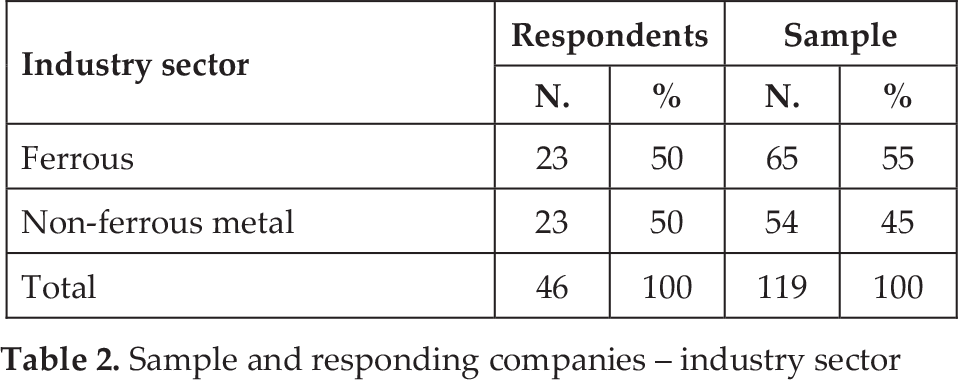
The survey design was based on questions that could be easily answered by the target respondents and limit possible framing effects. Furthermore, the questionnaire was tested on some companies before being distributed to the whole sample; the pilot test led to a few changes to make the questions more understandable. Before delivering the questionnaire, telephone calls were used to confirm whether the companies had a unit dedicated to the EMS and who was the person that had to be contacted. In the end, 119 questionnaires were sent out, since in one case the selected company had recently abandoned the certification. After the first contact, the researchers issued from two to four reminders. Forty-eight questionnaires were collected from certified companies with a 40% response rate, but two cases were excluded because some questions had not been answered and this led to an actual response rate of 39% (46 usable questionnaires). The respondents were considered representative of the sample, since no statistically significant differences emerged in relation to company size and industry sub-sectors (Table 1 and Table 2).
Sample and responding companies — company size

Sample and responding companies — industry sector
In addition, two procedures were used to assess the non-response bias. First, a control on the “reasons for non-response” was performed [52]–[54]. The most frequent motivation for the lack of response was related to the lack of time (about 30%). Only a few companies indicated that they were not interested in the project or considered the questionnaire not suitable for their company.
As suggested by [55], the existence of the non-response bias was further tested by comparing the responses of early and late respondents. The existence of statistical differences between the two groups of companies was tested applying the chi-square test (categorical variables) and the t-test (continuous variables). There was no significant evidence of a response bias.
Finally, a possible source of bias could be related to the choice of the sample frame (we focused on Italian companies); therefore, some caution should be taken when extending the results to other countries.
3.2 Variables and measurements
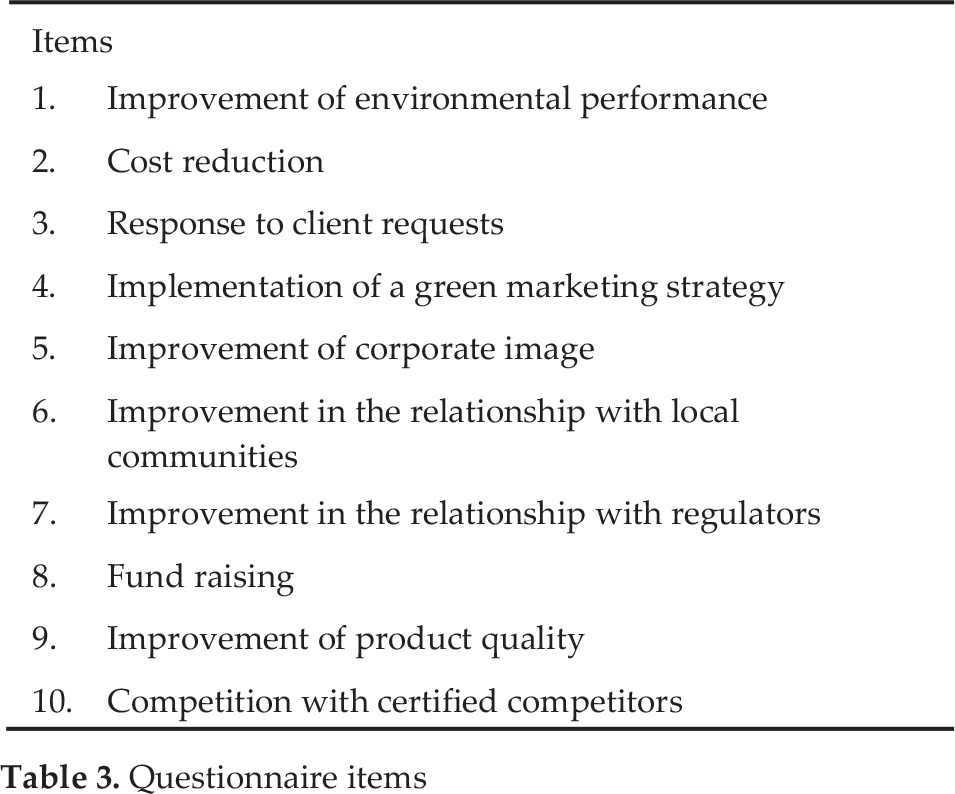
Table 3 reports the ten items used to assess the motivations and benefits associated with the achievement of ISO 14001. For each item, the respondents were asked to state: (1) the importance assigned to each item as a motivation for the company to certificate and (2) the extent to which the company has obtained the expected benefit. Motivations and benefits were measured on a five-point Likert scale, with the lowest value being 1 and the highest value being 5.
Questionnaire items
A few control variables were included in the model in order to verify the relevance of the contextual factors which can influence the results of the analysis. The control variables were the company's size, industry sub-sector and year of achievement of ISO 14001. The size of the company was measured according to the annual turnover. We used a dichotomous variable (SALE), which was given a value of 1 if the company had an annual turnover higher than 50 million euros and 0 otherwise. In a similar way, companies were divided into two groups according to their field of industry: companies competing in the production and processing of ferrous and non-ferrous metals: IND was given a value of 1 if the firm competes in the production and processing of ferrous metals and 0 otherwise.
4. Findings
This section is separated into three paragraphs, where we analyse: (1) the importance given to different motivations by metal companies to certificate; (2) the benefits perceived by certified companies; (3) the relationship between motivations and perceived benefits.
4.1 Motivations
Table 4 reports the analysis of the motivations related to ISO 14001 implementation. The surveyed companies' evaluations varied depending on the particular item being rated, and ranged from 2.28 to 4.46. The overall results indicate that the attributes considered most important by companies are the improvement of the environmental performance (with 4.46), the improvement of corporate image (4.33), the improvement in the relationship with the regulators (with 3.63), the improvement in the relationship with local communities (average 3.59) and the improvement of product quality (average 3.54). Instead, the lowest scores were those assigned to fund raising (average 2.70) and competition with certified competitors (average 2.28).
Overall mean results (* difference significant at p<0.05)

An analysis, potentially useful from both a managerial and policy-making perspective, concerns how companies' motivations are related to companies' characteristics, i.e., are there any differences in motivations correlated with the company size or industry sub-sector? In this respect, the data analysis shows that the scores assigned to different motivations do not vary significantly in relation to respondent characteristics (a t-test was performed to compare the mean of different groups). The overall ranking of the motivations is similar. There are only a few small differences related to the control variables. First, larger companies give higher scores for the improvement in the relationship with the local communities and with the regulators compared to SMEs. Second, in the ferrous metal sector the need for competing with certified competitors is perceived as more important than in the non-ferrous metal sub-sector (p<0.05).
4.2 Perceived benefits
Table 5 reports the analysis of the benefits associated with ISO 14001 implementation. The surveyed companies' evaluations varied depending on the particular item being rated, and ranged from 2.33 to 4.28. The highest scores were assigned to the improvement of the environmental performance (with 4.28), the improvement of corporate image (4.11), the improvement in the relationship with the regulators (3.59), the improvement in the relationship with local communities (3.35) and the improvement of product quality (average 3.22). Instead, the lowest scores were those assigned to fund raising (average 2.67) and competition with certified competitors (average 2.33).
Overall mean results (* difference significant at p<0.05)

As we did for the motivations, we analysed how companies' perceived benefits are related to companies' characteristics, i.e., are there any differences in perceived benefits correlated with company size or industry sub-sector? Concerning company size, we did not find significant differences between SMEs and large companies in relation to perceived benefits of ISO 14001. The ranking of the items is almost the same, though larger companies assigned higher importance to the improvement of corporate image (4.23 vs. 4.00), the improvement in the relationship with regulators (3.77 vs. 3.42) and improvement in the relationship with the community (3.50 vs. 3.21).
4.3 Relationship between motivations and benefits
To support assessment and decision-making, the results were plotted on a bi-dimensional grid (Figure 1). The x-axis indicates the importance of different motivations as measured by mean scores assigned to different items, and the y-axis shows their performance as measured by mean scores assigned to perceived benefits by the surveyed companies [56]. The value of three (corresponding to average importance) was used to split the axes. The scores assigned to motivations and benefits divide the matrix into four quadrants, giving a visual indication of the areas where expected improvements have been actually achieved and the areas where companies' expectations have been disappointed. The four quadrants are:
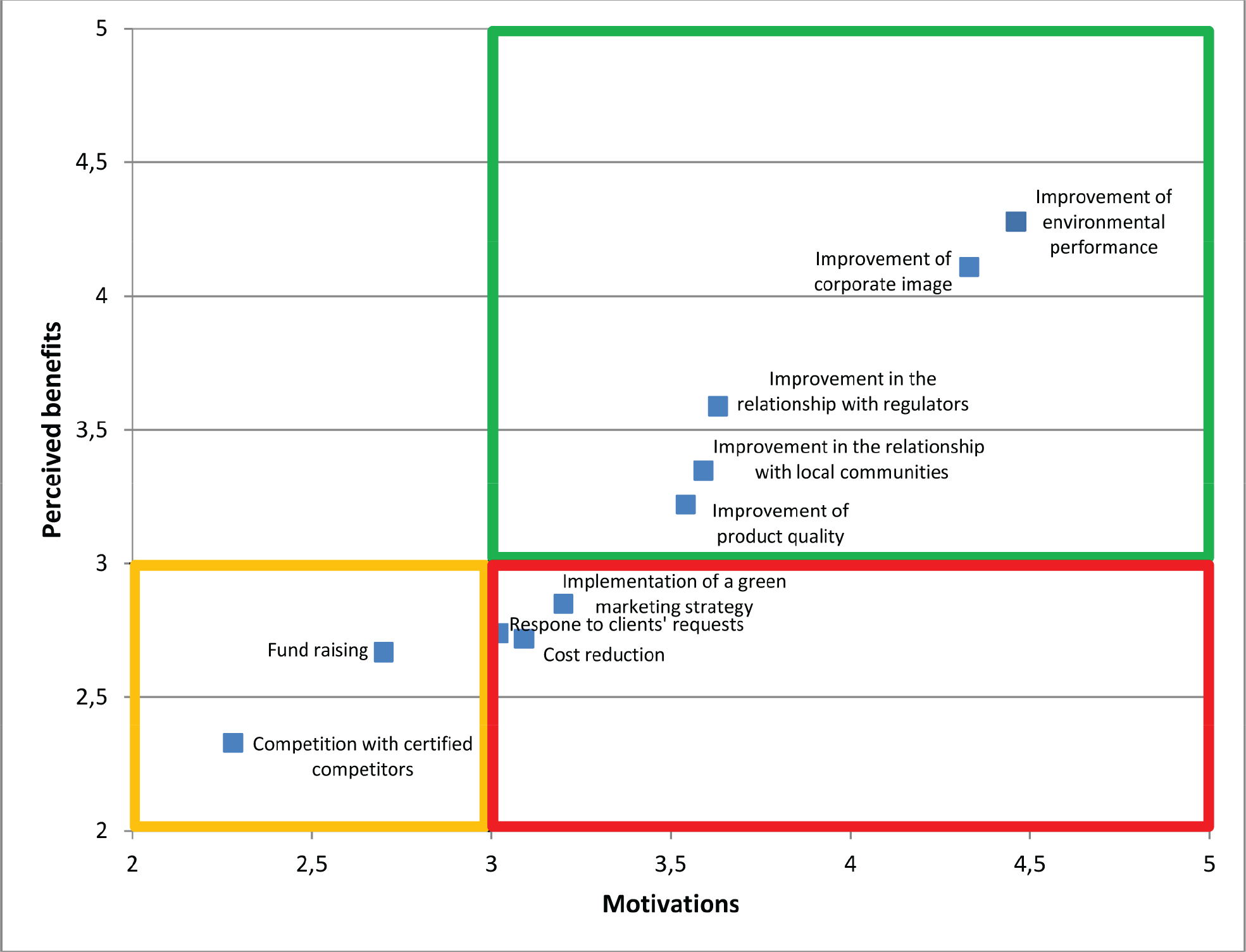
Relationship between motivations and benefits
Quadrant I: these are attributes considered to be very important by companies as motivations driving the choice of certificating but whose performance level is low. They are therefore the potential weaknesses, which demand attention since companies had not achieved the expected benefit. This is the case for response to clients' requests, implementation of a green marketing strategy and cost reductions.
Quadrant II: these are attributes which companies consider to be important motivations in determining the choice of certificate ISO 14001, and for which they have achieved the expected benefits. This is the case for the improvement of the environmental performance, improvement of the corporate image, improvement in the relationship with regulators, improvement in the relationship with local communities, improvement of product quality.
Quadrant III: these are attributes whose performance is poor, but over which managers should not be unduly concerned, since they do not appear to be important drivers of the choice to certificate (fund raising; competition with certified competitors).
Quadrant IV: these are attributes for which performance is good, but which companies consider of little importance. This quadrant in our case is empty.
5. Conclusions
Environmental sustainability is increasingly acknowledged as playing a significant role in ensuring the competitiveness of companies in different business industries, both by pursuing savings in operational efficiency (such as reductions in direct material usage or energy costs), and by inducing a large proportion of customers to alter their purchasing behaviour, giving sustainable companies a price premium and/or increased market share [3]. In recent years, the idea of leveraging on sustainability to obtain a competitive advantage has spread in the metal industry, as in the other industry sectors, with increasing attention being paid to the “environmental issue” and to the implementation of more sustainable practices. ISO 14001 provides a relevant case of such evolution, since the metal sector has become one the industries with a higher propensity to certificate ISO 14001. However, at present, only limited research has been carried out to analyse the implementation of ISO 14001 in the metal industry, though current research in the field has highlighted the existence of a few differences depending on the industry sector.
This paper has sought to fill this gap by presenting the results of a survey of metal companies, conducted on a sample of 119 Italian firms, with a response rate of 39%. From the results, we can draw some more general insights, with implications at both the managerial and policy-making level.
With respect to the motivations and benefits of ISO 14001, the results first of all yielded a ranking of the ten items tackled by the questionnaire in terms of importance and performance. The items considered most important by companies in relation to the choice of certificate ISO 14001 are the improvement of the environmental performance, the improvement of corporate image, the improvement in the relationship with the regulators and with local communities. These are also the items to which were assigned higher perceived benefits. These judgments were found to be only slightly influenced by certain respondent characteristics (company size and industry sub-sector).
In addition, both companies' managers and policy makers may benefit from use of the bi-dimensional grid presented in the result section. The grid graphically maps the relationship between the importance attributed to ten items examined as motivations for the implementation of ISO 14001 and the perceived benefits, highlighting where there is a decoupling between the importance assigned to the item and its performance. Based on the data analysis, the grid shows the critical problem areas on which managers or policy makers need to concentrate their attention. In the case of the Italian metal sector, three critical aspects emerged: response to clients' requests, implementation of a green marketing strategy and cost reductions, that are generally considered important elements in relation to the implementation of environmental proactive strategies [57] - i.e., approaches that treat environmental performance as an important source of competitive advantage [58].
This result can suggest some considerations concerning the problems that metal companies encounter in implementing environmental proactive strategies. On the one hand, the implementation of environmental strategies calls for considerable investments that are only partly recouped through savings in operational efficiency (such as reductions in direct material usage or energy costs). Hence they can only create shareholder value if they induce a large proportion of customers to alter their purchasing behaviour, giving sustainable companies a price premium and/or increased market share. On the other hand, despite the interest in sustainability, there is a lack of the operational tools required to make proactive strategies truly effective. Though companies aimed to exploit ISO 14001 to increase their market share and to answer to clients' requests, the benefits derived from the implementation of these strategies are still lower compared to companies' expectations.
Finally, we note the limitations of this study and the possible avenues it opens up for further research. Whereas the method may be replicated in other contexts, the specific results of the study are based on Italian companies, hence they are not immediately generalizable elsewhere. That being said, there is scope for international comparisons: does the benefit associated with ISO 14001 and the importance given to different attributes vary between countries?
Footnotes
6. Acknowledgments
The authors are grateful to IGQ for the financial support for the research.