




Abstract
Washing the corpse and dressing the body prior to burial is an act of love and necessity in many religions. Applying robotics and automation technologies for the washing and preparation of a deceased Muslim in accordance with the Islamic Shari'at laws has been the challenging foundation of this research. With an increasing annual population growth resulting in an increase in the number of deaths (historically and/or immediately after a national disaster), automating part of this procedure to increase the speed of operation, reducing the health risks to the personnel of washing rooms “Ghassalkhaneh” at the cemeteries and enhancing their quality of life have been the primary objectives of this project. We have named and patented this semi-automated corpse preparation machine as the
1. Introduction
Washing the body and dressing the deceased prior to burial is an act of love and necessity in many religions (i.e., Christianity, Islam, Judaism, Zoroastrian, etc.)[1–5]. Since the deceased loses all bodily functions at the time of death, cleaning the body to eliminate odours is generally a difficult and unpleasant task to perform. It has also been reported that tens of thousands of microbes and germs are present on every square centimetre of a human corpse's skin which presents a health risk to the persons performing the task. Therefore, it is logical to expect people to refrain from having physical contact with dead bodies. Also, it is perhaps for this reason that in many religions ritually washing or baptizing the dead body is highly recommended (similar to “Ghosl” in Islam) and a mandatory cleansing is required for those who come in physical contact with the dead. Figure 1 displays two types of bacteria which exist on the live skin and which rapidly increase along with other types of bacteria when the human body dies [6–7].
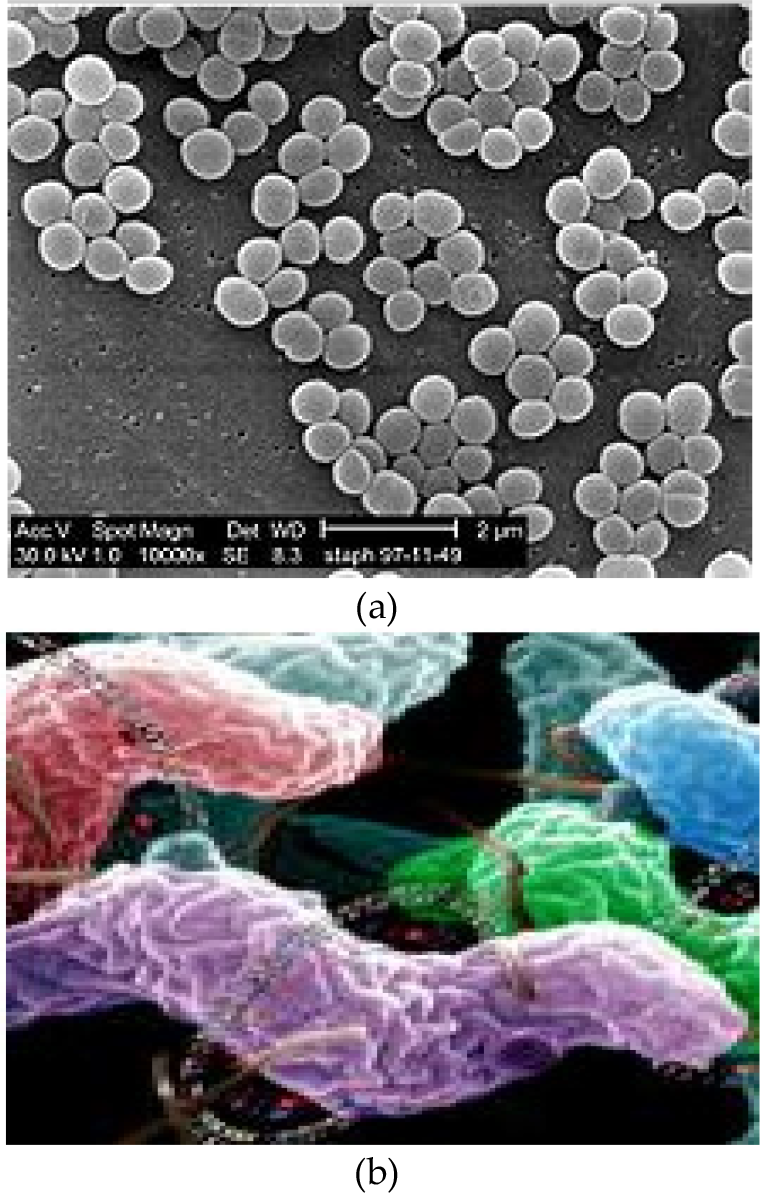
(a) Staphylococcus Bacteria, (b) Streptococcus Bacteria
Among Islamic nations, preparation of the deceased is usually carried out in specially designed washing rooms “Ghassalkhaneh” at cemeteries of large cities. This preparation consists of two important operations, namely, the washing and baptizing of the corpse “Ghosl” and wrapping the body in a shroud “Kafan”. In the next section we will describe the traditional method of these procedures in accordance with Islamic rules. One should note that due to the graphic nature of the subject, we intentionally used graphics to illustrate the whole procedure.
2. Preparing the Corpse for Islamic Burial: The Traditional Way
Preparing the deceased for burial in Islam takes place in three steps. These steps consist of washing, drying and shrouding in washing rooms located at cemeteries in accordance with the flow chart shown in fig. 2. The traditional details of these operations are described in the following sections.
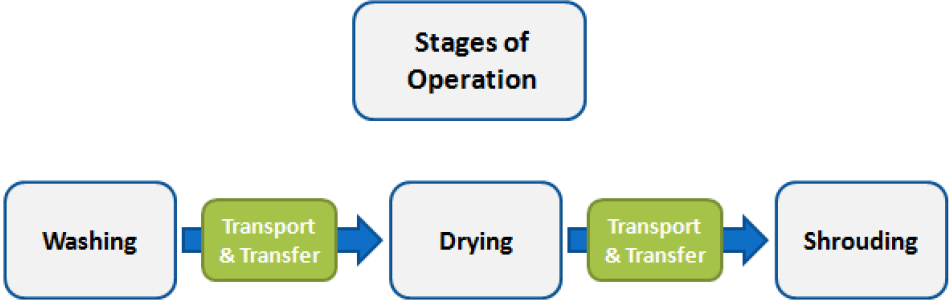
The Entire Operation of iGhoslntire Opera Ope
2.1 Ghosl: Washing and Baptizing
Ghosl or baptizing literally means washing and rinsing the body. In Islam, it is mandatory to perform Ghosl for various occasions. Morally, since the corpse is defiled by death, it needs to be cleaned to enter heaven [1–3]. This is traditionally achieved by Ghosl in accordance with the following steps and procedures:
Clothing and apparel are removed and a piece of fabric is placed to cover the genitals.
The body is slightly lifted and the chest and stomach are massaged to smooth out any unevenness, as shown in fig. 3 (a).
Before starting Ghosl, the corpse is washed with soap and water once as illustrated in Fig. 3(b).
The body must be rinsed with a cedar solution as shown in fig. 3(c).
The next step is to wash and rinse the body using camphor as shown in fig. 3(d).
Finally, the body is thoroughly rinsed with pure water and air dried.

Traditional Ghosl for a Deceased Muslim
2.2 Kafan: Shrouding and Covering
Prior to shrouding, cotton is placed on the genitals and in all orifices of the corpse to prevent any possible fluid discharge. Additionally, a “Hanout” process takes place which means putting small amounts of camphor on the forehead, palms, knees and finger tips of the body. This step is shown in fig. 4(a).

A Sinusoidal Path for the Wire Mesh Belt

Traditional Shrouding of a Deceased Muslim
In Islam, the corpse of a Muslim should be shrouded with three pieces of cotton fabric referred to as the “lame”, “shirt” and “overall”. The “lame” must cover the body from the belly button to the knees, the shirt must cover the shoulders, half of the legs and be wrapped around the body, and the “overall” must cover the whole body including flaps covering the head and feet. As a final step, upon closing the shirt and shroud, the overall fabric is banded and tied. This is shown in figures 4(b) and 4(c). Generally, three to four workers are heavily involved in the conventional way of washing, transporting and shrouding of each corpse which takes about 30 minutes.
3. The PaakShooy Operational Procedures
Following the analysis of religious instructions and traditions for the preparation of the deceased prior to burial, various automated designs and options were studied [6], and a final design and procedure was selected. The concepts of this design will be thoroughly discussed in the upcoming sections. This semi-automated corpse washing and preparation machine was named as the “
3.1 Primary Preparations
The first part of Ghosl or baptizing operation is to prepare the corpse for further actions. After delivering the corpse to the Ghassalkhaneh, the operators will remove all clothing and personal apparels such as rings, watch, jewellery, etc. They clean all nail polish, make-up, marks or injury on the skin of the body. The initial preparations are all done manually.
3.2 The Transfer Table Module
Once the body is prepared for washing, the corpse is placed on a transferring table equipped with rollers or a conveyor belt for easier movement as shown in fig. 5. The transport table is equipped with two wheels that move on a rail. The motion is provided by two motors attached to the table. In addition, this table is also equipped with a conveyor belt that has the role of transferring the corps to the shrouding table. The conveyor belt which operates by means of an electric motor is a wire mesh belt with horizontal rods placed at a distance from one another.
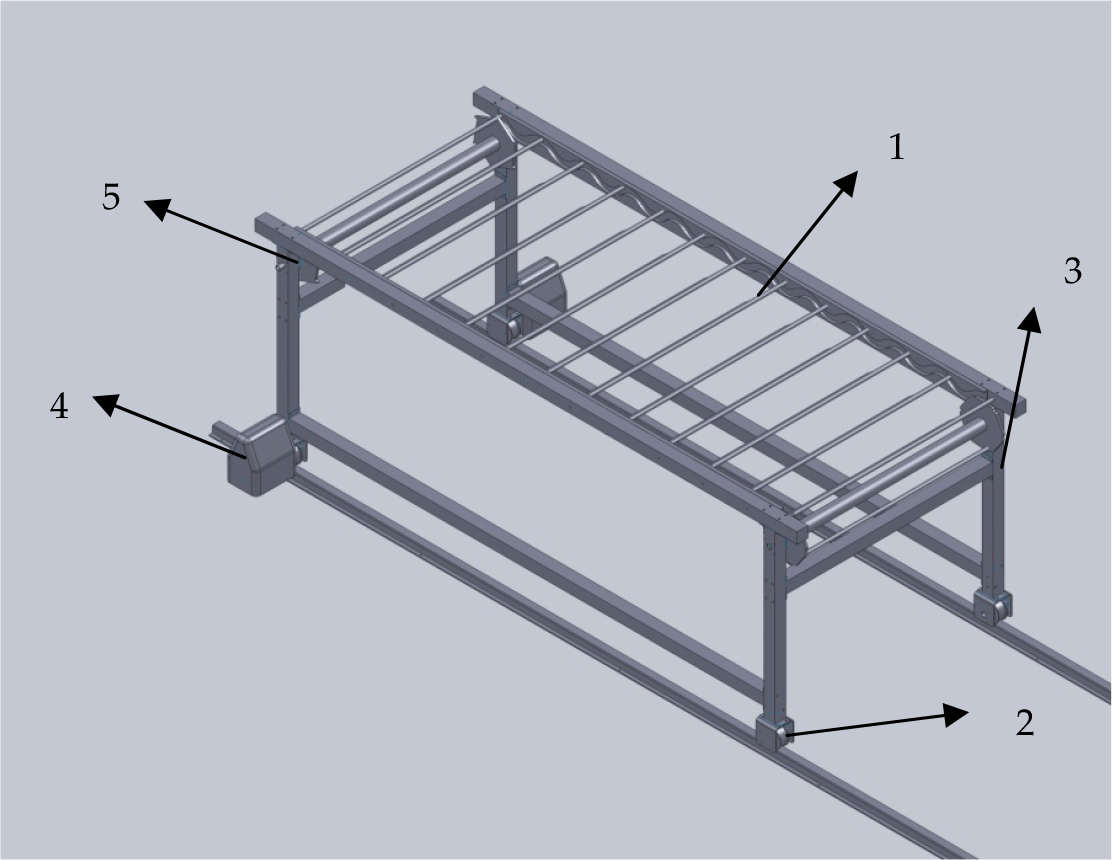
Transfer Table
In Islam, the Ghosl is complete if and only if all body parts are exposed directly to the spraying water. For this reason, and to make sure all parts of the skin will be exposed directly to water, the wire mesh conveyor belt moving within a curved and sinusoidal path is designed to be used on the transfer table (see figures 4 and 5). This will cause the body parts which are in contact with the conveyor to continuously change position and the entire skin surface will receive water directly in accordance with religious rules. Component specifications of the transfer table are given in table 1. All parts named in table 1 are also shown in figure 5.
The Transfer Table Specification

3.3 The Washing “Ghosl” Chamber Module
After the corpse is placed on the motorized transfer table (designed with a wire mesh conveyor belt), it is moved into the washing chamber and the washing operation begins. This operation is performed in a fashion very similar to the conventional way described in the previous sections. Several shower pipes are precisely designed and placed within the washing chamber to make sure all body parts receive appropriate amounts of water solutions like soap, cedar, camphor, and are rinsed thoroughly as many times as necessary in accordance with Islamic regulations. Figure 6 displays the initial (a-b) and final (c) designs of the washing chamber along with the soap, cedar and camphor solution tanks that are to be used in the appropriate order. Table 2 presents the washing chamber's main parts and its specifications. All parts named in table 2 are also shown in fig. 6 (c).
Washing Chamber Specification


The Washing “Ghosl” Chamber Design
As recommended in Islam, the right side of the body is washed and rinsed first, and then the left side. This is done by direct switching of showers to the left and right positions. The whole procedure is programmed and performed under the supervision of a Muslim operator as required by Islamic rulings “Fatwa” [4–5].
3.4 The Drying Chamber Module
After Ghosl, it is recommended to dry the corpse prior to shrouding. After actual observations during the traditional washing and shrouding procedures at the Tehran Behesht-e-Zahra (S) cemetery, we decided to add the drying stage to the PaakShooy operations. In this stage for a short period of time after the Ghosl and the manual placements of cotton on the genitals and in the orifices of the corpse to prevent any possible fluid discharge, the body will be scented and air dried. Figure 7 shows the schematics of the air-drying chamber designed for this purpose. Table 3 presents the drying chamber's main parts and its specifications. The unpleasant smell which is naturally produced in the washing room area will be diminished through a drying fan and ventilator within the enclosed air-drying chamber. Once the body is dried it will be moved by conveyor to the shrouding table for the last stage to take place. All parts named in table 3 are also shown in figure 7.
Drying Cell Specification


The Air-Drying Chamber
3.5 The Shrouding Table Module
Shrouding is the final stage of the PaakShooy cycle. After this stage the corpse is prepared for funeral services and burial. The shrouds of a Muslim male corpse shall include three pieces of white cotton material called the “shirt”, the “lame” and the “overall”. Once the corpse is transferred to the “shrouding table”, the shrouding operation is performed semi-automatically as shown in fig. 8. Table 4 presents the shrouding table's main parts and its specifications.
Shrouding Table Specification

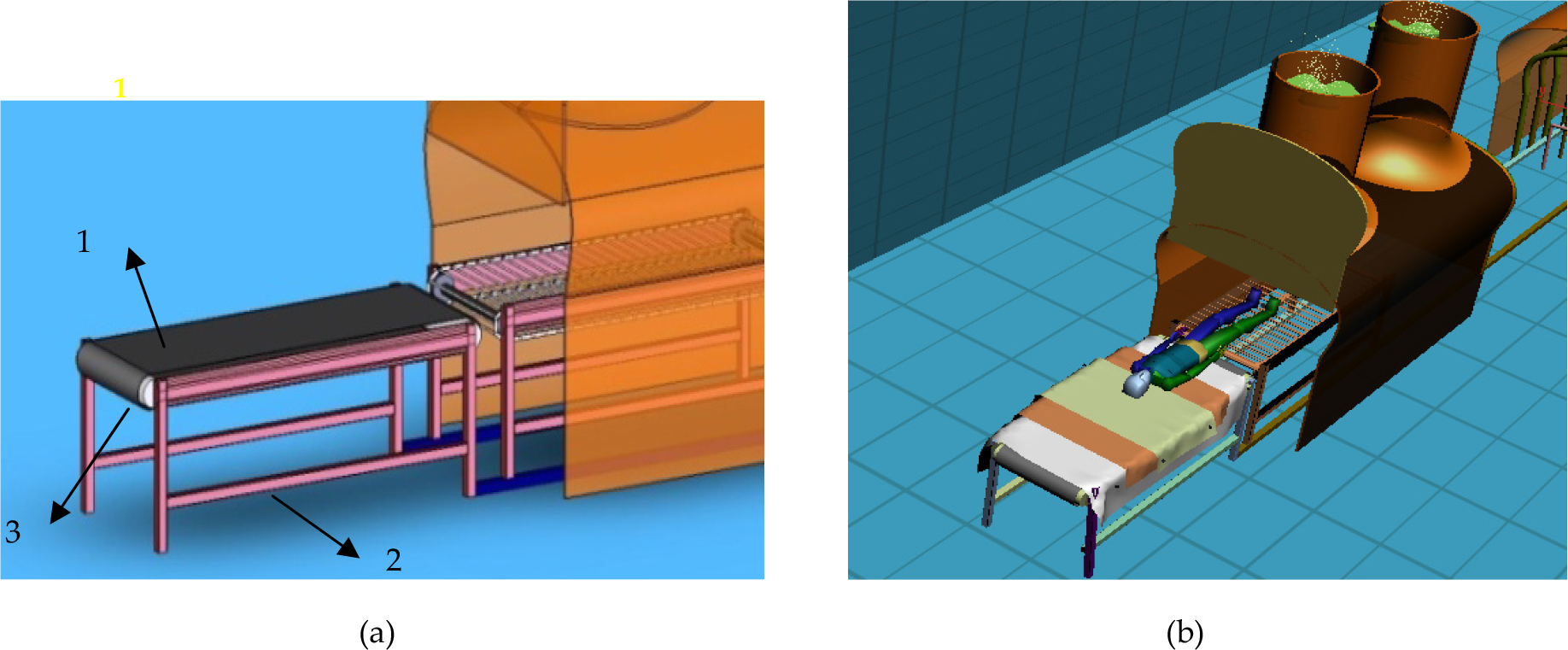
The Shrouding Table and Dryer
At this stage, the operators will place the triple cloths of the shroud on the shrouding table. If there is a possibility of bloody discharge from the body, they will place a plastic sheet within the shroud. The shrouding table includes a conveyor and some clothespins to temporarily hold the shrouding cloths. As the corpse is gradually moving out of the dryer and reaching the shrouding table (operators have previously placed the shrouds on the table and secured them with clothespins), the conveyor of the table moves simultaneously with the corpse and the shrouds are gradually pulled underneath the body. Then, the operator can easily perform the “Hanout” operation which is simply placing small amounts of camphor on the forehead, palms and the toes. Then, the operators will wrap and tie the shroud around the corpse. The shrouding stage is done semi-automatically to reduce operational costs and also to take into account other religious variables that make a fully automatic procedure almost impossible. The configuration of the air-dryer and shrouding table is shown in fig. 8. Finally the shrouds are manually wrapped and tied around the body by a human operator as shown in fig. 9. All parts named in table 4 are also shown in fig. 8 (a).

The Shrouded Corpse
4. The Complete PaakShooy Cycle
Figure 10 shows the complete PaakShooy machine cycle as a semi-automatic cell for the washing and shrouding of a corpse in accordance with Islamic rules and traditions. The whole process takes place like an assembly line with all modules placed in a series and on an active rail delivering the corpse from one station to another. After initial preparations, when the corpse is placed on the transfer table and moved into the washing chamber, the chamber doors are closed and the process starts performing all steps in a semi-automated sequence as described in the previous sections.

The Complete PaakShooy Cycle
The washing is done with two series of pressurized perforated pipes which are located above and under the transfer table. As shown in fig. 6 (c), smaller perforated pipes which are located between two rails spray water and other solutions from the beneath to wash and cover the underside of the corpse.
Furthermore, the pressurized perforated pipes are interconnected alternatively in the left and right sides of the chamber. This enables us to observe the Ghosl order which recommends the right side of the body be washed first and then the left side. All the circular pipes around the chamber are interconnected such that all parts of the body are thoroughly washed.
Once the triple stages of Ghosl are completed, the doors of the washing chamber are opened and the transfer table moves the corpse to a position between the washing chamber and the drying chamber. This stage is shown in fig. 10. At this point, cotton is placed on the genitals and in all the orifices of the corpse to prevent any possible fluid discharge. After this stage, the corpse is transferred to the drying chamber by the transfer table. When the body is in the chamber, the doors are closed and the fans, which are placed above the chamber, suck out the air and dry the corpse accordingly.
One of the advantages of this procedure is that the unpleasant smell which is usually in the morgue vents outward and as a result, this reduces any health risks to the operating personnel. When the corpse leaves the drying unit, it is ready to be shrouded. As the body leaves the drying chamber, the shrouding tableue vents outward andgealso start moving. This results in the engagement of the corpse with the shrouding conveyor belt and the body is automatically placed on the belt without operator interaction. The detailed design of the PaakShooy system is illustrated in fig. 11.

Detailed Design of the PaakShooy System
5. Controls and Electricals
In this section we will briefly elaborate on the control, electrical and sensing issues of the PaakShooy system.
5.1 Sensors
A number of optical sensors and micro-switches have been placed at various stages in order to monitor system performance during operation. For example, to accurately monitor the location of the corpse on the transfer table, a few optical sensors (with IP65 standards) are placed on the table to start/stop the conveyor belt/table as the corpse is moved to the desirable position for various operations. In addition, a number of micro-switches have been placed to monitor the opening/closing stages of the drying chamber as the corpse enters/leaves the chamber.
5.2 Central Control Unit
For the sake of functionality and ease of operations, a Programmable Logic Controller (PLC) is used to control various processes within the PaakShooy system. In addition, the human operator is equipped to input the process data using a touch screen Human Machine Interface (HMI) system. Therefore, operation of all sensors, pumps, fans, valves, etc. are centrally programmed and controlled by On/Off commands within the PLC programming. The system can operate in both manual and automatic conditions. Furthermore, to ensure safety and reliability, emergency stop switches have been placed at all stages of the operation.
5.3 Electrical Units
As stated in previous sections, 24 Volts Brushless DC motors have been used in all moving modules of the PaakShooy system in order to ensure the safety of the operating personnel. The transfer table through an electrical cable (by a spring drive reel) is directly attached to the central control unit and all electrical needs for various parts of the system are delivered by this cable.
5.4 Process Time
The drying time of the human body differs in summer and winter, therefore, the total time for the whole process to take place is estimated to be about 9 to11 minutes. This may be broken down into 2 minutes for washing, 2 to 4 minutes for drying, 3 minutes for shrouding and 2 minutes for transportation from one station to another. Since the shrouding procedure is done in a semi-automatic manner, the required time to perform this procedure is estimated from the currently observed manual operations. All other times are estimated based on similar applications in washing and drying machines.
6. Conclusions
Conceptual design of the PaakShooy machine as a novel semi-automatic cell for the washing and preparation of a Muslim corpse prior to burial in accordance with Islamic Shariine laws has been proposed and presented. The process cycle in our conceptual design includes washing, drying and shrouding stations which all act in accordance with religious rules and regulations. The project was initiated to increase the speed of the manual operation, reduce the burden on the personnel in the traditional corpse washing rooms “Ghassalkhaneh” hassalkhanehn proposed and presented. The process cycle in our conceptual design includ reduce the amount of physical contact between personnel and the corpse to avoid possible health risks. In addition, using the PaakShooy semi-automatic system, the total operation time from washing to shrouding shall now be reduced to approximately 10 minutes per corpse, which is about one third of the time required by the traditional method. In addition, using this system can reduce the amount of consumed water. At this point, the whole procedure and system has been designed in detail and animated by available computer software, and its feasibility has been thoroughly examined. The manufacturing and testing of the PaakShooy system based on the design presented here is the subject of the next phases of this project which shall be reported on in due course, in accordance with our way of life and previous experience on similar projects [9–11].
Footnotes
7. Acknowledgements
This project has been supported by the National Science Foundation of the Islamic Republic of Iran under contract #88000395 dated November 22, 2010.