




Abstract
Conflict management is one of the most important issues in leveraging organizational competitiveness. However, traditional social scientists built theories or models in this area which were mostly expressed in words and diagrams are insufficient. Social science research based on computational modeling and simulation is beginning to augment traditional theory building. Simulation provides a method for people to try their actions out in a way that is cost effective, faster, appropriate, flexible, and ethical.
In this paper, a computational simulation model for conflict management in team building is presented. The model is designed and used to explore the individual performances related to the combination of individuals who have a range of conflict handling styles, under various types of resources and policies. The model is developed based on agent-based modeling method. Each of the agents has one of the five conflict handling styles: accommodation, compromise, competition, contingency, and learning. There are three types of scenarios: normal, convex, and concave. There are two types of policies: no policy, and a reward and punishment policy. Results from running the model are also presented. The simulation has led us to derive two implications concerning conflict management. First, a concave type of resource promotes competition, while convex type of resource promotes compromise and collaboration. Second, the performance ranking of different styles can be influenced by introducing different policies. On the other hand, it is possible for us to promote certain style by introducing different policies.
Keywords
1. Introduction
The importance of teamwork in organizations has long been recognized at a pedagogic level. It is now common for educational course programs to include team projects. These projects enable team members to develop what has been termed positive interdependence (Johnson, D. & Johnson, R., 1978), which theoretically should result in enhanced short-term memory, long-term retention, greater understanding of course material, critical thinking, and problem-solving skills.
Although there are numerous advantages to working in teams, there are also several problems that one needs to be aware of (Harris, F. & Looney, C., 1999). Harris and Looney (1999) stated that one of the main problems is that a team approach to a project usually generates a greater degree of conflict than many people are accustomed to. This conflict can be a serious impediment to performance. This situation raises the question of what the exact nature of conflict actually is.
Some researchers have argued that conflict is an inevitable and pervasive aspect of organizational life (Amason, A., 1996; Galinsky, A., 2002; Jehn, K., 1995). People are said to be in conflict when the actions of one person are interfering, obstructing, or in some other way making another's behavior less effective (Tjosvold, D., 1997). In other words, conflict is a natural disagreement between different attitudes, beliefs, values or needs. It may be personal, interpersonal or inter-groups.
The traditional view of conflict was that it was a negative phenomenon and a serious threat to effective team performance (Deutsch, M., 1949a, 1949b; Robbins, S., 1989). However, some scholars have argued that more focus should be placed on the form the conflict takes. They have argued persuasively that when positive conflict is recognized, acknowledged, and managed in a proper manner, personal and organizational benefits can accrue (e.g., Amason, A., 1996; Darling, J., & Walker, W., 2001; Tjosvold, D., 1991).
Therefore, conflict may be constructive and destructive. Constructive conflict (Desivilya, H., 1998; Rognes, J., 1998; Tjosvold, D., et al., 2001) is often characterized by opening up an issue in a confronting manner, developing clarification of an issue, improving problems-solving quality, increasing involvement, providing more spontaneity in communication, initiating growth, and increasing productivity. Destructive conflict (De Dreu, C., et al., 2005; Wilmot, W. & Hocker, J., 2001) is characterized by diverting energy from real task, destroying morale, polarizing individuals and groups, deepening differences, obstructing cooperative action, producing irresponsible behavior, creating suspicion and distrust and decreasing productivity. Consequently, conflict management is one of the most important issues in leveraging organizational competitiveness.
Previous team-process research has distinguished three separate forms of conflict: task (or cognitive), relationship (or affective) (Amason, A., 1996; Amason, A. & Schweiger, D., 1994; Pinkley, R., 1990), and process (Jehn, K., 1995). These forms of conflict have been found to have different consequences on the performance of teams, with relationship conflict being the most damaging (Amason, A. & Sapienza, H., 1997; De Dreu, C., 1997; Pelled, L., 1996; Pelled, L. et al., 1999). Traditionally, social scientists built theories or models in this area which were mostly expressed in words and diagrams (e.g. Pruitt, D. et al., 1983; Thomas, K. & Kilmann, R., 1974). To test and refine these theories, they gathered empirical data from natural experiments, or obtained data from synthetic experiments that they designed and managed, typically using paid student subjects.
Starting with the pioneering work of Cyert and March (1963 and 1992) and Bonini (1967) in the 1960s, and accelerating after 1970, computational modeling and simulation has provided an alterative for the social science research modalities. Social science research based on computational modeling and simulation is beginning to augment traditional theory building, synthetic and natural empirical experiments in psychology, sociology, economics and political science. There are good reasons for this. Natural experiments are expensive, difficult to access for a variety of privacy reasons, and provide no experimental control. Synthetic experiments are relatively faster to design and implement, provide good experimental control, but suffer from limited external validity, since real world motivations are almost impossible to replicate in the laboratory. Moreover, ethical concerns nowadays preclude many kinds of experiments. One of the most serious shortcomings of traditional social science experiments may be the difficulty of developing and rigorously testing unified, multi-level theories. Thus, theories and empirical findings developed in micro-social science stand in relative isolation from theories and empirical findings developed in the macro social sciences. (Levitt, R., 2004)
In this paper, a model has been built to explore the individual performances related to interpersonal conflict under various types of conflict handling styles, resources and policies. Session two describes the model building. Experiment setting and results are provided in session three. Limitations and further work are discussed in session four.
2. The Model
2.1 Modeling Method
For the model building, we adopt the agent-based modeling method. Agent-based modeling in the role of simulation models of human organizations offer an intriguing perspective for studying those organizations (e.g. Carley 1990; Carley and Svoboda 1996). Each individual are called agent. Instead of hierarchically structured computer programs, agent-based simulation models of organization offer a bottom-up perspective: based on the capabilities of agents (individuals) and the resulting communication and cooperation, emerging characteristics of the organization as a whole can be defined, discovered, or explained. Because most work that is done in human organizations is based on intelligence, communication, cooperation, and massive parallel processing, agent-based simulation models seem to offer a promising, plausible model of organization. Moreover, the local intelligence and parallel processing features of agent-based simulation models offer a promise of overcoming present bottlenecks in computerized problem solving.
Agent-based simulation model combines the instruments of system theory with the attention for the agent level of the classical theories. It tries to explain the behavior at the systems level based on insight into the agent level of organizations. This leads to a picture of organizations that has advantages over the systems theoretical picture at the following points:
a psychologically plausible account of human behavior can be given;
the operationalization of theoretical concepts into measurable indicators is less problematic;
the black box of the organization as a system is opened, and organizational behavior can be explained based on the aggregated behavior of agents;
the agent concept and the idea of agent interaction leading to emergent
organizational behavior offer a good starting point for computer simulation models.
2.2 Conflict Handling Styles
In this model, scarcity of resources brings about conflict as each individual within the organization seeks to secure for herself/himself the scarce resources s/he requires for her/his survival. Each individual acts out of self interest and conflict handling style. The conflict handling styles used in the model is adapted from the Thomas-Kilmann conflict mode instrument (Thomas & Kilmann 1974). The adapted styles consist of accommodation, compromise, competition, contingency, and learning. Avoidance and accommodation in the Thomas-Kilmann conflict mode are combined as accommodation. People who have accommodation style in this model are conceding other's opinion to appease others by withdrawing from the situation. Compromise and collaboration in the Thomas-Kilmann conflict mode are combined as compromise. People who have compromise style in this model are trying to ensure that every one wins equally. People who have competition style in the model are focusing on winning the conflict at the expense of others. People who have contingency style are developing individualized strategies against each competitor. People who have learning style are searching strategy to maximize self interest continually.
2.3 The Agents
Initially, the total number of agents, N, which represent the group size, is assigned. Then each agent is assigned with one of the conflict handling styles, Si, (i.e. accommodation, compromise, competition, contingency, and learning), where i is the index of the agent. Then one of the types of resource, T, (i.e. normal, convex, and concave); the maximum amount of effort that an agent can disburse to compete, C; one of the types of policies, Q, (i.e. no policies, and a reward and punishment policy); the total number of running cycles, R; and the number of agents involved in each cycle, n, are need to be selected before running the simulation.
In each cycle, n agents will be chosen randomly to involve in a competition of resource. The agents will compete by infusing a specific amount of effort, ci, based on their styles, where i is the index of the agents. Then there is a governor agent to determine the results of the competition based on the type of resource. The result of agent i, ri, in the competition is determined by the following equations:
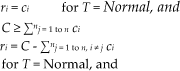
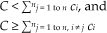

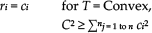
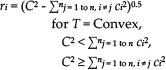



There are two types of policies. One is no policy. The performance of each agent is determined by averaging the result it gains in each competition. Another one is reward and punishment policy. The performance, Pi, of the agent is calculated by the following equations:


where m is total number of competitions of agent i involves, pi is the performance of agent i in a single competition, a and b are constant.
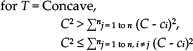
There are 5 types of conflict handing style, each agent disburses different amount of effort based on its style. For agents that have an accommodation style, they will not put any effort to compete (i.e. ci = 0). For agents that have a compromise style, they will put a fixed amount of effort to compete which is determined by calculating the optimal point of the current type of resource (i.e. ci = O), on the basis of game theory. The optimal points, O, of different types of resource are calculated by the following equations:



For agents that have a competition style, they will put the maximum effort to compete (i.e. ci = C). For agents that have a contingency style, the amount of effort is depending on their competitors. The competing effort, ci, is calculated by the following equations:


where xij is the amount of effort disbursed by agent j in the previous competition with the agent i. If agent i competes with agent j in the first time, then xij = O.
For agents that have a learning style, the amounts of effort are depended on their previous results. In the first competition, a learning agent will adopt the strategy of compromise style (i.e. ci = O). In the second competition, its competing effort is randomly assigned to be either O + 1 or O – 1. After the competition, the result will be compared with that of previous competition. If the result is larger, it means that the strategy is correct. Same strategy will be adopted in the next competition. Otherwise, the opposite strategy will be adopted.
3. Experiments and Results
Experiments had been done with 5 agents. Each of the agents has a different style. Initializations and parameters were assigned as stated in Table 1. In Experiment 1, 2, and 3, the effect of performance related to different types of resource is compared. In Experiment 4, 5, and 6, a reward and punishment policy was introduced, so as to investigate the effect of the policy by comparing the results from that of Experiment 1, 2, and 3. The model was run for 600 times (100 times for each experiment). Thus, the results displayed are all 100-run samples' distributions. Individual performance for Experiment 1, 2, 3, 4, 5, and 6 are shown in Fig. 1, 2, 3, 4, 5 and 6, respectively. Table 2 shows the statistical results of individual performance of each style in each experiment.
Experiments Settings

Statistical results of individual performance of each style in each experiment


Normal type of resource

Convex type of resource

Concave type of resource

Normal type of resource under reward and punishment policy

Convex type of resource under reward and punishment policy

Concave type of resource under reward and punishment policy
From the results, we can see that convex type of resource provides better individual performance and group performance. While concave type of resource provides poorer individual performance and group performance. Except for the style of competition, all the other four styles show nearly normal distributions. The competition style has two modes and has the largest variance. Under no policy, competition style has either the best or the poorest performance when compared with the styles of compromise, contingency and learning. Under the reward and punishment policy, learning style is the best style. From the results, we may derive two implications. First, concave type of resource promotes competition since competition style has a better performance. While convex type of resource promotes compromise and collaboration. Second, the performance ranking of different styles can be influenced by introducing a reward and punishment policy. It means that it is possible for us to promote certain style by introducing different policies. In this model, the style of learning is encouraged by the reward and punishment policy.
4. Discussions and Conclusions
In this model, there are several limitations. Firstly, the styles of the agents are static. The model assumes that the style of individuals will not change over time. However, the style of individuals is changing all the time in the reality. The style of individuals depends on the value, belief, and needs of her/himself. And these factors are also depends on other many factors, such as the relationship between the individuals and others. Further work should be done on considering these factors.
At the present level of development, the model is not yet ready to be used for quantitative forecasting. It is freely admitted that certain sectors need to be added and improved in the model, and that many parameters need to be estimated accurately. However, it is believed that simulation models will eventually grow to complement the existing models, perhaps with superior analytic and forecasting power. It may be useful for applied in the following areas: (1) as a computational laboratory – to investigate the relationships between the phenomenon of organizational behaviors, and to develop and validate social and organizational theories by performing computational experiments; (2) as a managerial tool – to provide a mechanism for exploring the ramifications of various policies; and (3) as a educational tool – to provide as simulation games for training purpose.
Footnotes
5. Acknowledgements
The author would like to express his sincere thanks to the Research Committee of the Hong Kong Polytechnic University for financial support of the research work.