




Abstract
Road accidents can lead to abdominal injuries ranging from severe to lethal, that include hemorrhage of organs and their attachment system. A good understanding and prediction of abdominal injuries therefore requires investigation of the mechanical properties of the attachment systems of abdominal organs. In particular, the gastrocolic ligament (GCL) is one major link between the stomach and the transverse colon. This study aims to investigate the mechanical properties of the GCL under very low and high strain rate uniaxial tensile tests until failure. Thirty-five GCL samples were dissected from 7 embalmed cadavers and tested at a rate of 1 mm/s and 1 m/s. Incidence of freezing was also evaluated. The mechanical response of GCL samples showed an approximately bilinear curve. Within the first linear region (less than 5% of ligament strain), the apparent elastic modulus was estimated at 247±144 kPa, while in the second region, it was estimated at 690±282 kPa. The average failure stress (σfail) and failure strain (∊fail) were 131.6±50 kPa and 29%±8%, respectively. High strain rate loading also showed high sensitivity to strain rate. The estimated GCL mechanical properties in this study can be implemented in finite element models of the abdomen to further investigate the mechanical contribution of the organ attachment system under traumatic loading conditions.
Introduction
The abdominal cavity includes hanging organs sheathed by the peritoneum and stabilized by ligaments, mesenteries and omentums. Abdominal organs exhibit high mobility (1, 2) and are therefore particularly vulnerable in case of impact. In road accident epidemiological studies, abdominal traumas are reported in 8% to 20% of all cases (3, 4). Digestive system trauma varies from 4% in the case of an impact against the steering wheel, up to 56.7% when seatbelt syndrome (3) is involved. The severity of these injuries is primarily related to the risk of hemorrhaging of digestive vessels due to their abundant vasculature (5). According to anatomical and clinical considerations, the organ attachment systems are of major importance in understanding injury mechanisms. Such investigations require an evaluation of the mechanical behavior of the structures up to damage and failure. To the authors' knowledge, the only previous work investigating the properties of abdominal organ attachment systems was focused on the mesentery (6). Bourdin (6) collected several mesenteries from post mortem human subjects (PMHSs) which attach the small intestine to the spine. Quasi-static and dynamic uniaxial tests were performed for 2 different sample shapes, in both the radial and orthoradial directions of the intestinal tube. In the orthoradial direction, a failure tensile stress of 367 kPa and a failure tensile strain of 23.1% were reported. The gastrocolic ligament (GCL) is also of great importance as far as the organ attachment system is concerned. It ensures the link from the greater curvature of the stomach to the anterior edge of the transverse colon (Fig. 1a). It is formed by densification of the greater omentum and the transverse mesocolon and is crossed by the gastroepiploic vessels.
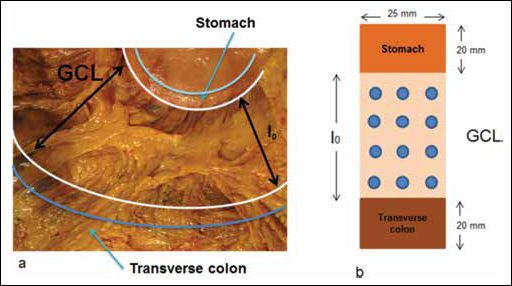
a) The stomach—transverse colon segment. b) Illustration of the dimensions of the rectangular sample removed. Note that the sample includes a piece of transverse colon and stomach to investigate the whole structure including its insertions. Blue speckles were regularly placed on the anterior side of the gastrocolic ligament (GCL) to better identify the failure mode occurrence with video analysis.
Regarding similarities to other soft tissues structures, different testing methods could be used to perform identification of properties. Uniaxial tensile loading with hydraulic devices is the most frequently used and probably the most appropriate. Mohan and Melvin (7) and Xiong et al (8) investigated failure properties of vessel walls. Brunon et al (9) conducted uniaxial quasi-static tensile tests for mechanical characterization of the liver capsule until failure. Snedeker et al (10) combined quasi-static and dynamic uniaxial tests to identify strain rate dependency of kidney capsules. Biaxial loadings (11, 12), ultrasonic techniques (13, 14) and aspiration methods (15) were also reported, but these did not investigate damage and failure.
Regarding the influence of experimental testing methods, soft tissues exhibited very large variability with the use of PMHS tissue and chosen preservation technique (9, 16-17-18). Freezing can facilitate long-term preservation, but its impact on mechanical properties is still being discussed. Some recent studies have concluded that thawed liver samples have significantly different properties as compared with fresh liver samples (9, 16); while other studies on ligaments or tendons have reported no significant differences (17, 18).
This work focused on the characterization of PMHS GCL mechanical behavior until failure, based on uniaxial tensile tests at different rates: one very low strain rate (VLSR) (1 mm/s) and one high strain rate (HSR) (1 m/s). In a second stage, it also aimed to investigate the effects of freezing such tissues, on their mechanical behavior.
Materials and Methods
Seven embalmed PMHS were obtained and handled according to the recommendations of the ethics committee of the Faculty of Medicine of Marseille. The subjects were treated with Winckler solution (19) to ensure proper preservation of soft tissues and did not exhibit any pathology regarding the gastrocolic segment.
For each PMHS, the stomach—transverse colon segment was collected. GCL samples were then immediately dissected in the radial direction, keeping, at each end, a part of the stomach or colon (Fig. 1b), in order to facilitate subsequent fixing including ligament insertion.
GCL samples were then removed using a rectangular cutting shape to get a constant 25-mm width. The length, width and thickness were then recorded using callipers. Because of human variability, the anatomical distance between the greater curvature of the stomach and the anterior edge of the transverse colon is not constant (Fig. 1a), and thickness is dependent on the amount of adipose tissue in the ligament. Four to 7 samples were removed per PMHS according to GCL global morphometry, leading to a total of 35 samples as reported in Table I. Note that after removal, the sample widths were checked and found to be equal to mean of 25±8 mm. Once dissected, the samples were examined. Those presenting existing visible holes to the naked eye were excluded from the study.
SUBJECT DESCRIPTION AND NUMBER OF EACH GCL
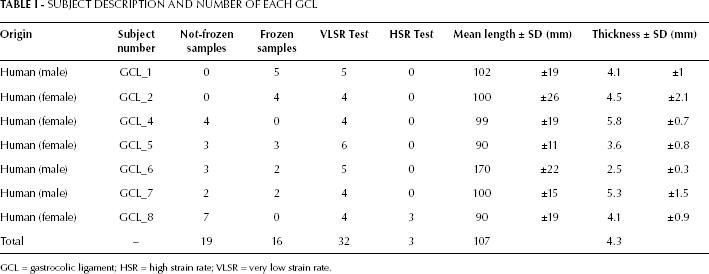
GCL = gastrocolic ligament; HSR = high strain rate; VLSR = very low strain rate.
To investigate further the effects of freezing on structural properties, collected samples were stored at 6°C for 24 hours or frozen at –16°C for 48 hours (Tab. I). In both cases, the tests were done at room temperature. In particular, the thawing of frozen samples was carried out slowly, with an intermediate stage in the refrigerator for 24 hours, to limit degradation of the internal structure of the ligament. To assess the possible influence of the preservation method on the GCL mechanical behavior, samples from GCL_5 to GCL_7 were classified for each PMHS into 2 groups. The groups were preserved using 2 different preservation methods as stated in Table I.
MECHANICAL PARAMETERS OF GCL: COMPARISON OF FROZEN (Fro) AND NOT FROZEN (n-Fro) SAMPLES
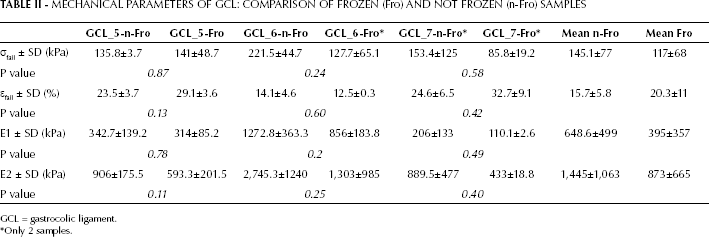
GCL = gastrocolic ligament.
Only 2 samples.
The samples were mounted on an MTS 370.10 hydraulic testing machine (MTS System Corp.) and fixed using the gripping system illustrated in Figure 2, which consists of 2 mechanical clamps. Sandpaper was added to the internal faces of the clamps to ensure a more homogeneous stress distribution in the contact area, and limit the sliding of the sample. First, the upper extremity including the stomach was fixed onto the mobile upper clamp. The second clamp was then set at the same height as the lower sample extremity and tightened. In so doing, no initial stress or other preconditioning cycling was applied to the sample.
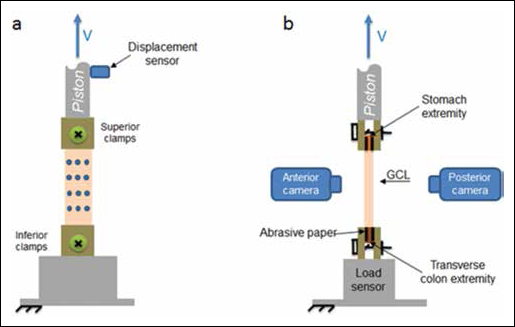
Frontal (a) and lateral (b) illustrations of the tensile testing device used. GCL = gastrocolic ligament.
As shown in Table I, VLSR uniaxial tensile tests were performed on 32 embalmed samples. Among them, 16 were temporarily frozen. VLSR tests involve applying a constant loading velocity of 1 mm/s until structure failure. In addition, three HSR uniaxial tensile tests were performed at a loading velocity of 1 m/s. This loading velocity was relevant for crash loading conditions used for abdominal behavior analysis (20).
A resistive load sensor (Fig. 2) with a range set to 150 N and a sensitivity of 1% was used to record the longitudinal tensile force. A displacement transducer (LVDT) with a sensitivity of 1% was used to get imposed displacement to the sample. The sampling rate was set to 100 Hz and 1 kHz for VLSR and HSR tests, respectively. Video captures of both anterior and posterior faces of the samples during the test were recorded with AOS X-VIT high speed cameras at a rate of 25 fps and 1,000 fps for VLSR and HSR tests, respectively.
Conventional strain (∊conv) and true strain (∊) were computed with Equations 1 and 2, where (l0), the initial length is the distance between the extremities of the fixture device, and change in length (d) is measured directly from the actuator displacement.


Due to the high inhomogeneity of the tested structure, sample thickness variation measurement was hazardous. For this purpose, the true stress (σ) was computed regarding conventional stress (σconv) and strain as presented in Equation 3. With σ conv = F/S0, (F) is the force measured during the test and (S0) the initial section.

The results analysis was then built from true stress vs. strain curves obtained from each PMHS tensile experiment without any initial data shift.
The mechanical parameters calculated from the results are E1, representing the apparent modulus for low strains, and E2, defined as the apparent modulus in the second identified linear region. These 2 moduli were introduced to better reflect global properties of the structure behavior. The E1 modulus was defined from the origin to the first nonlinearity on the toe region (∼5% strain). The E2 modulus was obtained from the end of the toe region to damage occurrence (to the next inflexion). Failure behavior was obtained by recording the failure stress (σfail) and failure strain (∊fail). For each tensile test, the time of GCL rupture was identified both on recorded stress vs. time and strain vs. time curves, and confirmed through the analysis of the blue speckle kinematics (performed on the sample prior to each test) on the video capture.
Statistical analysis of the mechanical parameters due to the preservation method in each PMHS group of tests was performed using bilateral t-test comparisons. Only differences between results with a P value of 0.05 or below were considered statistically significant.
To complete the experimental investigations, histological analyses were performed on 3 samples (from GCL_1 and GCL_2). Tissue samples were fixed in 4% buffered formalin and embedded in paraffin. Regularly distributed sections were cut and stained with Hematein-Eosin-Safran (HES). The different sections were then analyzed to identify the relative composition of the GCL in order to further evaluate potential effects on results (particularly the damage process).
Results
Typical true stress vs. strain curves obtained from each PMHS under VLSR tensile experiments are reported in Figure 3. Structure behavior exhibited high strain levels and can be described considering 3 steps. The first linear region, characterized by a relatively low-stiffness toe region, corresponds to the low-strain domain. This first step extends over a range of strain from 5% to 20%, according to the different PMHSs. Once all fibers of the external peritoneal membrane are recruited, the structure showed quasi-linear behavior. Finally, curve inflection damage up to a relative brittle failure process was recorded.
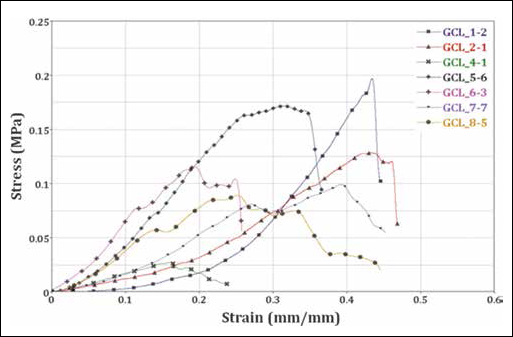
Typical gastrocolic ligament (GCL) true stress vs. strain curves for very low strain rate (VLSR) tests.
Based on video analysis and blue speckle displacement on each sample, the failure was seen to occur in 75% of the cases preferentially horizontally from right to left when considering the anterior side of the GCL. No dedicated region was reported for failure initiation. An example of sample failure is illustrated in Figure 4. The failure mode reported is an opening failure mode, in some cases with a slip between the GCL folds. This slip is observed in some ligaments with 2 parallel adipose blocks linked by conjunctive tissues.
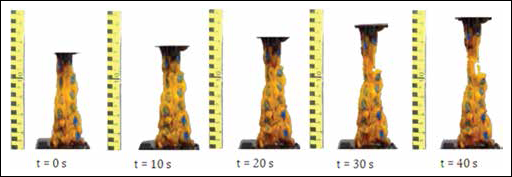
Failure progression on a typical gastrocolic ligament (GCL) low-strain tensile test up to failure initiation, with a 10-second time step.
To complete failure process analysis, microstructure of the GCL showed adipose tissue in varying amounts. This tissue is known to be a loose connective tissue composed of adipocytes (Fig. 5a). This adipose tissue is trapped between 2 layers of peritoneal membrane (Fig. 5a). Finally, some gastroepiploic vessels were identified in the longitudinal direction of the GCL (Fig. 5b).
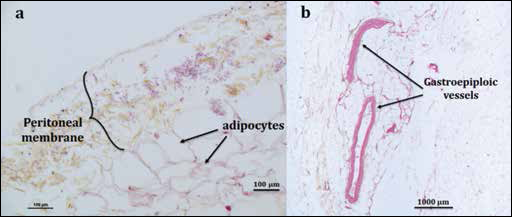
Histological sections: a) representing the white adipose tissue between the 2 peritoneal layers, and the peritoneal membrane which is the wall of the posterior and anterior ligament. b) The gastroepiploic vessels.
Focusing on structure response up to damage initiation (i.e., first curve inflexion), the true stress vs. strain curve was reported for each PMHS. Stress vs. strain curves for each subject (as referred to in Tab. I) are given in the Appendix.
According to the true stress vs. strain curves, frozen specimens showed lower stress levels than did not-frozen specimens. This difference was not statistically significant (P values), as confirmed by σfail, ∊fail, E1 and E2 mechanical parameters calculated from frozen and not-frozen groups of specimens as reported in Table II.
Considering only VLSR loading conditions, the GCL global properties were then defined independently of the conservation technique (Fro vs. n-Fro). For GCL_4 and GCL_6 results (Appendix), the failure parameters were evaluated as outliers. Anomalies of the peritoneal membrane consistency were also identified by a visceral specialist, leading to these data being rejected for further analysis.
Thus, the average true stress vs. strain experimental curve is illustrated in Figure 6. Respectively, the mean apparent moduli E1 and E2 were 247±144 kPa, 690±282 kPa. The average σfail was 131.6±50 kPa, and the corresponding ∊fail was 29%±8%.
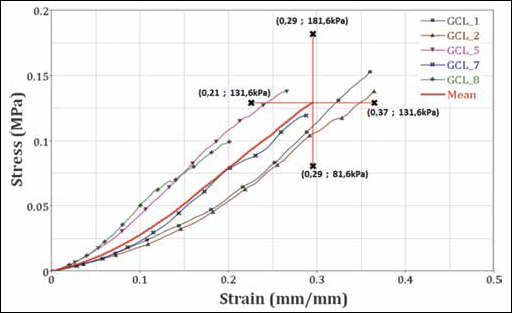
Averages true stress vs. strain curves up to damage initiation, from each subject and regarding the whole results (including response variability). PMHS = post mortem human subjects.
High Strain Rate Tests
In the subject GCL_8, strain rate influence was first investigated by comparing VLSR with HSR test response (Fig. 7; Tab. III) and corresponding mechanical parameters. The strain rate showed a significant influence on structure elasticity. High elastic moduli and failure stress were observed with an increasing strain rate. In contrast, failure strain seemed not to be influenced by the strain rate.
MECHANICAL PARAMETERS FOR SUBJECT GCL_8 UNDER VLSR AND HSR CONDITIONS
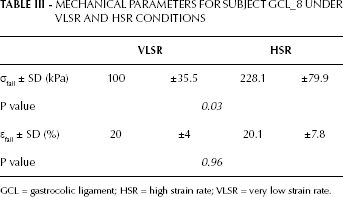
GCL = gastrocolic ligament; HSR = high strain rate; VLSR = very low strain rate.
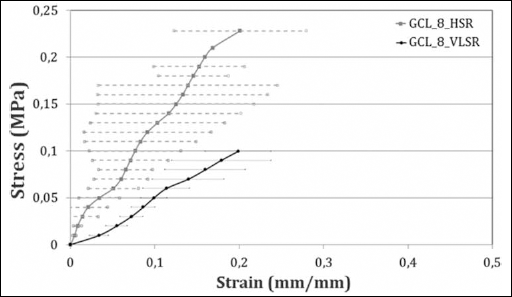
Mean true stress vs. strain curve up to damage initiation for high strain rate (HSR) and very low strain rate (VLSR) loading conditions, for the subject GCL_8.
Discussion
This work demonstrated not only an experimental method for investigating organ attachment systems but also new data on GCL ligament identifications, investigating some features of property variability including the influence of loading velocity and the effects of freezing methods.
On the Experimental Method
The choice of using GCL samples could be considered as a limitation to the evaluation of the mechanical behavior of the whole structure of the ligament. The reason for this choice was GCL morphology, which does not allow homogenous structure recruitment. In addition, the use of several samples per PMHS strengthens the reproducibility of the results. Regarding sample preparation, different sample shapes could be used according to the tissue's heterogeneity and handling difficulty. I- or T-shaped samples are well suited when tissue is homogenous and easy to handle (6, 9). Taking into consideration the GCL tissue heterogeneity and preparation issues, a rectangular sample shape preserving its integrity was preferred, as has already been done in previous similar works (21, 22). The clamping fixing method did not show any sliding or local damage of the sample and was robust in investigating high rate loading up to damage. This method was an efficient alternative to magnetic tape fixtures (11) proposed for canine viscera pleura characterization or fish hooks (12) used for abdominal aorta property evaluation.
To investigate the mechanical behavior up to failure, no initial preconditioning or initial force were set prior to experiments. This choice was supported by preliminary experiments which did not exhibit a stable measurement of initial force once a preload was applied. It was also consistent with previous work performed under similar loading conditions to investigate tissue damage (23). The reported results did not show shifting, and the toe region was not truncated. Hence, the E1 calculation could be influenced by initial force variations prior to the monotonic tensile test. To investigate strain rate influence, experiments based on a cyclic test with preconditioning and initial forces would be more accurate.
In further experiments, initial preconditioning (and forces) with low strain amplitude (less than 5%) could be performed to strengthen the robustness of the results for the low strain range. In addition, to complete the evaluation of mechanical properties, cyclic tests should also be planned to investigate strain rate and relaxation effects.
The other parameters were less affected by this limitation. Hence the apparent elastic modulus E2 should be considered as representative of the mechanical parameters of the structure elasticity.
Stress computation required an accurate evaluation of the sample section. This fact was considered a limitation of the current work, as it was not possible to evaluate change in sample section during tests. Equation 3 was therefore used for the true stress calculation. This may induce an error in computing the stress of the GCL. To assess this error, an estimation of the GCL sample instantaneous cross-section was performed according to the range of possible values for the Poisson's ratio (0.3, 0.49) (21, 24-25-26) of the adipose tissues. The use of the adipose tissue Poisson's ratio is based on its high level in comparison with the other major tissues (peritoneal membrane and vessels). No significant difference (P>0.05) was observed between the estimated failure parameters and those calculated previously.
On the Results Obtained
The nonlinearity of the toe region led one to introduce 2 linear regions (with E1 and E2) to describe tissue elastic response. This choice was consistent with previous studies on similar materials (21, 22, 27) for which 2 linear regions were defined. The mesentery, which is another abdominal attachment system previously investigated and published (6), presents a similar behavior with a relative higher rigidity.
From the obtained experimental curves, the GCL structure exhibit large deformation before failure (up to 43% strain level). According to the low strain rate data, the GCL exhibits at minimum a hyperelastic behavior with slight nonlinearity. This can be partly explained by the large proportion of adipose tissue present in the GCL structure, as compared with conjunctive tissue, which is often described as purely elastic (24, 28).
The complex structure including 2 membranes layers, vascularization and adipose tissues could lead to complex damage sequences probably supported by the ductile behavior reported. Nevertheless, according to histological analysis and similarities to other structures, the mechanical behavior of the GCL could be supported only by the contribution of the peritoneal membrane. Additional investigation with coupling histology to incremental loading up to failure might be useful to complete the analysis of the failure process. From GCL failure properties, the strain failure threshold reported in this work exhibited a low variability independently of strain rate considerations and could be considered as a failure criterion.
According to results of the high strain rate tests, the GCL mechanical response seems to be strain-rate dependent, which gives weight to the assumption of viscoelastic behavior. Unfortunately, the number of high strain rate experiments was limited and should be consolidated by additional investigations with a wider range of velocities. Such new investigations are necessary to quantify strain rate dependency and provide data for defining a viscoelastic behavior law. At this stage, 2 sets of parameters (E1, E2, σfail and ∊fail) could therefore be considered to describe GCL properties under the low and high strain rate loading conditions.
Variability in results is usually induced by experimental interindividual variability and testing procedure (29). This work also showed significant intraindividual variability.
The GCL sample heterogeneity was confirmed by the proportion of adipose tissue, and the presence and number of vessels which go through the ligament. In addition, the non-uniform cross-section (thickness and width) which changes according to the sampling area across the length could explain this variability in results. To make further use of the results obtained, to identify a behavior law, the current analysis was completed by introducing average curves for GCL behavior identification (cf. Fig. 6).
On many different soft biological tissues, the literature provides contradictory conclusions about the influence of freezing on the mechanical properties. Van Ee et al (30) reported no influence on mechanical response for skeletal muscles, while other studies on ligaments or tendons have reported small differences (17, 18), or significant differences when testing thawed liver samples, as reported by Santago et al (16) and Brunon et al (9). In this study, freezing seems to have had an effect on elasticity and failure occurrence. Unfortunately, the statistical sample was not large enough to provide a robust statistical analysis and give definitive conclusions. Thus the P values, computed in the statistical analysis to compare Fro and n-Fro specimens, are not accurate enough. Additional experiments including an enlarged experimental plan would be useful to strengthen the evidence for the current conclusions.
The abdominal attachment system is involved with many other anatomical structures including mesos and digestive ligaments. These connective tissues show strong similarities to the GCL. The same properties could therefore be postulated for such structures. In addition, the experimental setup proposed in this work could be applied to those different structures.
Conclusion
This work was a first step in the characterization of GCL mechanical behavior until failure, for low strain rate and preliminary high strain rate uniaxial tensile loading conditions. The GCL behavior could be summarized as a bilinear hyperelastic (to viscoelastic) behavior up to the ductile failure process which seems to follow a strain criterion. From tested PMHSs, the results showed significant variability influenced by the intrinsic histological and morphological heterogeneity of the structure. At the very least, freezing seems to deteriorate tissue properties.
The experimental device reported in this work was efficient for investigating GCL properties up to failure and could, at a later stage, be applied to other abdominal connective tissues. Additional experiments enlarging loading conditions and including initial forces and preconditioning would be useful to identify viscoelastic properties. The current results can find immediate application in the definition and validation of finite element models of the human body. By increasing model biofidelity, it will then be possible to investigate the interactions and mobility of abdominal organs under trauma conditions, leading to the definition of abdominal injury criteria combining injury risks of organs and connective tissues.
Footnotes
Acknowledgements
The authors would like to acknowledge the contribution of Omar Zaidi, Thierry Bege and Christophe Regnier for sample dissection, and Yves Godio in helping with the MTS test machine.