




Abstract
Background:
Standardized endotracheal tube (ETT) securement processes have been linked to a decreased rate of unplanned extubation (UE), an adverse event common in NICUs. Our level IV NICU follows a standardized ETT securement bundle with use of the NeoBar as an integral component of ETT securement. Kamishibai cards (K-Cards) are a quality improvement auditing tool originally developed in the manufacturing industry, and when applied in healthcare, they can be used to list individual bundle elements needed to mitigate event risks. Our UE prevention team developed a K-Card specific for the standardized ETT securement bundle to measure adherence and drive-actionable interventions to prevent UEs. This was a main intervention we implemented to help reduce our unplanned extubation rate from 1.6 UE events/100 ventilator days to a rate ≤ 1.
Methods:
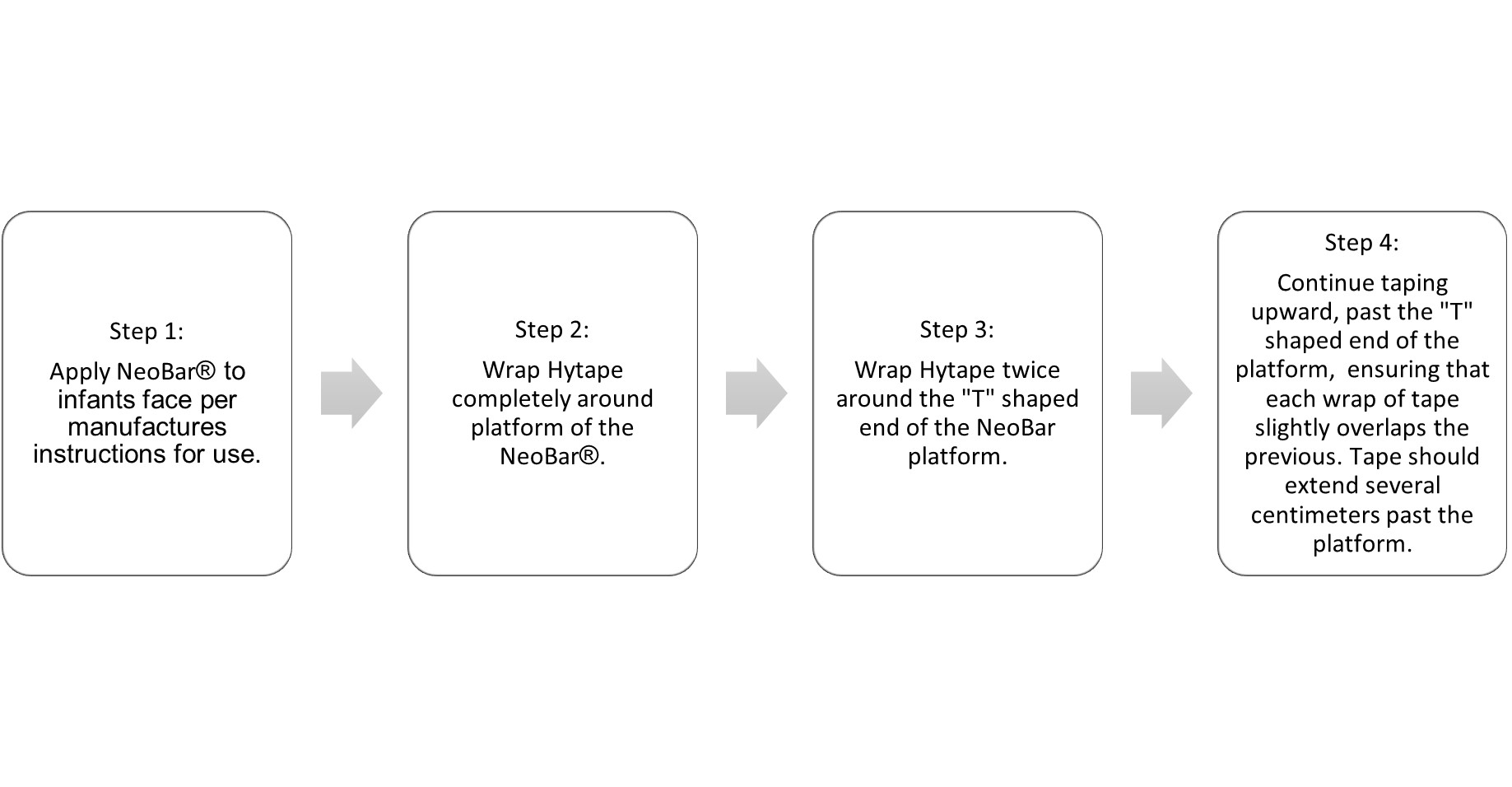
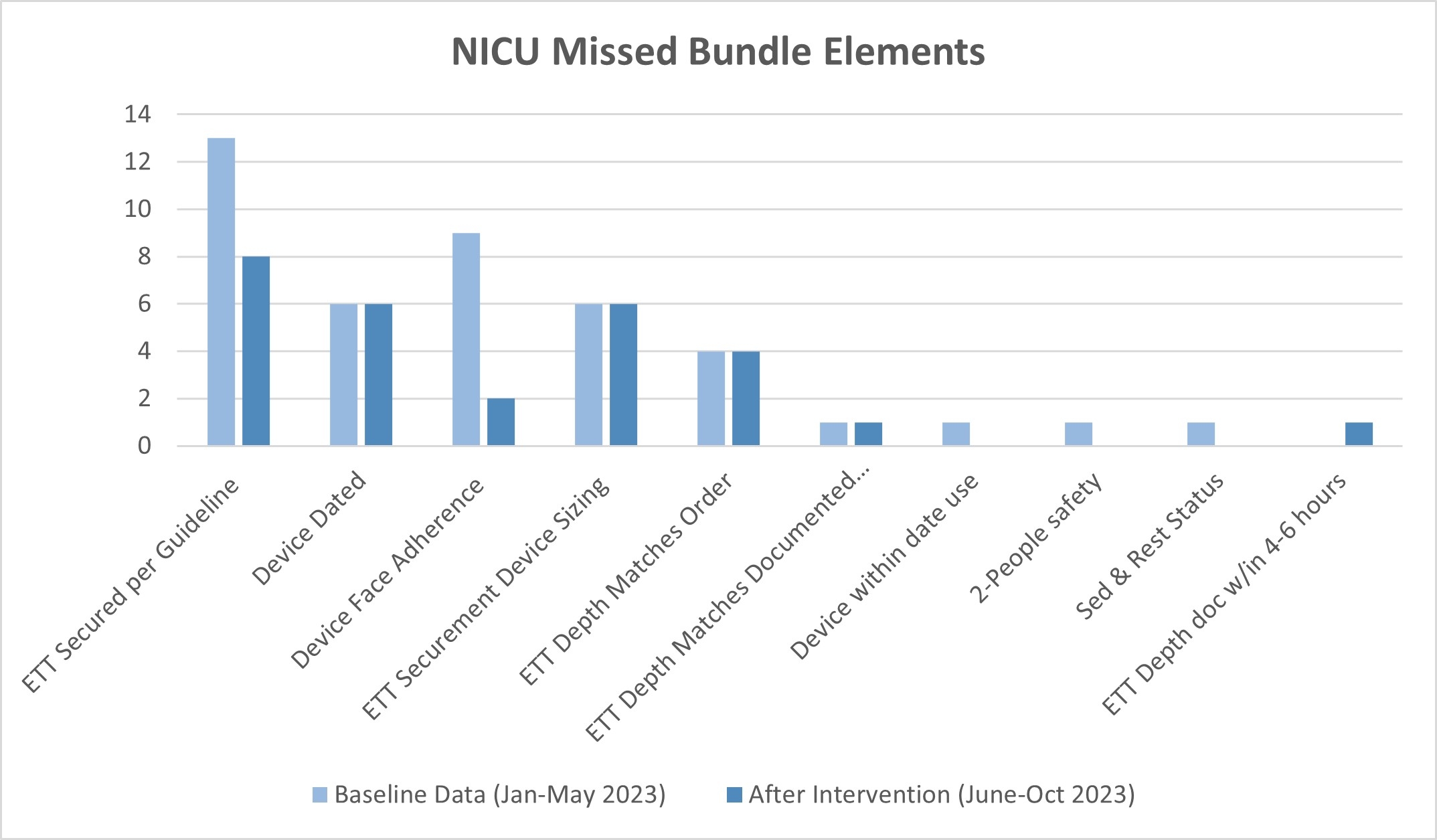
Data collected for the study, deemed a quality improvement initiative and thus IRB exempt, included K-Card audit responses which were reviewed for individual element adherence. Project data was recorded over the period between January and October 2023. Based on review of data collected from Jan-May, coupled with failure mode analysis revealing ETT slippage through the tape or tape tears at the NeoBar tip as root cause for several UEs, the UE prevention team implemented a revised bundle ETT taping procedure in June 2023. Data was reviewed following this intervention (June-October 2023) and compared with earlier data to identify changes in bundle adherence.
Results:
From January-May, the K-card audit completion rate was 70% (420/600 completed audits). Of 420 completed K-Cards, 42 were non-adherent with missed bundle elements for a non-adherence rate of 10%. Of 344 completed audits from June-October 28 had missing bundle elements (8.1%) for an overall increase in bundle adherence of 18.6% post-securement bundle revision.
Conclusions:
K-Cards are an efficient way to measure bundle adherence for ETT securement. Analyzing information from K-Card tracking data can lead to actionable interventions for hospital quality initiatives.
Get full access to this article
View all access options for this article.