



Abstract
Background:
Ventilatory ratio (VR) is a surrogate for physiologic dead space reflecting both ARDS severity and mortality risk. The recently defined hyperinflammatory ARDS subphenotype class has worse clinical outcomes than the hypoinflammatory class and may have an elevated VR. This may be due to pulmonary vascular dysfunction caused to systemic inflammatory up-regulation. This retrospective study compared VR between classes.
Methods:
Data from the Early Assessment of Renal and Lung Injury (EARLI) study was used.1 Inclusion criteria were: 1) mechanically ventilated subjects meeting AECC ARDS criteria, 2) had subphenotypes classifications available, and 3) data were documented after initiation of the hospital’s electronic medical record. VR was calculated using the method described by Sinha.2 Continuous variables were compared using the Student’s T-test, and categorical variables with the Chi-squared test. Logistic regression assessed the association between subphenotype class, VR, and mortality. We performed a mediation analysis to estimate VR’s role as a mediator between class and mortality. A post hoc analysis also used logistic regression to identify predictors for subphenotype class.
Results:
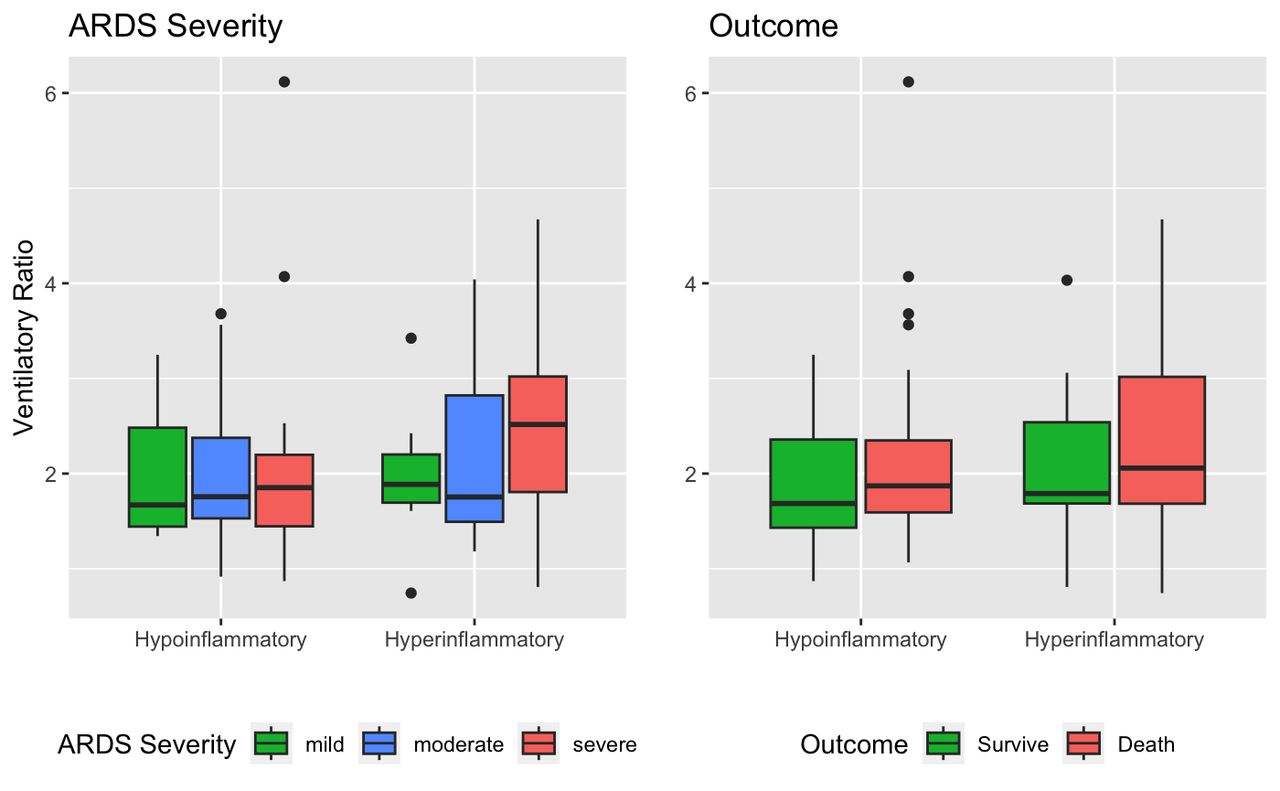
Of the 129 enrolled subjects most were male (64%, P = 0.6), with a mean (SD) age of 68 ± 14.7 y. Hospital mortality was 58%. The sample was equally divided between hyper- and hypo-inflammatory classifications (64 vs 65 respectively). Three significant findings distinguished the hyper- from hypo-inflammatory cohorts: 1) higher VR (2.33 ± 0.92 v. 2.0 ± 0.85, respectively, P = .035); 2) greater incidence of severe ARDS (44% v. 23% respectively, P = .02), and 3) greater mortality (73% v. 43% respectively, P < .001). Both class and VR were significantly associated with mortality (unadjusted model), whereas hyperinflammatory class remained significant when adjusted for VR (OR 3.5, 95% CI 1.65 to 7.65, P = .001). VR did not mediate between class and mortality. APACHE II score and base deficit were also independent predictors for class.
Conclusions:
Our results confirm previous findings that VR is associated with mortality and is elevated in hyperinflammatory ARDS. 1. Auriemma CL. Intensive Care Med 2020. 2. Sinha P. Am J Respir Crit Care Med 2019.
Figure 1. Ventilatory ratio stratified by ARDS subphenotype Figure 2. Ventilatory ratio stratified by Berlin ARDS severity and outcome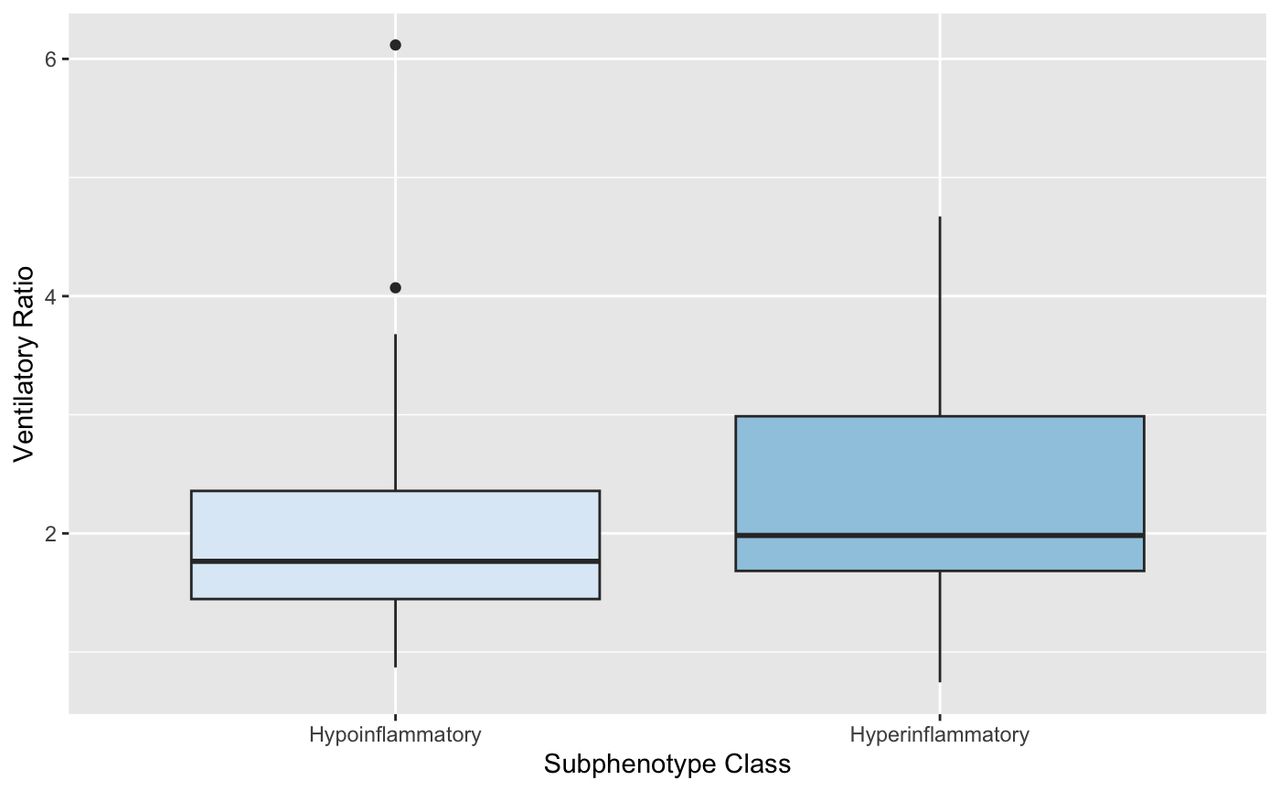
Get full access to this article
View all access options for this article.