




Abstract
Background:
Awake prone positioning (APP) has been increasingly used in patients with COVID-19 induced hypoxemia. However, the impact of combining high-flow nasal cannula (HFNC) and CPAP with APP on ventilation distribution remains unclear. We aimed to use electrical impedance tomography (EIT) to assess the ventilation distribution in adult healthy subjects receiving APP with HFNC and CPAP under different settings.
Methods:
A randomized crossover study was conducted to enroll adult healthy subjects upon approval from the institutional review board. The participants received three respiratory support modalities under APP or supine position (SP) in a predetermined random order: 1) HFNC (Airvo2) at 30 vs 60 L/min; 2) high-velocity therapy (HVT) at 20 vs 40 L/min; 3) CPAP at 5 vs 10 cm H2O. Each device/setting was used for 20 mins with a 3-5 min break in between. The region of interest (ROI) were compared between the two settings using independent t-tests or Mann-Whitney tests.
Results:
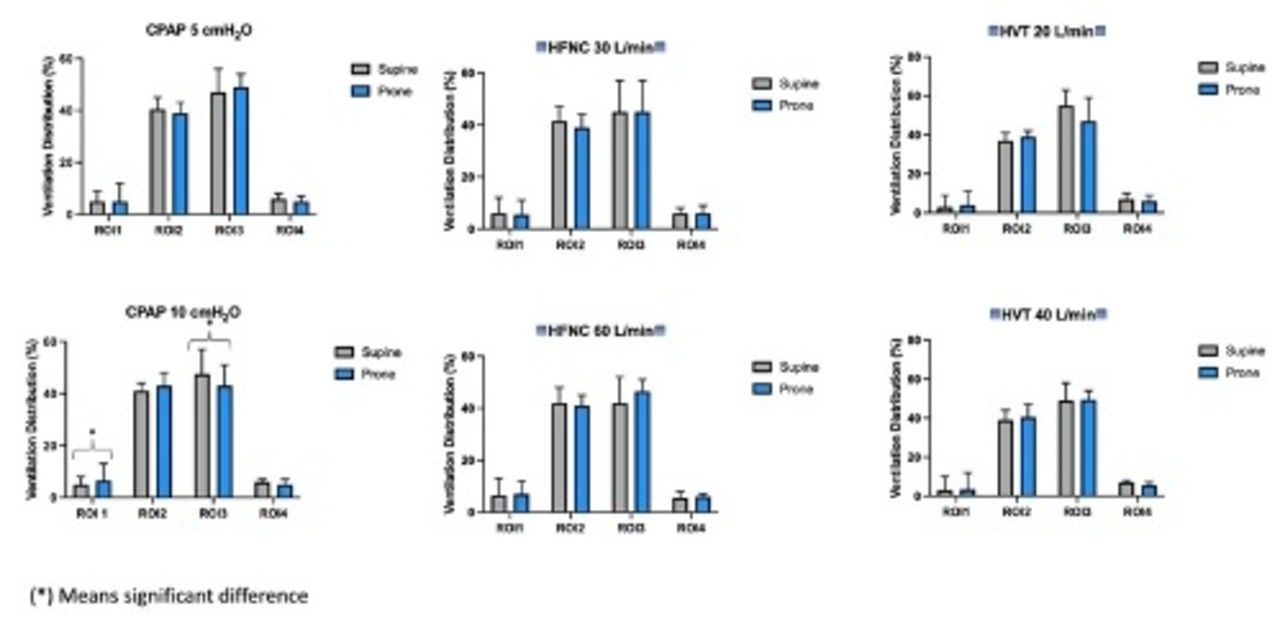
Twenty subjects (7 female) were consented and enrolled, age 31.4 ± 9.3 years, with BMI of 25.4 ± 4.3 kg/m2. No significant differences were found between APP and SP, regardless of the respiratory support modalities and settings, except for CPAP at 10 cm H2O. At this setting, the ROI in the upper ventral area (ROI 1 layer) increased significantly from SP to APP (5 [1,8] vs 6.5 [4,13]%, P = .05), while there was a significant reduction of ROI in the upper dorsal area (ROI 3 layer) (47.5 [43,57] vs 43 [38,51]%, P = .047). Tidal volume also significantly decreased at CPAP 10 cm H2O after APP (688 ± 186 vs 544 ± 150 mL, P = .028). No significant differences in ROIs and tidal volumes were found between HFNC and HVT or between HFNC and CPAP, regardless of the settings and positions.
Conclusions:
In adult healthy subjects, combining APP with HFNC, HVT, or CPAP at 5 cm H2O did not result in significant changes in ventilation distribution. However, with CPAP at 10 cm H2O, APP led to a significant shift in ventilation from the dorsal area to the ventral area, accompanied by a reduction in tidal volume.
Study design ROI Changes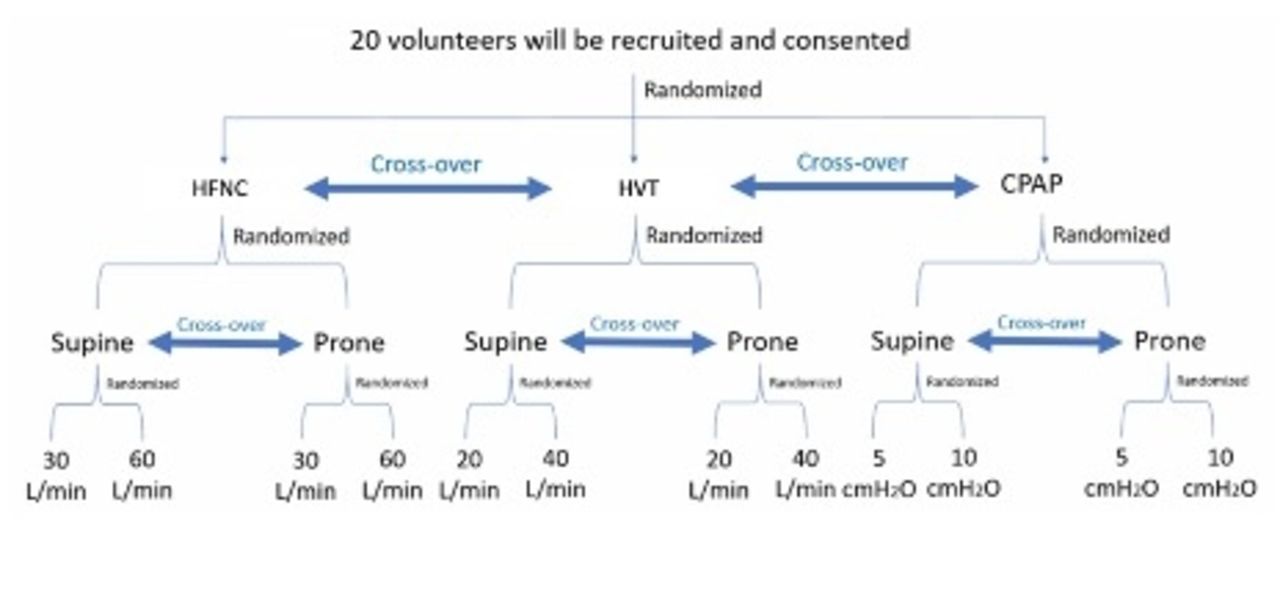
Get full access to this article
View all access options for this article.