




Abstract
Background:
The respiratory care department at UC San Diego Health had been utilizing an annual skills fair to implement training and education for our staff for many years. Skills fairs were scheduled classes (typically off-site) that included many different topics and competency checkoffs outside our therapists’ normal work schedules. Due to the ever-expanding size of the respiratory care department, we experienced increasing difficulty in planning these events. These difficulties included but were not limited to work schedule coordination, room/facility availability, and more prominently financial restraints. For these reasons, we implemented a new Respiratory Refresher program. These refreshers are essentially a deconstructed version of our skills fair, with education broken up into smaller modules and spread throughout the calendar year. This program has enabled us to deliver up-to-date educational information to our staff, perform interactive demonstrations, and complete required training competencies while our staff is on-shift, eliminating the need and cost of scheduling outside classes.
Methods:
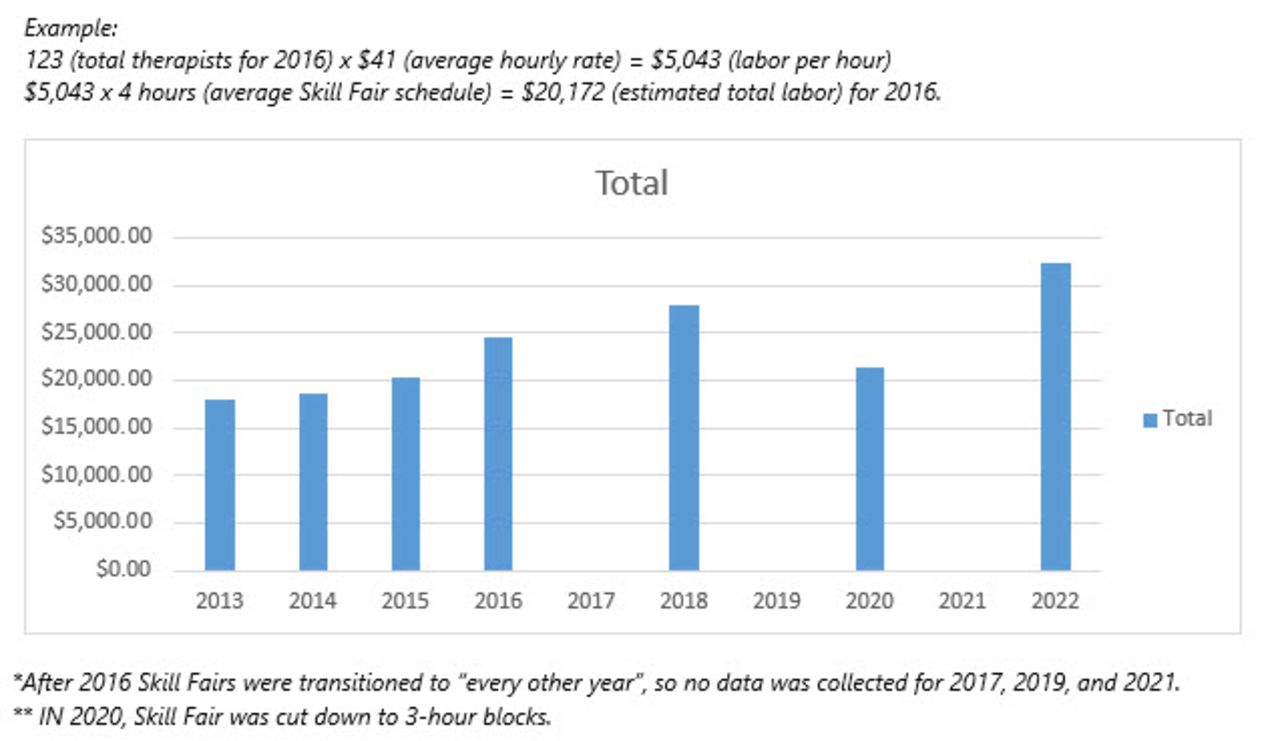
We compared labor expenses over seven years to show an estimated cost of conducting skill fairs. To determine labor costs, we multiplied the number of staff therapists during a given year by the average of their hourly rate. Then, we multiplied that cost by the number of hours spent on these events.
Results:
Over the last seven years, the average labor costs for skill fairs was approximately $19,070. This average amount would be immediately saved by moving entirely to the Respiratory Refresher model versus scheduled, in-person training.
Conclusions:
The Respiratory Refresher program has and will continue to enable us to conduct all RT training and competency certifications on shift, eliminating potential scheduling restraints, and the need for room/facility availability, thereby reducing our total labor expenses. We will continue to evaluate this program and make the necessary changes to improve the quality and value of our educational endeavors.
Get full access to this article
View all access options for this article.