




Abstract
Background:
Continuous albuterol nebulization with heliox has been reported to improve aerosol delivery compared to oxygen during mechanical ventilation and high-flow nasal cannula (HFNC). However, the optimal setup for administering continuous albuterol with heliox remains unclear, especially for pediatrics. We aimed to evaluate the efficiency of continuous albuterol delivery with heliox using different nebulizers and techniques for pediatric patients.
Methods:
A pediatric manikin with realistic airway anatomy was connected to a dual-chamber model lung, driven by a ventilator to simulate spontaneous breathing (tidal volume 100 mL, breathing frequency 20 breaths/min, inspiratory time 0.91 s) (Figure 1). Continuous albuterol (20 mg/h) was delivered with heliox (80/20) in three setups: 1) mini-HEART nebulizer driven by oxygen at flow of 3 L/min, and a valved reservoir with 11 L/min heliox attached to a y-piece connecting to a partial rebreather aerosol mask; 2) vibrating mesh nebulizer (VMN) placed at humidifier inlet of HFNC (Optiflow) with heliox flow of 11 L/min (manikin’s mouth sealed); 3) VMN placed via a T-piece between a valved reservoir bag with 11 L/min heliox and a partial rebreather aerosol mask, using a loose and tight-fitting mask. Heliox of 70/30 was tested with VMN and loose fit mask. Albuterol was delivered continuously to the nebulizer via an infusion pump at a dose of 8 mL (20 mg)/h for each 20-min run (no. = 5). A collecting filter placed between the manikin’s trachea and model lung was removed, drug eluted and assayed with ultraviolet spectrophotometry (276 nm).
Results:
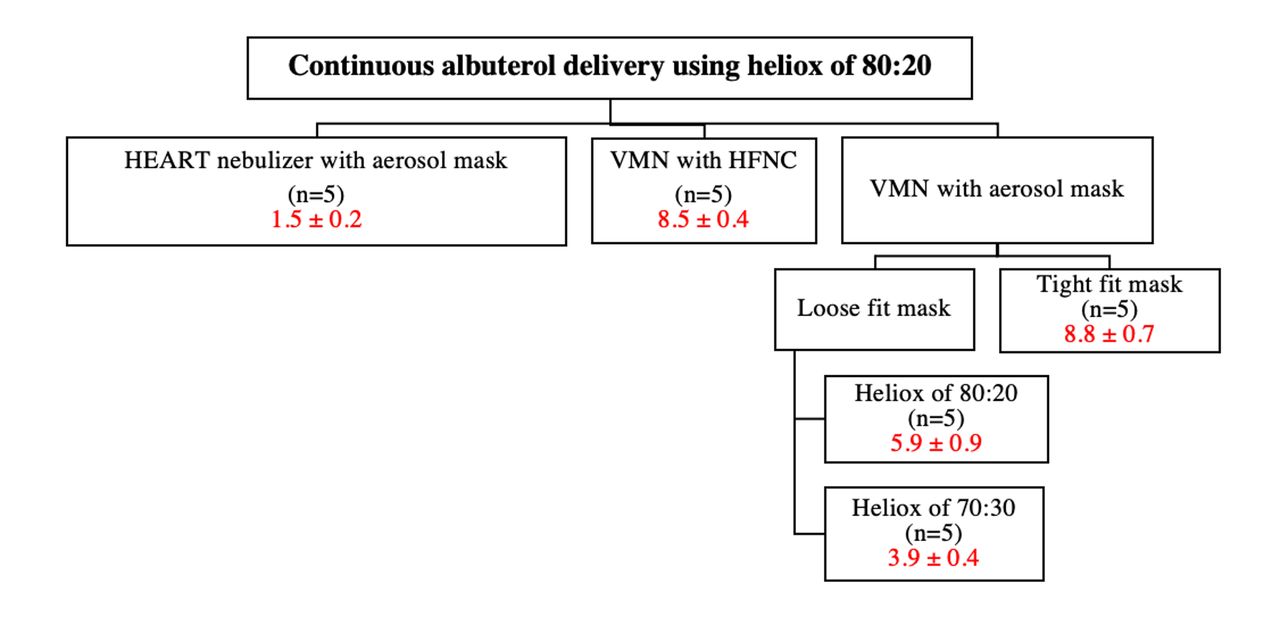
The percent of dose inhaled (mean ± SD) is shown in Figure 2. Heliox administration of albuterol using VMN either with HFNC or tight-fitting valved aerosol mask achieved the highest inhaled dose. Loose fitting masks delivered a lower inhaled dose and mini-HEART set up provided the minimal aerosol deposition.
Conclusions:
Administration of continuous albuterol using 80/20 heliox by VMN and HFNC provided higher dose with minimal potential discomfort for the patient.
A. Experiment set up; B. Mini-HEART nebulizer and a valved reservoir attached to a Y-piece connecting to a partial rebreather aerosol mask; C. Vibrating mesh nebulizer (VMN) placed at humidifier inlet of HFNC (Optiflow) with manikin’s mouth sealed; D. Loose partial rebreather aerosol mask with VMN placed via a T-piece between a valved reservoir bag; E. Tight sealed partial rebreather aerosol mask with VMN placed via a T-piece between a valved reservoir bag. Flow chart of the study design with the result for each condition presented as mean±SD%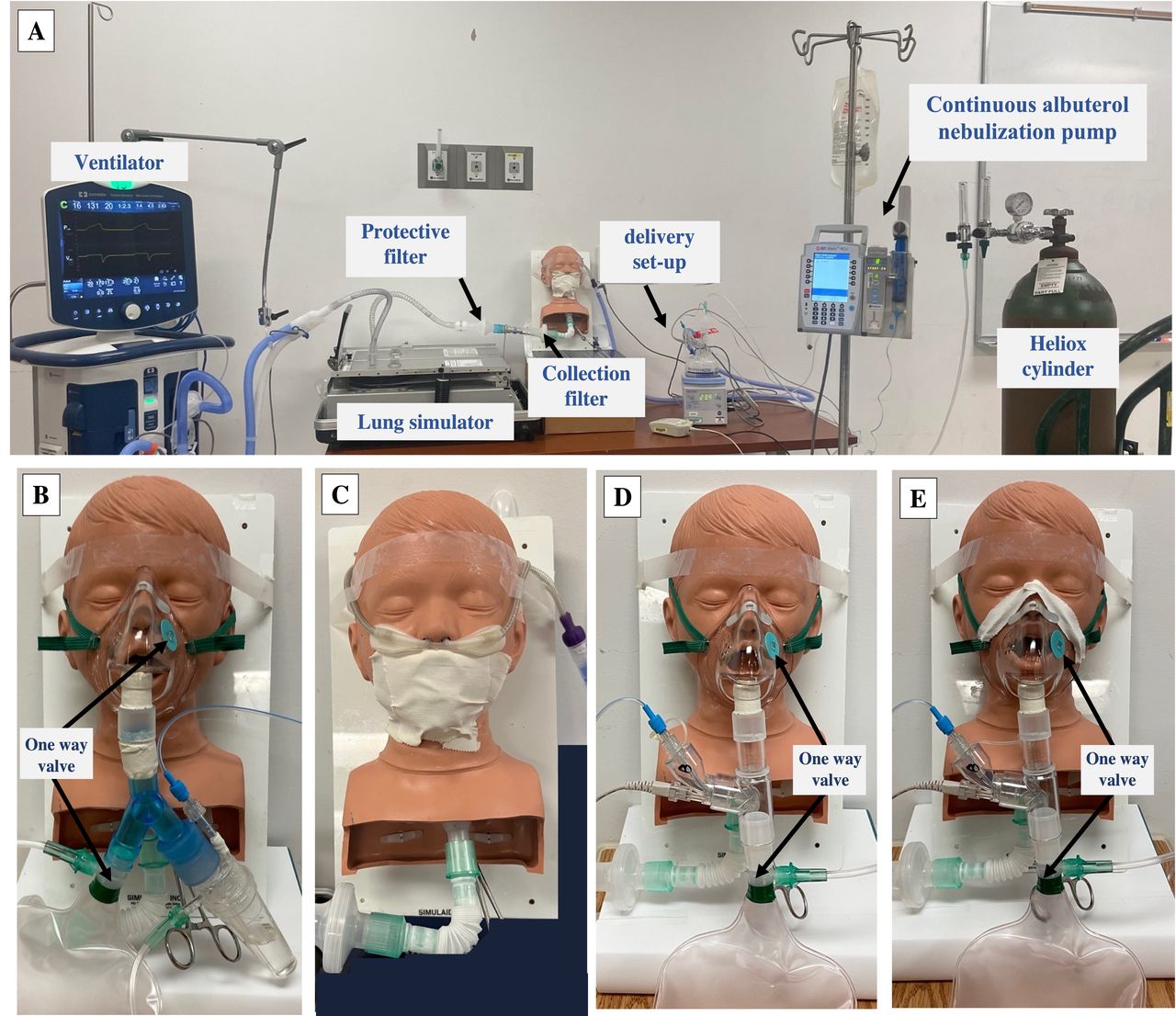
Get full access to this article
View all access options for this article.