




Abstract
Background:
This study aimed to assess the feasibility of localizing the competencies for entry-level respiratory care professionals from the American Association of Respiratory Care (AARC) in Taiwan.
Methods:
The researchers translated the AARC competencies into a questionnaire and distributed it to respiratory therapists, supervisors, and medical directors in Taiwan. The questionnaire measured the importance, feasibility, suitability for local culture, and timing of implementation for each competency using a 4-point Likert scale.
Results:
A total of 41 experts participated in the study, including 29 respiratory therapists and 12 medical consultants or physicians. The results showed that the respondents considered the AARC competencies important and feasible, with high agreement rates. The median agreement rate for importance was 98%, and for feasibility, it was 97%. However, the localization of performing tracheal intubation received lower agreement at 56%, indicating the need for further consideration for this specific competency. Additionally, the study found that while most respiratory therapy majors were completed in school, 13% of majors required additional training after employment to acquire advanced abilities.
Conclusions:
Overall, the findings suggest that the majority of experts in Taiwan agree with following the AARC competencies for entry-level respiratory care professionals. However, the competency of performing tracheal intubation requires further attention. These insights are valuable for establishing competency-based education in respiratory care in Taiwan.
Importance, Feasibility, and Suitability in Taiwan of AARC Competences of Entry-level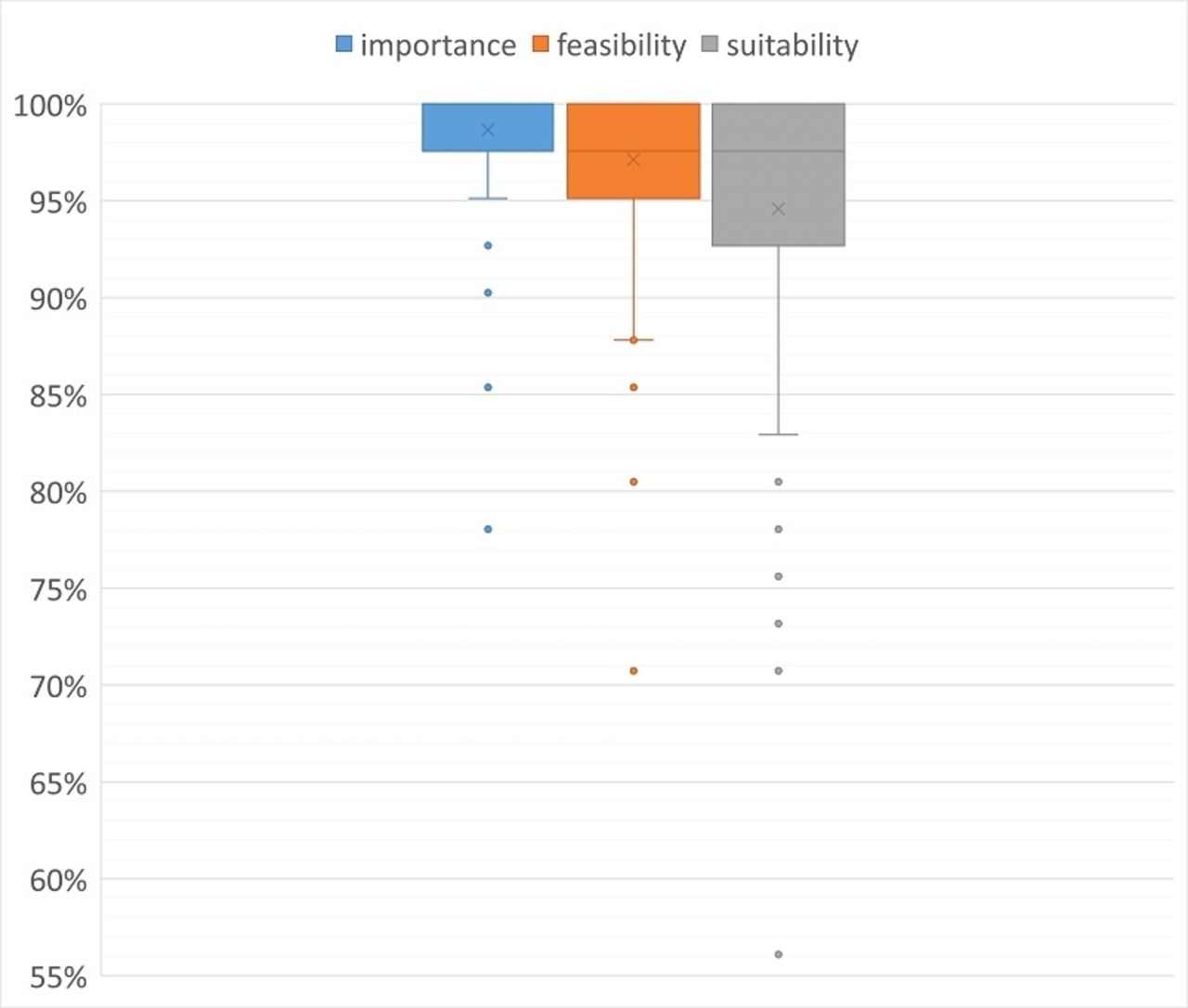
Get full access to this article
View all access options for this article.