




Abstract
Background:
The abuse of nicotine through cigarette smoking is the prime cause of preventable death in the United States. Globally 8.7 million people succumb every year from tobacco-associated issues. There are a multitude of performed and investigated interventions for smoking cessation including pharmacologic, non-pharmacologic, and combination interventions with the goal of achieving tobacco abstinence. In our investigation, we sought the answer to: Does the delivery of current and emerging smoking cessation interventions have an impact on the effectiveness and success of becoming a non-smoker?
Methods:
After obtaining IRB approval an extensive literature review was performed utilizing CINAHL, PubMed, Google Scholar, Health Reference Center-Academic, databases. Inclusion criteria for this study focused on smoking cessation interventions and their impact on the success of becoming a non-smoker, utilizing a systematic review to define Populations, Intervention, Comparison, and Outcomes (PICO) parameters. A meta-analysis consisting of the statistical evaluation of smoking cessation research studies was performed to combine the results of comparable studies and clinical trials.
Results:
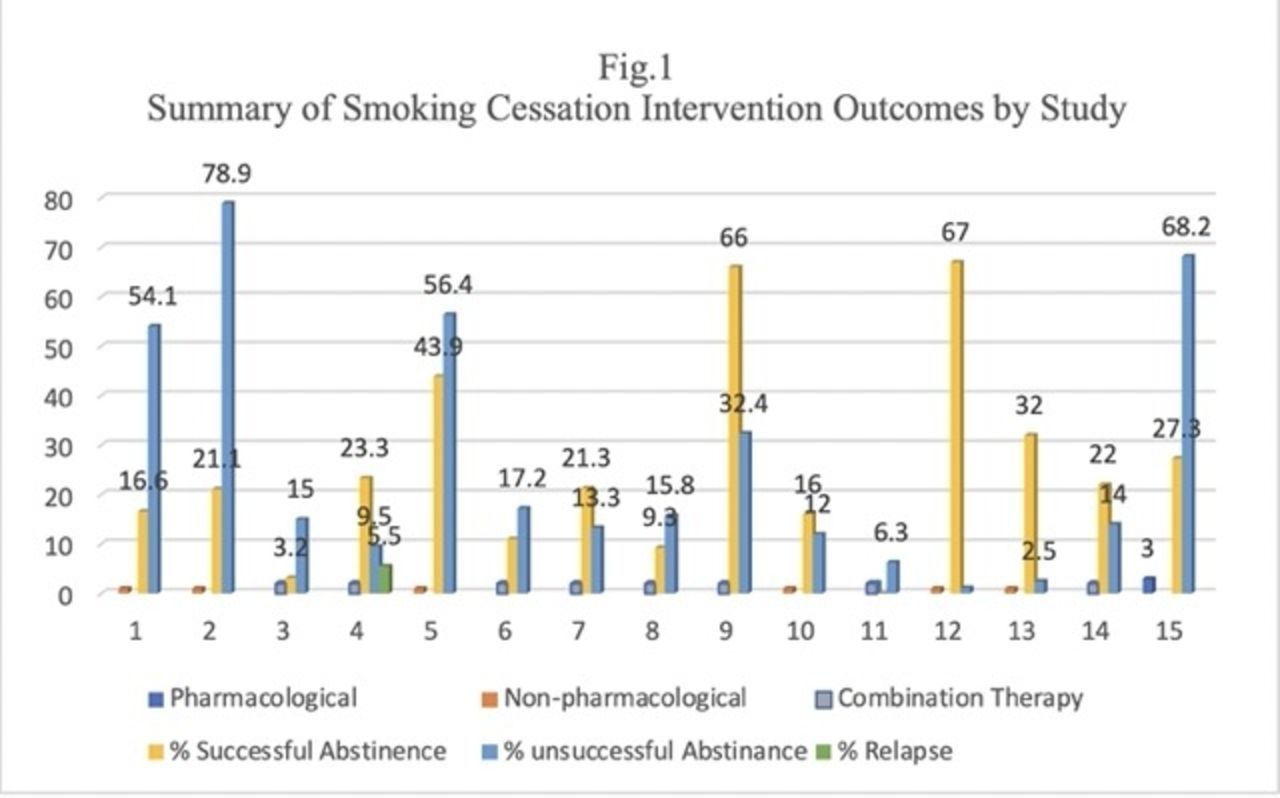
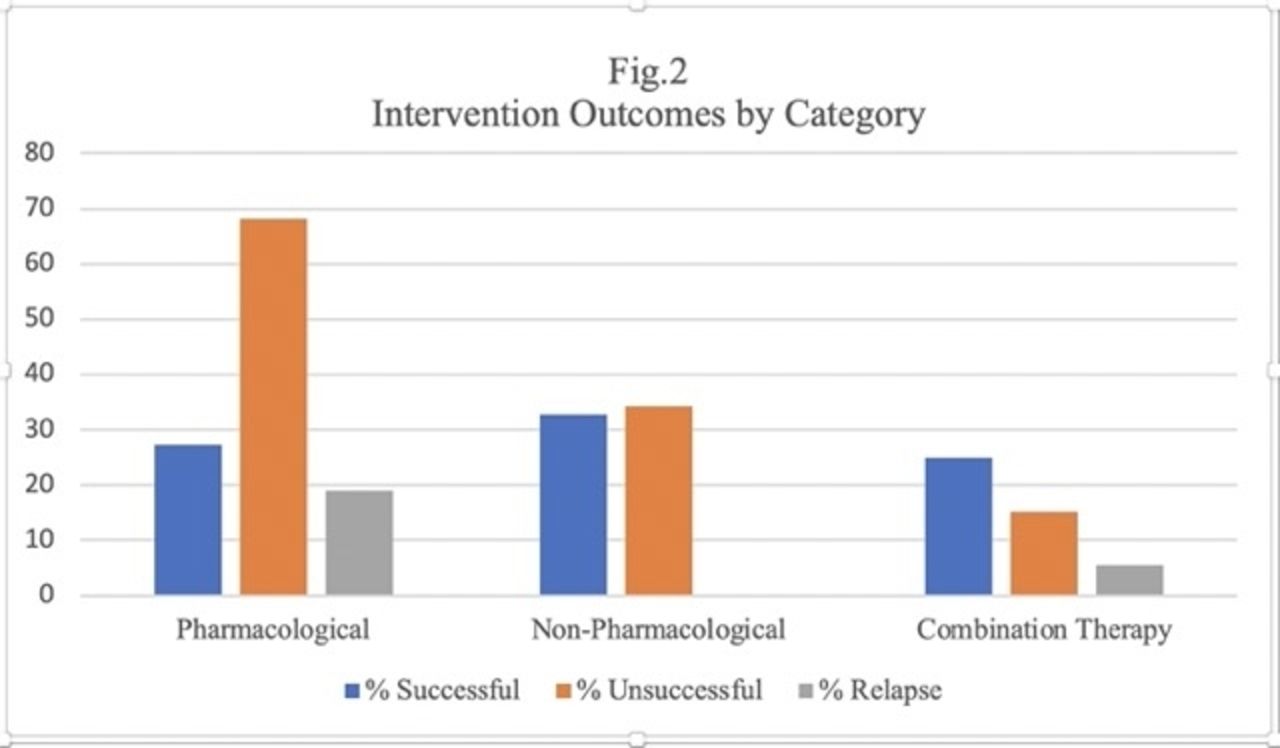
Of the studies examined, (117,215), 26 were defined as appropriate for inclusion, with 14 studies initially selected (12 randomized controlled trials and 3 observational studies) met the inclusion criteria. A total of 265,874 participants were included within this meta-analysis. The reviewed interventions consisted of pharmacological, non-pharmacological, and combination interventions. Of the reviewed studies, combination intervention success rates for abstinence were 25%, (>1 year), Although success rates for pharmacological interventions revealed a statistical significance with an abstinence success rate of 27.3%, our meta-analysis revealed an impressive 32.8% abstinence success rate for non-pharmacological interventions.
Conclusions:
This investigation sought the answer to current smoking cessation interventions and if the method of delivery and experiences had an impact on the effectiveness and success of becoming a non-smoker. This investigation revealed the dominance of non-pharmacological interventions over other individual smoking cessation interventions to have the most impact on smoking abstinence. Since this is a pilot investigation, more research may be needed to yield a higher understanding of emerging interventions.
Get full access to this article
View all access options for this article.