




Abstract
Background:
Quality clinical education is essential in respiratory therapy education. However, many respiratory therapists who serve as clinical instructors lack formal pedagogical training and most respiratory therapy students have not previously engaged in clinical learning. It is known that misaligned expectations may cause conflict, dissatisfaction, anxiety, and attrition. The purpose of this study was to examine the expectations of clinical instructors and students regarding the Cognitive Apprenticeship Theory’s (CAT) teaching methods. University of North Dakota IRB approval was obtained.
Methods:
For this quantitative survey study, a modified version of the Maastricht Clinical Teaching Questionnaire (MCTQ), a survey based on CAT teaching methods created by Stalmeijer et al was used. An invitation to participate was sent to and disseminated by program directors of entry level respiratory therapy programs accredited by the Commission on Accreditation for Respiratory Care (CoARC) in June of 2021. A total of N = 248 responses from clinical instructors (n = 85) and students ( n = 163) were collected and analyzed using descriptive statistics, independent t-tests, and Pearson correlation coefficient.
Results:
Results indicate that clinical instructors and students expect the teaching methods of the CAT to be used (average percentage of agreement 98.8% and 95.9%, respectively). Clinical instructors had statistically significant (P < .05) higher expectations than students regarding the expectations for clinical instructors to demonstrate how to perform skills (P = .019), adjust their teaching activities to the level of the students’ experience (P = .001), and to ask students questions to increase the students’ understanding (P = .006). No significant differences were found when comparing gender and type of credential held by the clinical instructor. A statistically significant positive correlation was found between the program degree level and the level of education completed by the clinical instructor. Statistically significant negative correlations were found between clinical instructor experience and the expectations for them to encourage students to formulate and pursue learning goals.
Conclusions:
The findings clarify the expectations of clinical instructors and students regarding clinical education in respiratory therapy. Furthermore, the results support the use of the CAT teaching methods in the field of respiratory therapy to meet clinical teaching and learning expectations.
This figure outlines the domains of the Cognitive Apprenticeship Theory and was created based on the publication of Collins et al.2
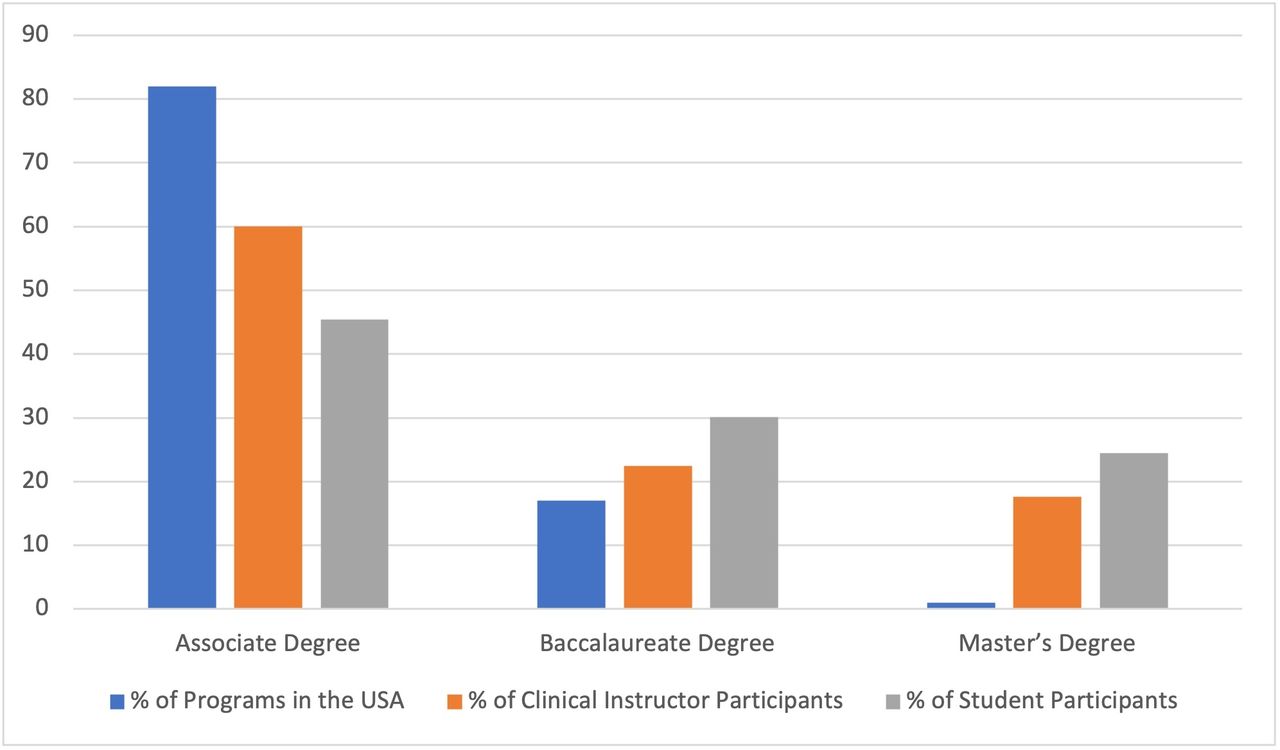
This figure displays the percentage of entry-level associate, baccalaureate, and master’s degree programs and study participants.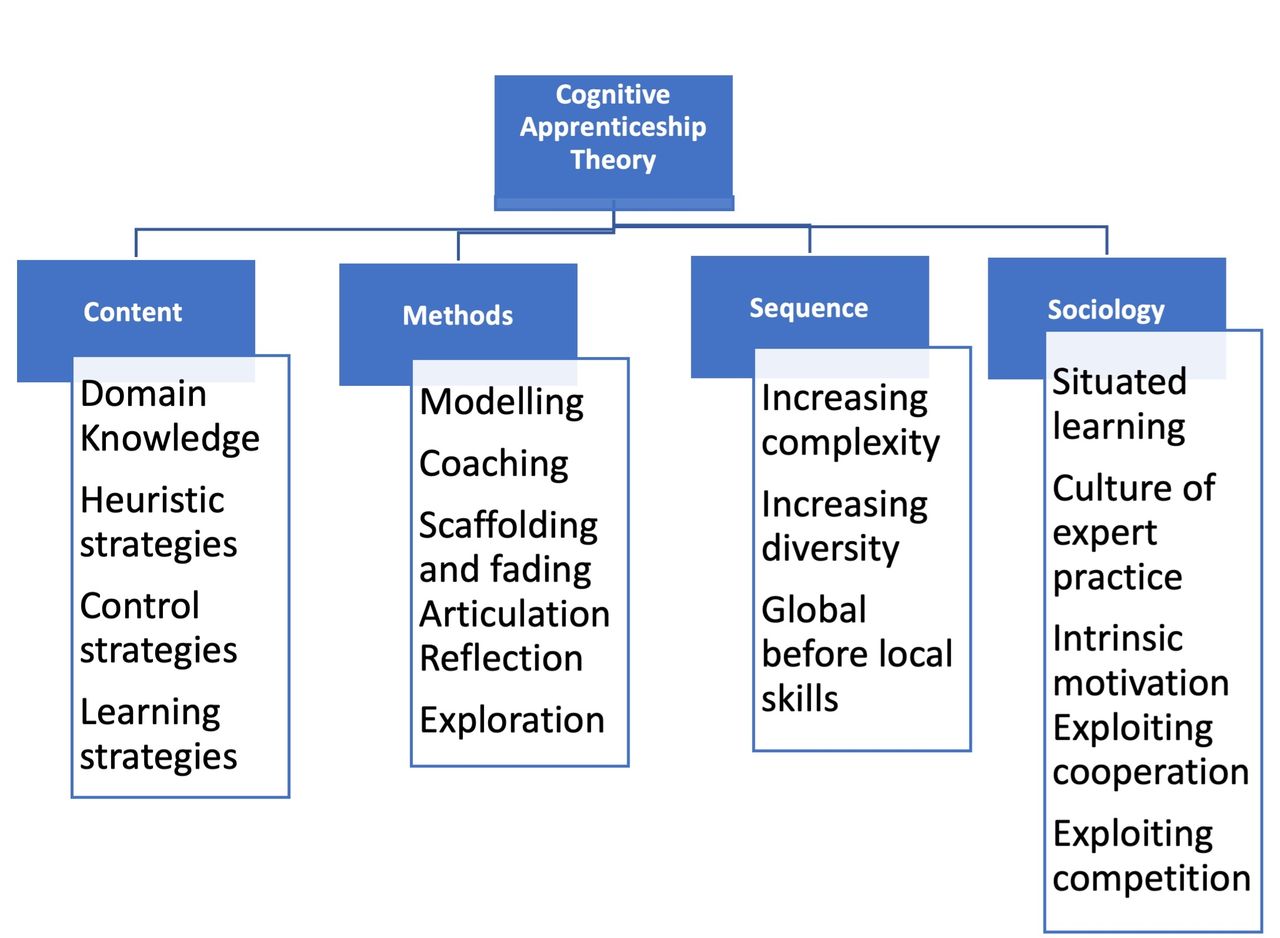
Get full access to this article
View all access options for this article.