




Abstract
Background:
COPD poses a significant burden on healthcare in the US, with inadequate patient education leading to delayed exacerbation recognition and increased hospitalizations. This study aims to incorporate technology, such as Bluetooth monitoring devices, to address early symptom detection and reduce medical utilization. Although Intermountain Healthcare’s Pulmonary Disease Navigator program provides education/monitoring after discharge, early exacerbation signs are not easily recognized or monitored.
Methods:
This quality assurance study evaluated home-monitoring devices and Bluetooth technology for their effectiveness in early exacerbation recognition and reducing medical utilization. The Intermountain Healthcare and Boise State University Institutional Review Boards approved the study. Participants with Bluetooth-capable smartphones were recruited from various healthcare settings. Four devices were selected based on reliability and ease of use: MIR SmartOne, In-Check Dial, Pulse Oximeter, and a Data Journal. Weekly data on respiratory parameters were collected and analyzed to identify early exacerbation signs. Participants received education on COPD and device usage. Statistical analysis compared pre- and post-intervention medical utilization rates using a paired t-test to assess the impact of home-monitoring technology on reducing medical utilization. The statistical analysis assessed the medical utilization rate from the electronic medical record. A paired t-test compared pre- and post-intervention medical utilization rates to determine if the home-monitoring technology reduced medical utilization rates.
Results:
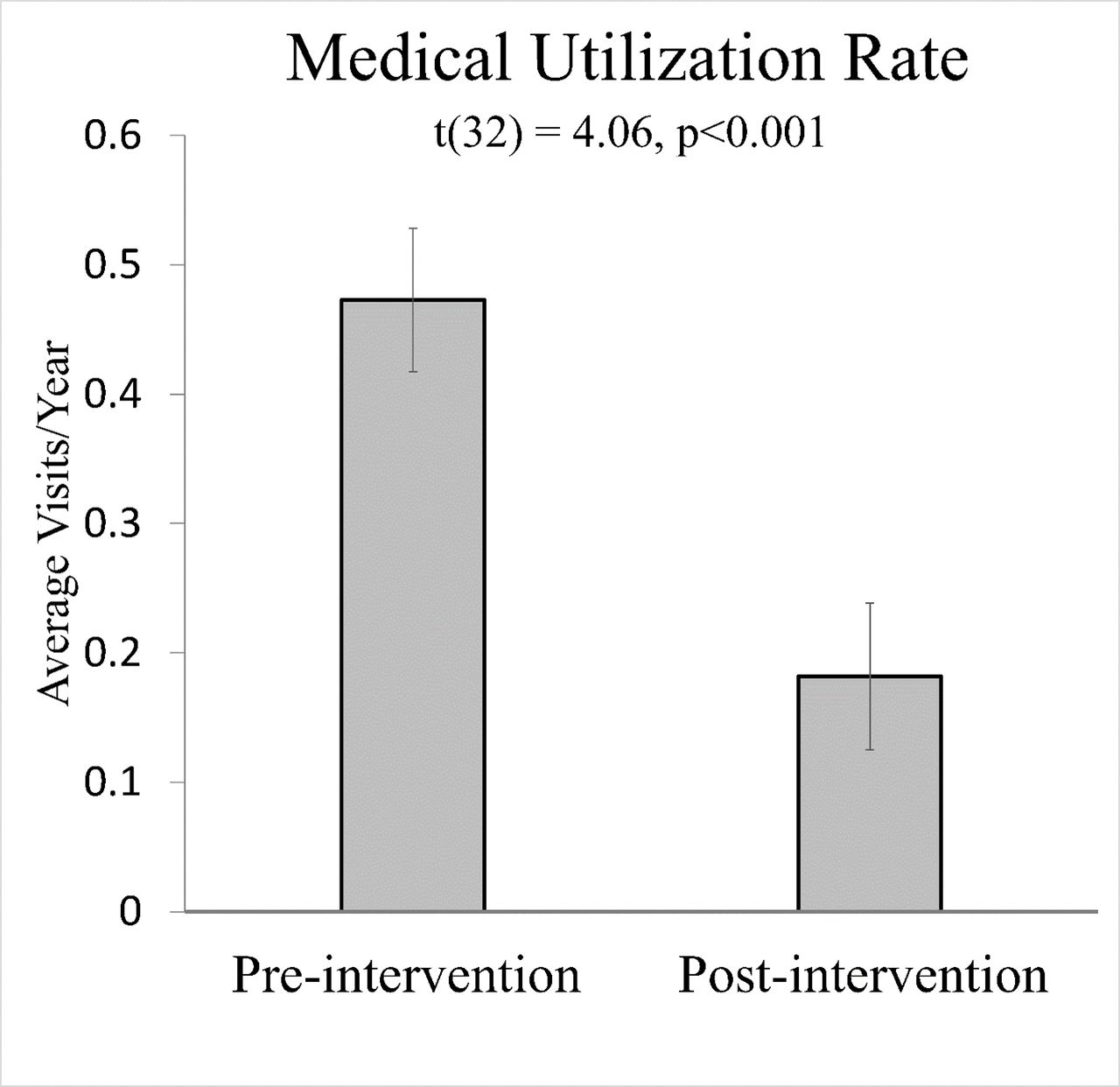
Forty-six participants diagnosed with COPD agreed to participate for 6 months, and 32 (70%) completed the study. Only 14 voluntarily withdrew from the study, did not complete it, or had more than 50% of their data missing. There was a significant difference in the medical utilization rate pre-intervention (M = 0.47, SD = 0.32) and post-intervention (M = 0.19, SD 0.33): t(32) = 4.06, P < .001, which suggests that the technology significantly decreased the medical utilization rate for those who completed the study.
Conclusions:
The study observed that COPD patients effectively utilized home-monitoring technology to significantly reduce medical utilization rates by identifying early exacerbation warning signs. These findings emphasize the efficacy of technology in COPD management and stress the importance of patient and healthcare provider education on these home monitoring tools.
Baseline Subject Characteristics Comparison of Pre-intervention and Post-intervention Medical Utilization Rate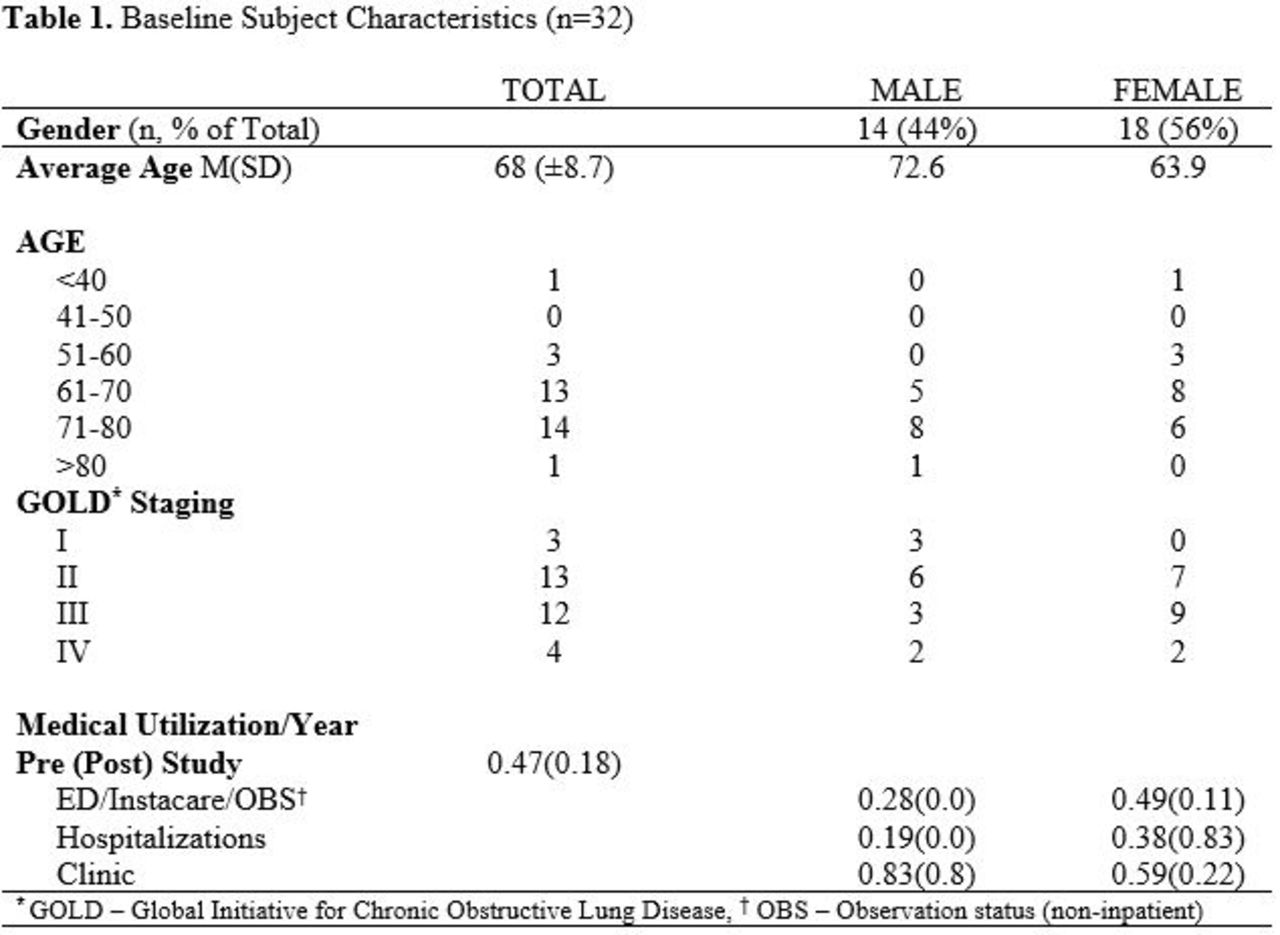
Get full access to this article
View all access options for this article.