




Abstract
Background:
Simulation-based education is thought to be more effective than traditional teaching. Recent studies have described the benefits of simulation-based training on healthcare professional performance in several clinical areas, but not many studies have researched the benefits of simulation training in COPD and tracheostomy education. Therefore, this study was composed to assess the approach of mannequin simulation-based training education as a method to provide an interactive learning experience for RTs, which could in turn translate into better management performance.
Methods:
This study was approved by the Institution Domain Specific Review Board (NHG DSRB 2020-01138). A pilot study of the COPD-TTP was implemented targeting RTs at a large tertiary hospital from March 2021 to July 2021. The study narrowed down on focusing simulation for tracheostomy care on COPD patients due to a high prevalence of tracheostomy in COPD patients; managing COPD and tracheostomy has shown to be a major concern to most clinicians after a pre-interview on respiratory education topic was performed. RTs were randomized into control and intervention groups and presented with the COPD clinical scenarios of patient assessment management and tracheostomy scenarios using the difficult airway high-fidelity mannequin. Before the simulation training, a 25-question theory test covering COPD and tracheostomy assessment principles was administered. Participants then underwent COPD-TTP simulation assessments, and a debrief was held at the end of the session.
Results:
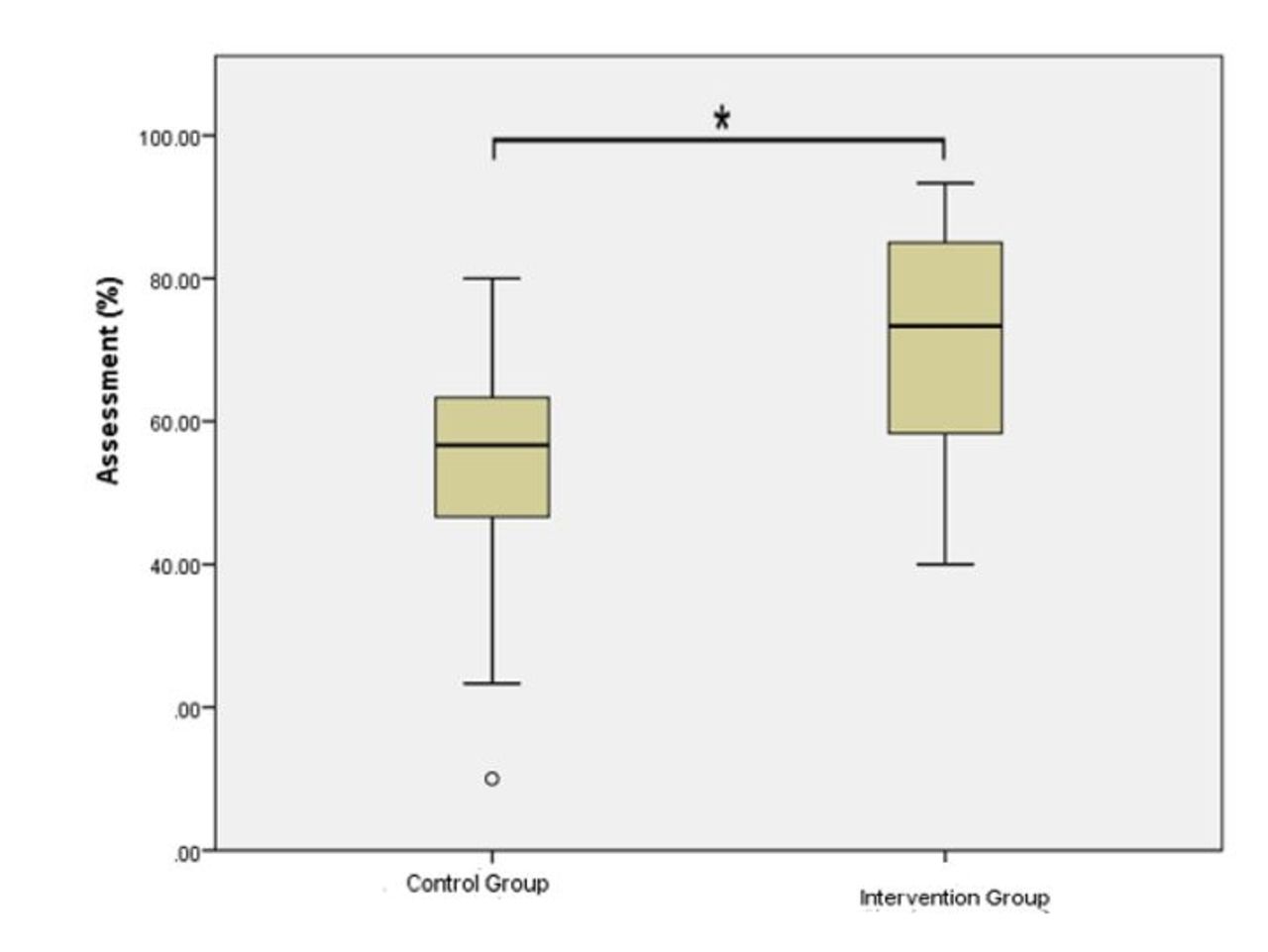
26 RTs participated in the COPD-TTP program. As for demographics, a majority were female (n = 15 [57.7%]), and 8 (30.8%) RTs had less than five years of working experience. The median (range) of RTs’ experience was 6 (1-11) years. The intervention group has a significant difference in the mean for both theory test scores (82.3% vs 73.1%; P = .044) and overall psychomotor skills competency (74.5% vs 61.2%; P = .018) as compared to the control group. The results demonstrated a significant difference in scores in the intervention training group that underwent COPD-TTP, supporting the proposed hypothesis. Table 1 provides the full overview of the result and the curriculum of COPD-TTP.
Conclusions:
This study demonstrated that using E-Learn is essential coupled with having hands-on and open communication experiences, enhances the educational value of web-based education in training psychomotor skills, and increases in knowledge and confidence.
The curriculum of COPD-TTP is to provide participants with the basic management of tracheostomy management, care management of COPD patients and response to unforeseen situations in COPD patients. Participants in the intervention group will need to attend an hour class on COPD-TTP taught by trained educators. Participants in the control group will not receive COPD-TTP but are required to participate in theory tests and simulation assessments. * Denotes P-value <0.05 SD - Standard Deviation
Figure 1: Box-Plot of the median overall assessment in % for control and intervention group View all access options for this article.Table 1: Average test score for each simulation procedure
Control Group (n=12)Mean (SD)
Intervention Group (n=14)Mean (SD)
P-value
Theory Test
73.1% (4.8)
82.3% (3.3)
0.044*
Psychomotor Skills Assessment (Using High-Fidelity Mannequin)
Basic Tracheostomy Care and COPD management (E.g. COPD Patient Assessment, Therapeutic Procedures to COPD patients, Tracheostomy Stoma Care, and Tracheostomy Accessories Set-up)
69.5% (7.2)
80.4% (3.4)
0.028
Emergency Tracheostomy Management (E.g. Tracheostomy Tube Obstruction, Haemorrhage, and Dislodgement)
58.3% (4.5)
70.6% (7.4)
0.011
Tracheostomy Weaning Management for COPD patients (E.g. Use of Speaking Valve, and Assessment for Readiness to Wean)
51.2% (8.8)
75.1% (4.2)
<0.001*
Overall Combined Result for Theory Test and All Psychomotor Skills Assessments
Overall
58.2% (8.8)
75.8% (6.7)
0.038*
Get full access to this article