




Abstract
Background:
Carbon dioxide is one of the most potent regulators of cerebral blood flow. Near infrared spectroscopy has been used in neonatal encephalopathy during therapeutic hypothermia to monitor regional cerebral oxygen saturation that can be a proxy of CBF. Impaired cerebral autoregulation following severe hypoxic-ischemic brain injury has been associated with poor neurologic outcome. The aim of this study was to evaluate the correlation between transcutaneous CO2 and markers of cerebral oxygenation including cerebral oxygen saturation and fractional tissue oxygen extraction among infants with neonatal encephalopathy.
Methods:
This prospective observational trial enrolled infants, who received TH for mild to severe NE between October 2019 and June 2022. The pattern of brain injury was evaluated according to an MRI grading system developed by Weeke et al. We identified 2 groups of patients with and without any brain injury based on the assessment of MRI after rewarming. Transcutaneous CO2, rSO2 and bedside physiological data were captured simultaneously by a real-time integrated neuromonitoring system. Fractional tissue oxygen extraction was calculated as: FTOE = (SpO2 – rSO2)/SpO2
Results:
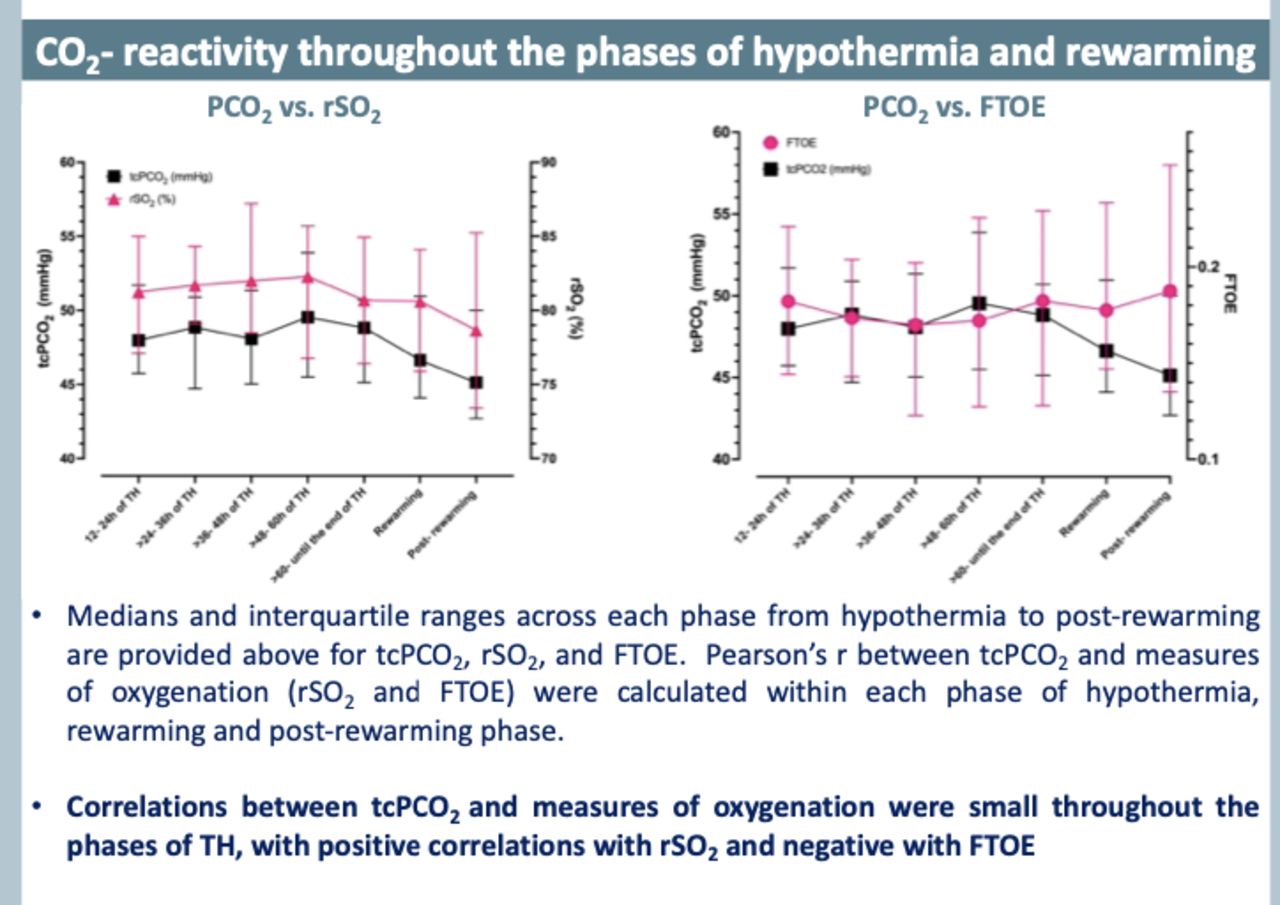
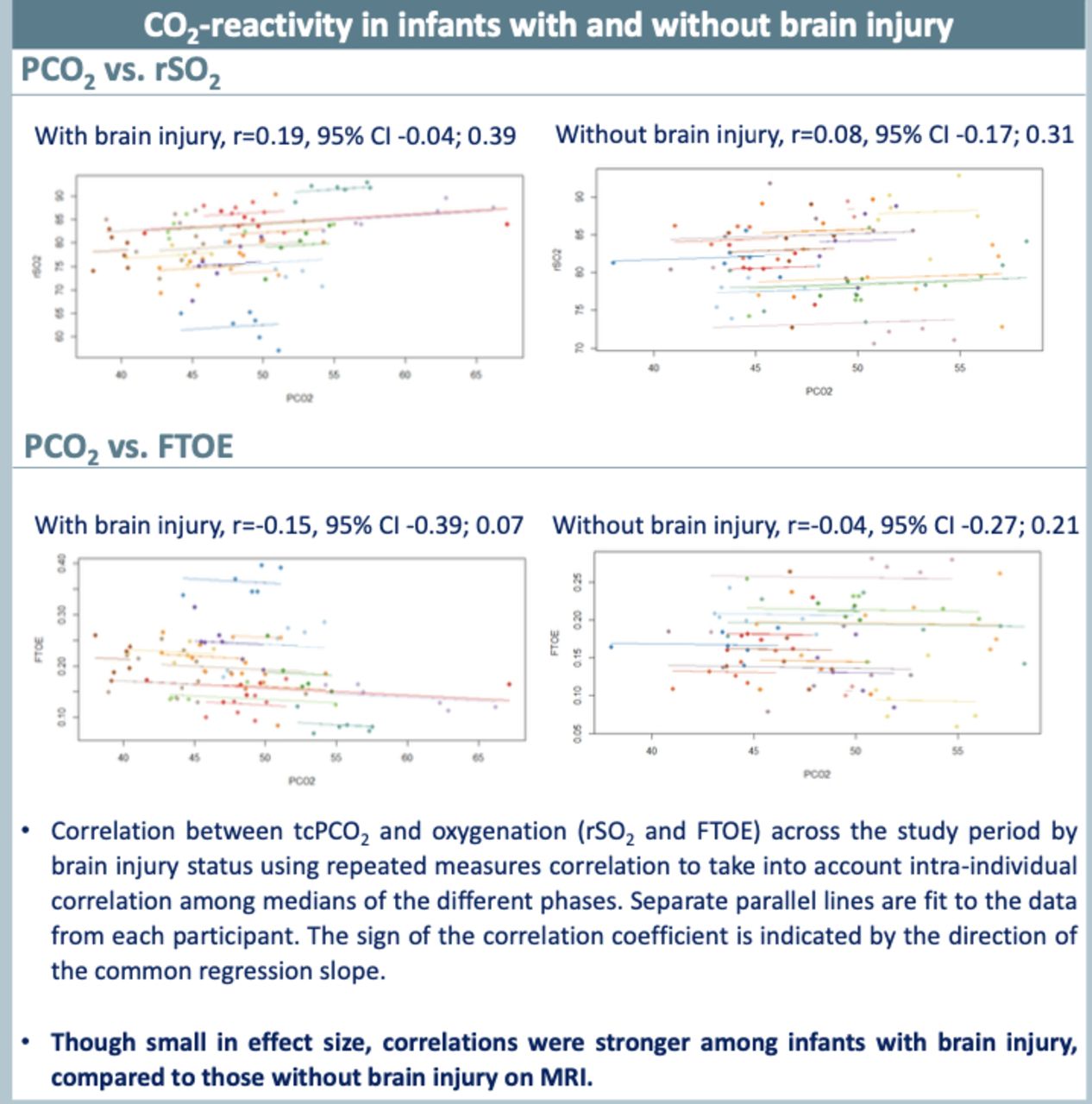
110 infants received TH during study period, out of those 37 infants were enrolled into this prospective study. Serial measurements from 31 patients were available for analysis. Sixteen (51.6%) infants had evidence of any brain injury on MRI. Pearson’s r between PtcCO2 and measures of oxygenation were calculated within each phase of hypothermia, rewarming and post-rewarming phase. Correlations between PtcCO2 and measures of oxygenation were small throughout the phases of TH, with positive correlations with rSO2 and negative with FTOE. Correlation between PtcCO2 and oxygenation across the study period by brain injury status using repeated measures correlation to take into account intra-individual correlation among medians of the different phases. Though small in effect size, correlations were stronger among infants with brain injury, compared to those without brain injury on MRI.
Conclusions:
Correlations detected between CO2 and cerebral oxygenation were modest with a positive correlation with rSO2 and negative correlation with FTOE across the study period. Though small in effect size, the correlation between PtcCO2 and cerebral oxygenation (rSO2 and FTOE) over the study period was greater in magnitude among infants with brain injury compared to those without, among whom the correlation was close to zero.
Get full access to this article
View all access options for this article.