




Abstract
Background:
Asthma is not a single disease but rather a syndrome consisting of various phenotypes. Patients often present with nonspecific symptoms that is marked by clinical heterogeneity, over-lapping immunology, and highly variable response to drug therapy. Asthma should be a diagnosis of exclusion since it shares clinical and pathophysiological features COPD and asthma-COPD overlap syndrome (ACOS).
Methods:
An asthma population health project was initiated with the goal of providing optimal treatment for asthmatic patients within primary care at UC Davis Health. Retrospective chart reviews were completed by two physicians and three RRTs to validate the diagnosis of asthma from the EHR asthma registry. The initial EHR asthma registry identified patients ≥18 years using a health maintenance modifier tool in Epics Healthy Planet for current diagnosis of asthma and having a diagnosis of asthma in either an active problem list, encounter diagnosis, or invoice diagnosis in the patient’s EHR. Validation was performed and modified logics were created to find true asthma patients.
Results:
46,072 patients were identified as having asthma according to the initial EHR criteria. During initial chart reviews pulling 120 randomly selected patients, it was halted early due to the first 25 not having evidence of asthma. Based on these results, a modified asthma logic was created to focus on the sensitivity and specificity rate for this patient population to improve accuracy of diagnosis (Image 1). Subsequent review of EHR showed that there were 5,868 patients using the modified logic, a decrease of 87.3%. Random chart reviews of a small sample of these patients demonstrated 75% validation of asthma diagnosis.
Conclusions:
Establishing the accurate diagnosis of asthma cannot rely on the previous documentation in a patient’s EHR or symptoms alone, as symptoms are nonspecific. The clinical heterogeneity of the disease necessitates the need for objective testing and treatment of commonly found comorbidities. Accurate diagnosis and early optimization of asthma treatment may minimize disease progression and improve outcomes.
Image 1. Modified asthma logic was created to focus on the sensitivity and specificity rate to accuratly identify this patient population.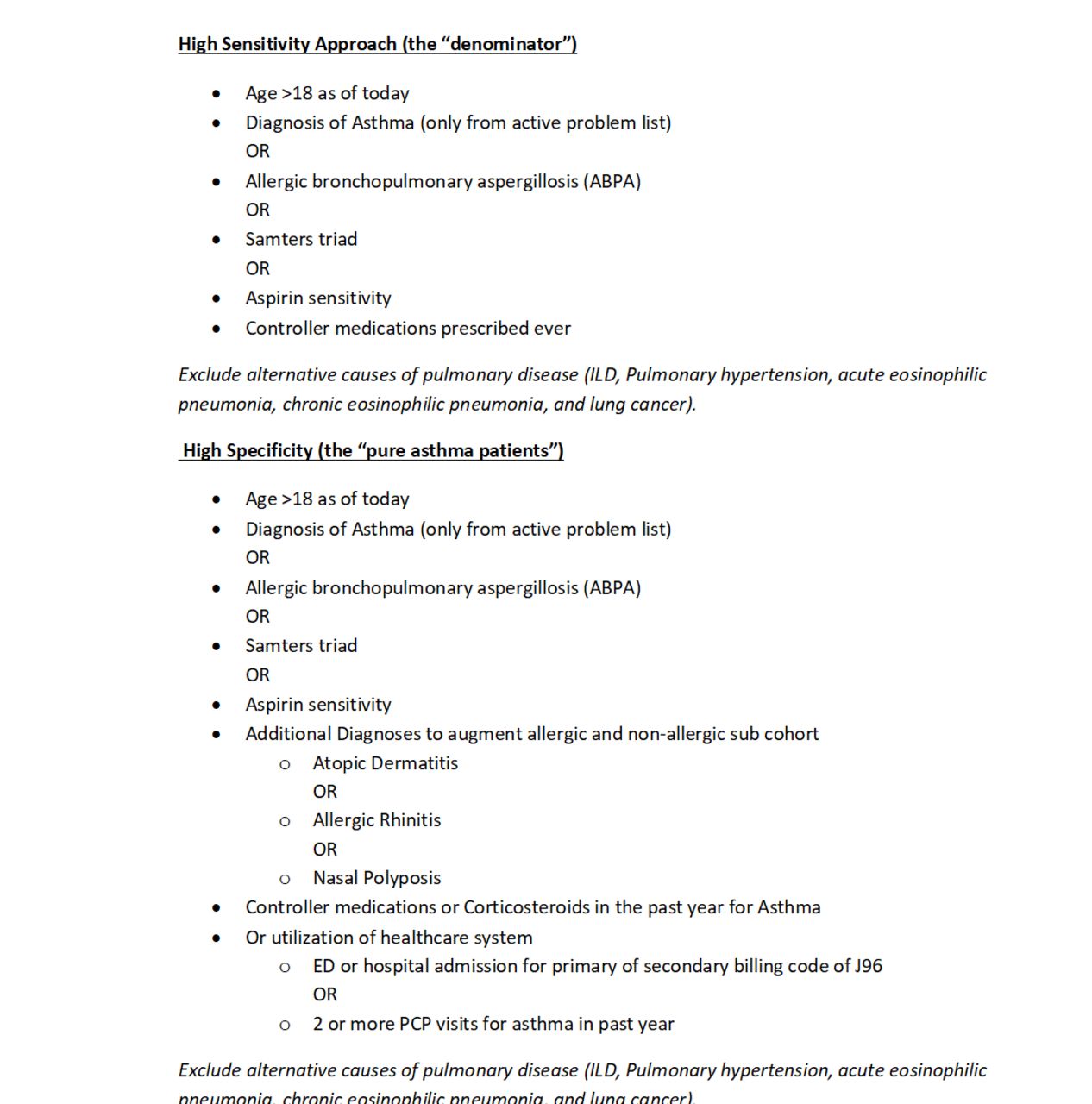
Get full access to this article
View all access options for this article.