




Abstract
Background:
Critically ill infants in the intensive care nursery often require endotracheal intubation for prolonged periods. A complication associated with endotracheal intubation is an unplanned extubation, a dislodgement of an endotracheal tube that is not intentional. Newborn patients may be more prone to unplanned extubations because of prolonged duration of intubation, shorter trachea, uncuffed tubes, challenging securement and use of less sedation. Unplanned extubations in the newborn patient population often contribute to significant morbidity and mortality impacting patient safety.
Methods:
A task force was organized to establish a baseline rate of unplanned extubations in intubated newborn patients. In the process we were able to identify primary reasons leading to this occurrence. Based on the unplanned extubation data we focused our preventative efforts on standardizing endotracheal tube securement, standardizing chest x-ray workflow and job-aid and prevention bundle audits. Specific strategies include retraining respiratory care staff on the primary securement method and introducing of a second securement option for challenging patients; implementation of a mandatory second person available to protect the endotracheal tube whenever a high-risk situation is occurring; implementation of collaborative workflow during chest x-ray procedure which included a visual job-aid with step-by-step instructions on how to safely position the patient. Our goal was a 20% year-over-year reduction in unplanned extubations.
Results:
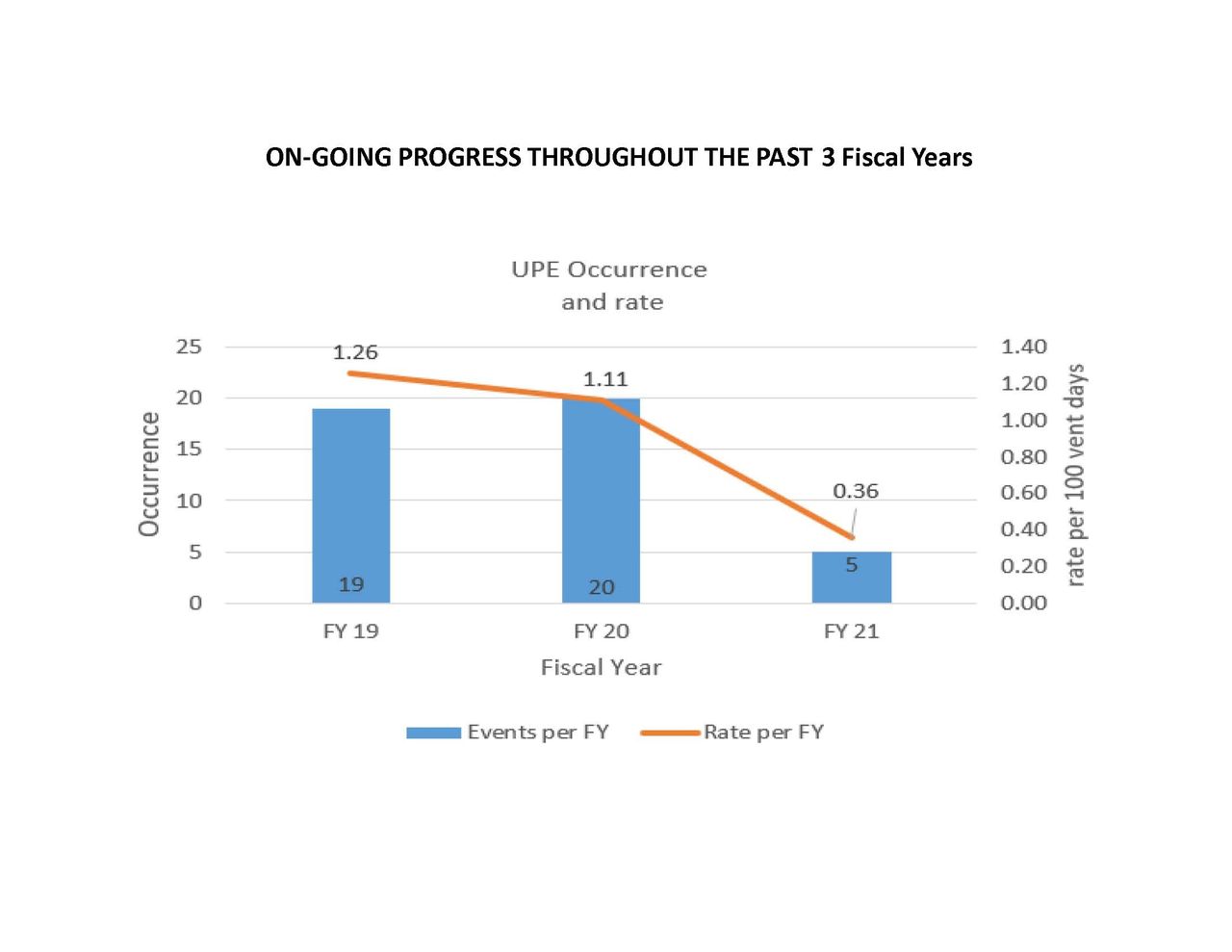
Since initializing this project in fiscal year 19, our fiscal year 21 rate is 0.36/100 ventilator days which is a 63% decrease from the prior fiscal year. The current SPS benchmark is 0.85/100 ventilator days and our personal goal is a rate less than 0.5/100 ventilator days.
Conclusions:
A multidisciplinary approach with a shared common goal, success in process improvement can be achieved. Our ICN Unplanned Extubation Taskforce successfully decreased our unplanned extubation rate, with a significant decline this past year. We will continue to meet monthly in an effort to sustain this lower rate. We will also increase our audits to ensure that staff compliance with the prevention bundle elements, focusing our time and efforts in areas with lower compliance.
Get full access to this article
View all access options for this article.