



Abstract
Background:
Job satisfaction is an important factor in staff recruitment and retention. With the ever-increasing demand for respiratory therapists (RTs), therapist retention and turnover has become increasingly important. Respiratory therapy staff levels began to plummet soon after the COVID-19 pandemic hit in March 2020, creating issues such as employee illness and/or burnout. The purpose of this study was to explore RT job satisfaction and to determine if scope of practice and perceived leadership support affect level of job satisfaction.
Methods:
This study was approved by the IRB. Researchers created an electronic survey based on a review of literature. The research team distributed the survey to RT department managers in the state of Ohio, and then management distributed the survey to the RT staff. Participants in the study were currently employed acute care RTs in the state of Ohio. The survey included demographics and questions concerning the following topics: overall job satisfaction, satisfaction with scope of practice, the impact of leadership on job satisfaction and the desire to remain in the respiratory care field or seek employment elsewhere.
Results:
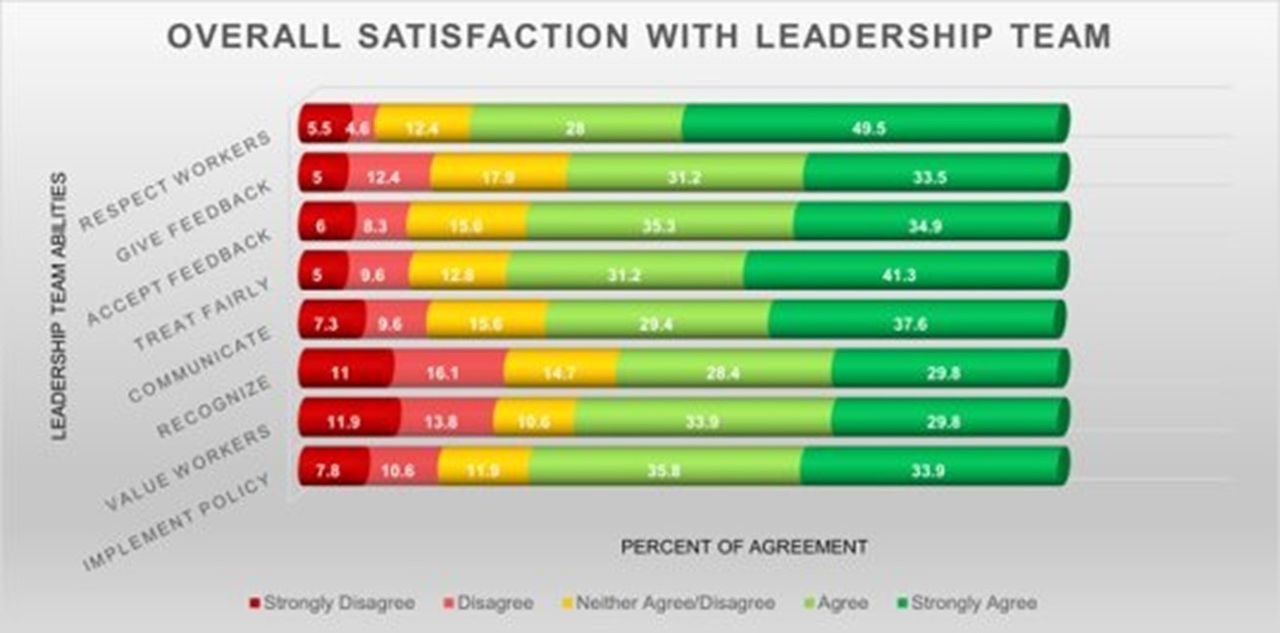
There were 218 complete responses to the survey. Sixty-eight percent of participants indicated they were satisfied or highly satisfied with their role as an acute care RT. In addition, 65.8% indicated they were satisfied or highly satisfied with their current scope of practice. Only 32% of participants were neutral, dissatisfied, or highly dissatisfied with RT leadership support, with 35.3%-41.8% expressing neutral or feelings of dissatisfaction with staff recognition and giving feedback specifically. However about 20% of participants indicated they had intentions to seek employment in another field. (See Figure 1)
Conclusions:
The results of this study suggest that acute care RTs in the state of Ohio are overall satisfied with their current jobs, their current scope of practice, and their current level of support from RT leadership. RT managers should focus on improving staff recognition programs and providing feedback on job performance to potentially improve staff retention. Ensuring a high level of job satisfaction and a high level of support from RT leadership will likely improve staff retention and be one way to address the RT staffing issues that have emerged due to the COVID-19 pandemic.
Get full access to this article
View all access options for this article.