




Abstract
Background:
Sleep deprivation is common in the United States. Inadequate sleep is linked with high blood pressure, heart attack, heart failure, and/or stroke. It can result in psychological manifestations like depression, and poor decision-making. Ongoing staffing shortage requires clinicians to work additional shifts, often several of them in a row. We aimed to examine the perception of sleep deprivation among respiratory therapists (RTs) while working stacked shifts (two or more shifts in a row without an in-between off day).
Methods:
We created and distributed a 17-item survey via email to respiratory therapy department leaders in the Southern New Jersey and Southeastern Pennsylvania hospitals. The departmental leaders were requested to share the survey with their respiratory therapy staff. Participation was voluntary and anonymous. Data collected included demographic information, types of shifts worked, and perception of sleep deprivation. The survey link was open from May 10 to May 22, 2022.
Results:
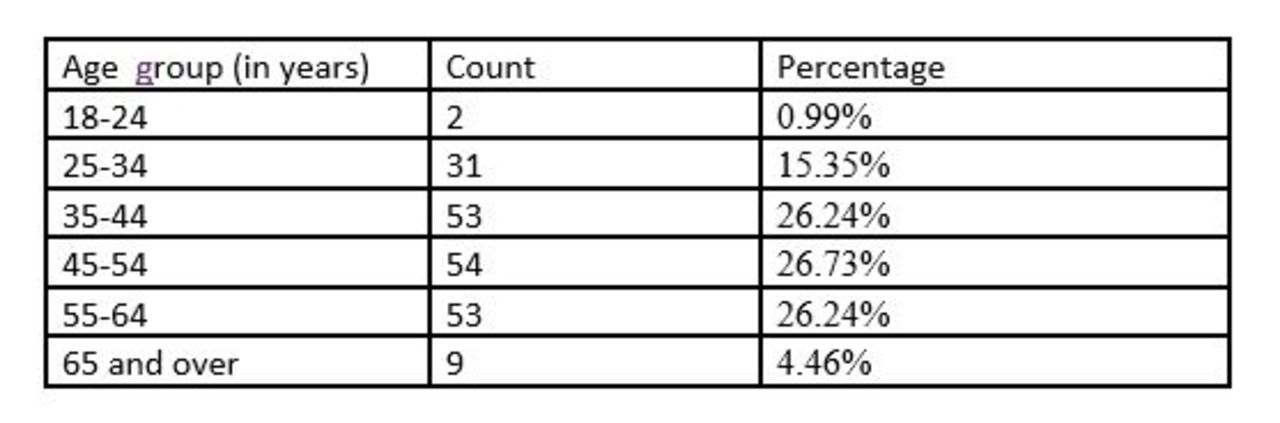
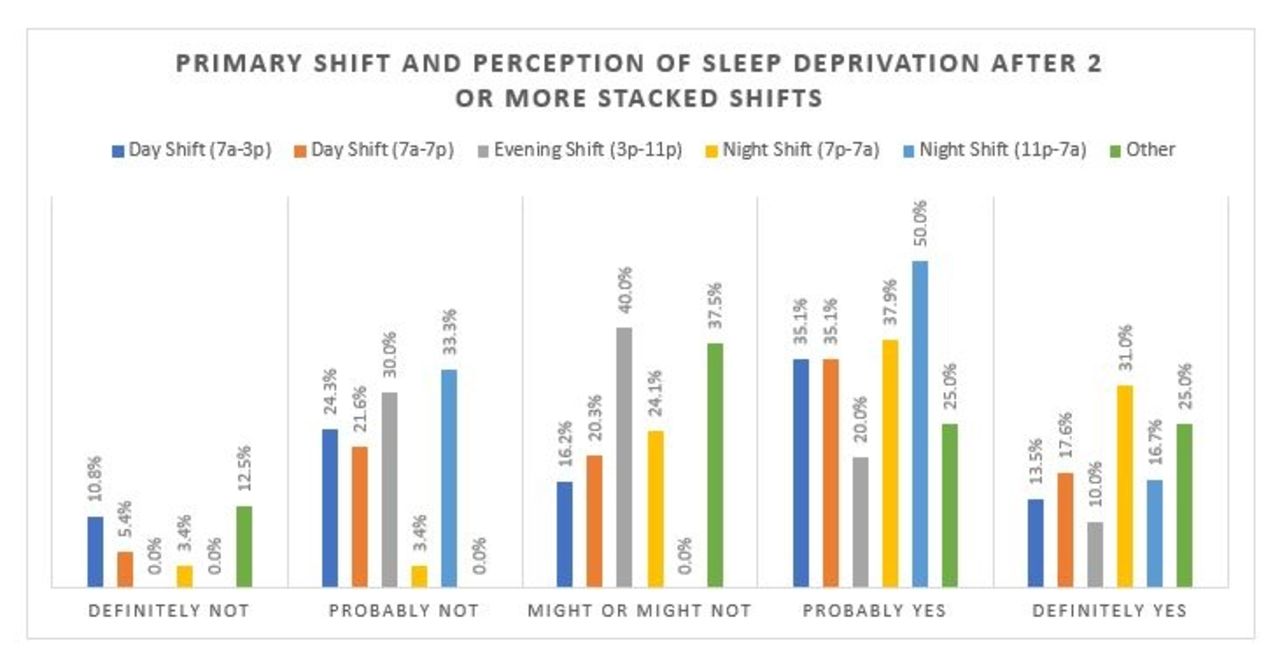
Two hundred and two responses were received. Of these respondents, 47% definitely experienced sleep deprivation. 80% identified their race as white, and 76% identified as females. The age groups of participants are shown in Table 1. 92% did not have a known sleep-related disorder. Places of employment included academic medical centers (18%), 500 or more beds large community hospitals (34%), 100 to 499 beds medium community hospitals (42%), fewer than 100 beds small community hospitals (4%), and other areas (2%). Work shifts included 7:00am–3:00pm day shift (18.8%), 7:00am-7:00pm day shift (39.1%), 3:00pm-11:00pm evening shift (4.9%), 7:00pm-7:00am night shift (29.7%), 11:00pm-7:00am night shift (3.5%), and other shifts (3.9%). RTs average hours of sleep was reduced while working stacked shifts. RTs experienced increased sleep deprivation after 2 or more stacked shifts. Night shift RTs experienced sleep deprivation after 2 or more stacked shifts (Figure 1).
Conclusions:
The results of the survey suggest that sleep deprivation is experienced after two or more stacked shifts. During periods of shift stacking, RTs sleep less and less hours, the more they do stacked shifts, ultimately getting the most sleep on off days. The overwhelming majority of the survey participants have not been diagnosed with a sleep-related disorder and yet the majority have experienced sleep deprivation. It is important to direct further research around scheduling practices in relation to sleep deprivation.
Get full access to this article
View all access options for this article.