




Abstract
Background:
COVID-19 is a global pandemic that can cause severe ARDS, which is related to significant morbidity and mortality as a result of respiratory disorder. Many COVID-19 patients around world underwent extensive management in the ICU due to severe symptoms. In this study we aim to find the predictors of ICU length of stay in hospitalized COVID-19 patients.
Methods:
A retrospective observational cohort study of 473 patients who were hospitalized in tertiary hospital in Riyadh between March 1 to December 31, 2020 was conducted. The characteristics of patients in the study were adult patient with confirmed COVID-19 and admitted to the ICU. In this study we were concerned about factors that affect the length of a stay in the ICU, namely age, gender, blood panel, and body mass index. All the characteristics and factors were tested and analyzed to confirm if there was association/difference or not.
Results:
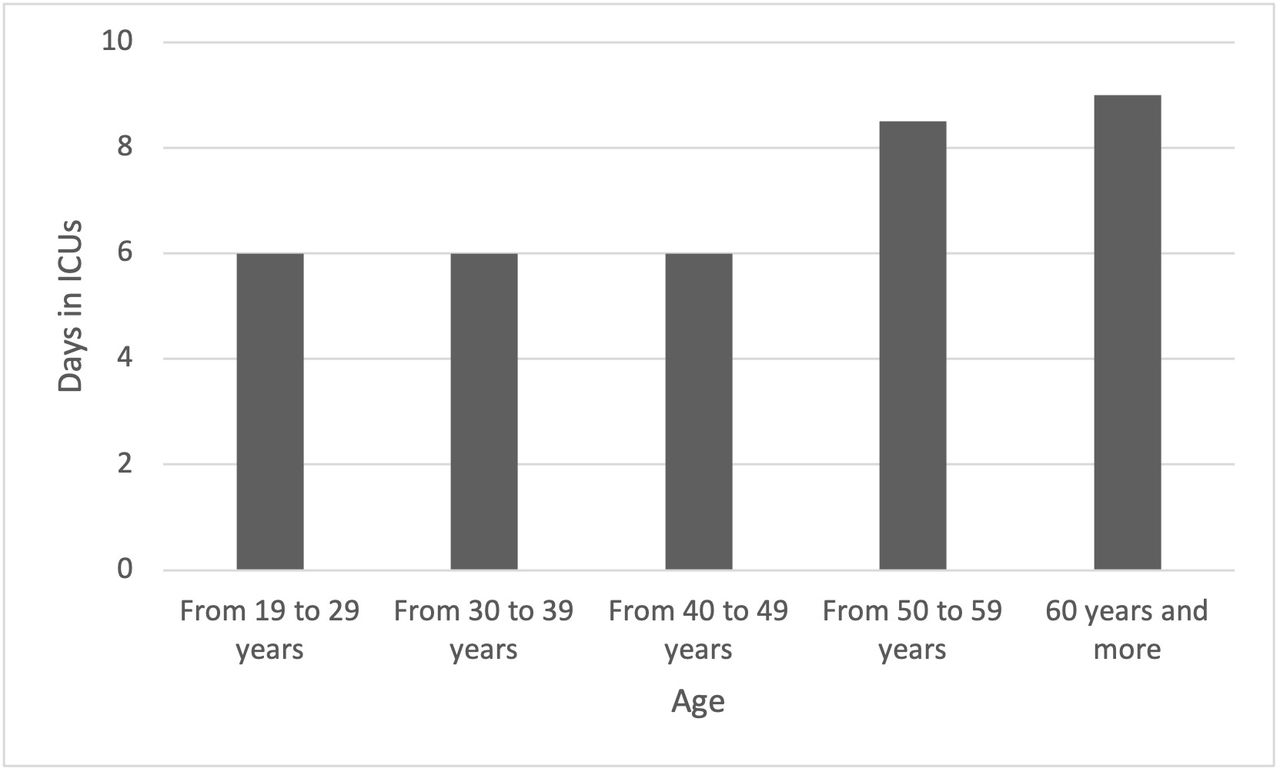
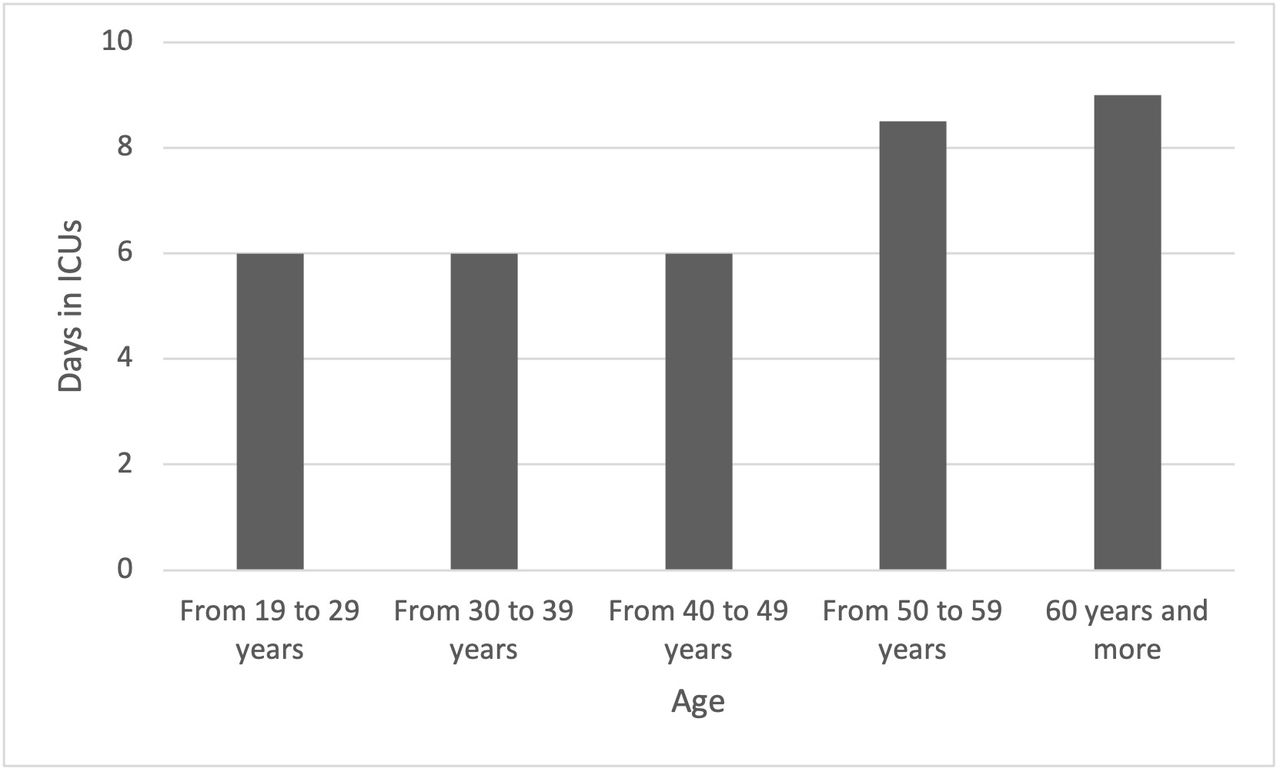
Length of stay in ICU was different for different age groups that either: from 19 to 29 years (n = 7), from 30 to 39 years (n = 31), from 40 to 49 years (n = 71), from 50 to 59 years (n = 92), and 60 years and more (n = 272). The test showed that there was a statistically significant difference in ICU length of stay between the groups (P = .02) (Figure 1). In addition, ICU length of stay was significantly higher in group age 60 years and more compared to both age groups from 30 to 39 years and from 40 to 49 years (P = .02, P = .003, respectively). The difference in ICU length of stay according to gender showed no significant difference between the male and female groups (8 [3-17] vs 9 [4-17], P = .64, respectively). In addition, The ICU length of stay was not statistically significantly different regarding gender, body mass index, and blood panels.
Conclusions:
In conclusion, COVID-19 patients in Saudi Arabia admitted to critical care units had a longer stay if they were older. This may be explained by the fact that aged patient may have more morbidity conditions that could worsen their clinical outcome.
Table 1. Patient Characteristiccs
Get full access to this article
View all access options for this article.