




Abstract
Background:
High-flow nasal cannula (HFNC) therapy is often prescribed for patients with acute hypoxemia and increased work of breathing. HFNC supports patients' work of breathing by providing higher flows to meet patients' inspiratory demand. With the many different HFNC interface options available on the market, we aimed to assess the flow output versus set rate between manufacturers.
Methods:
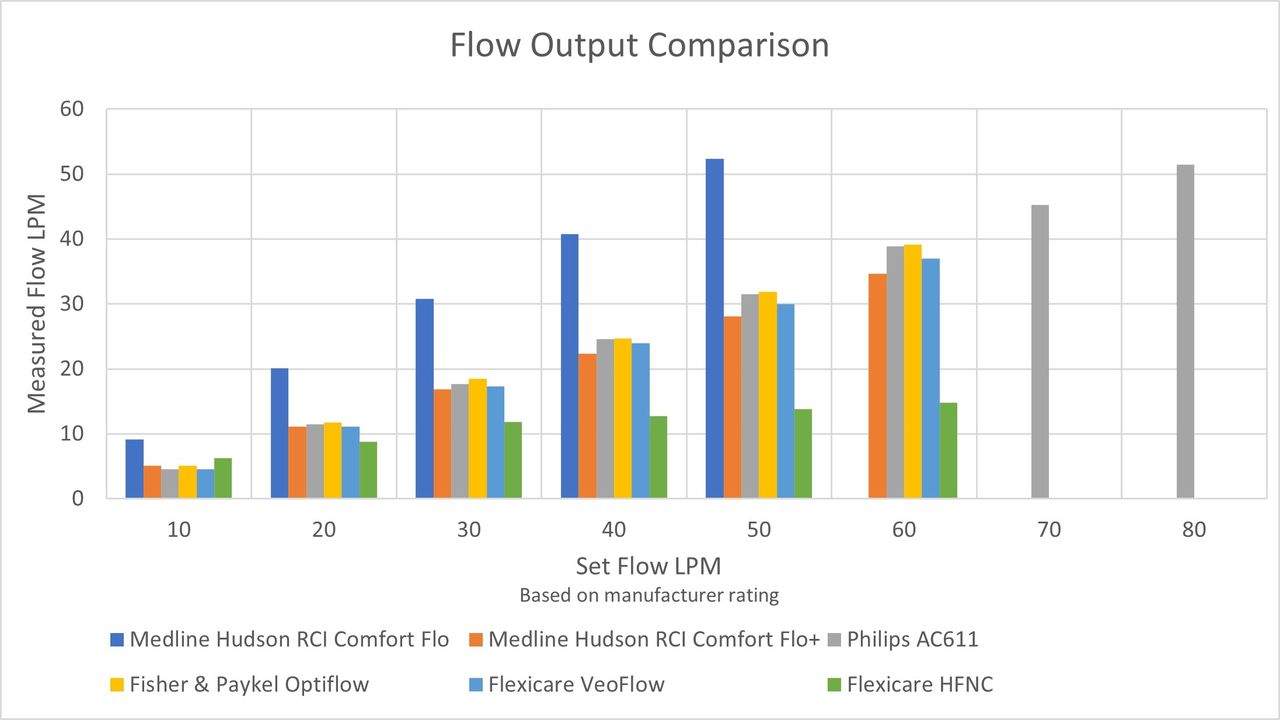
We tested 6 different HFNC cannulas: Medline Hudson RCI Comfort Flo, Medline Hudson RCI Comfort Flo+, Fisher & Paykel Optiflow, Phillips AC611, Flexicare Veoflo, and Flexicare HFNC in all adult standard sizes offered by the manufacturers. A simple adult nares model was constructed and each of the HFNC prongs tested were inserted into the model. Flow output was measured using a flow analyzer (Certifier FAplus flow module) to capture readings from various HFNC circuits and respective HFNC interfaces. We also measured the flow from the circuit without the interfaces for comparison. Flows were measured and recorded starting at 10 L/min and increased in increments of 10 L/min up to 80 L/min or recommended rating by manufacturer guidelines.
Results:
Based on the test data, we observed that at a given flow, the circuit diameter, bore size of the prongs, and design of the cannula can have a significant effect on flow delivery to patients. The flow measured on most of the HFNC interfaces was significantly lower than the set flow. The flow measured at the circuit without the interfaces shown minimal flow loses compared to the set flow.
Conclusions:
Our results indicate that there is variability in the flow output between each manufacturer and size of cannula. Although the actual cause in reduction of flow output relative to the actual set flow remain unknown, the results do raise questions of whether actual HFNC settings are overestimated and under supportive in patients with severe hypoxemia. When selecting flow for HFNC, the diameter of the circuit and prongs should be considered.
Get full access to this article
View all access options for this article.