




Abstract
Background:
Spirometry is a physiological test that measures how a patient inhales or exhales gas as a function of time. The American Thoracic Society (ATS) guides spirometry standards to ensure that spirometry results are accurately interpreted and influence care appropriately. With the introduction of the 2019 standards, our department implemented regular auditing and feedback to ensure RT compliance in the form of individual feedback, monthly emails with education regarding common mistakes, and monthly PFT meetings. A previously accepted AARC abstract showed RT compliance to ATS standards was 92.45%. We aimed to determine if regular auditing and feedback increased compliance to ATS standards.
Methods:
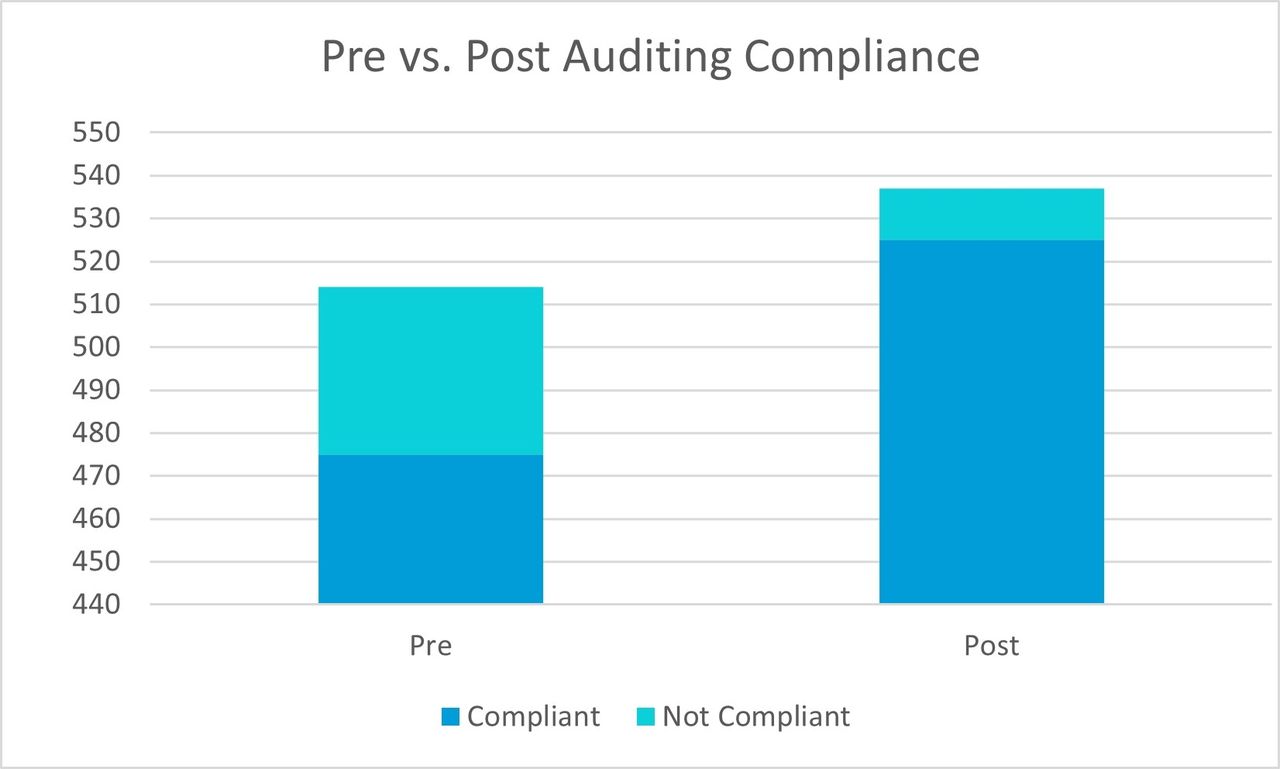
In an IRB approved retrospective analysis, we reviewed and compared spirometry audits from 01/2019-06/2021 for compliance to ATS standards (Figure 1). As part of our standard quality assurance process, a minimum of 30% of spirometry is randomly selected each month and audited by trained PFT staff for compliance based on ATS standards. We reviewed 514 spirometry before regular auditing and feedback and 537 spirometry after (Figure 2).
Results:
In 1,051 random spirometry audits, with 514 before the use of auditing and feedback and 537 after, compliance to ATS standards increased from 92.45% to 97.5%. The most common reasons for non-compliance with ATS standards included reporting unacceptable loops (obvious glottic closure/early termination).
Conclusions:
Regular auditing and feedback should be a standard practice for all professionals performing pediatric spirometry to ensure accuracy of results that are aligned with ATS standards. Further research is needed to determine the potential impact of regular auditing and feedback on a larger scale.
Figure 1 shows the ATS criteria used when auditing RT spirometry for compliance to standards Figure 2 shows the increase in compliance after the utilization of auditing and feedback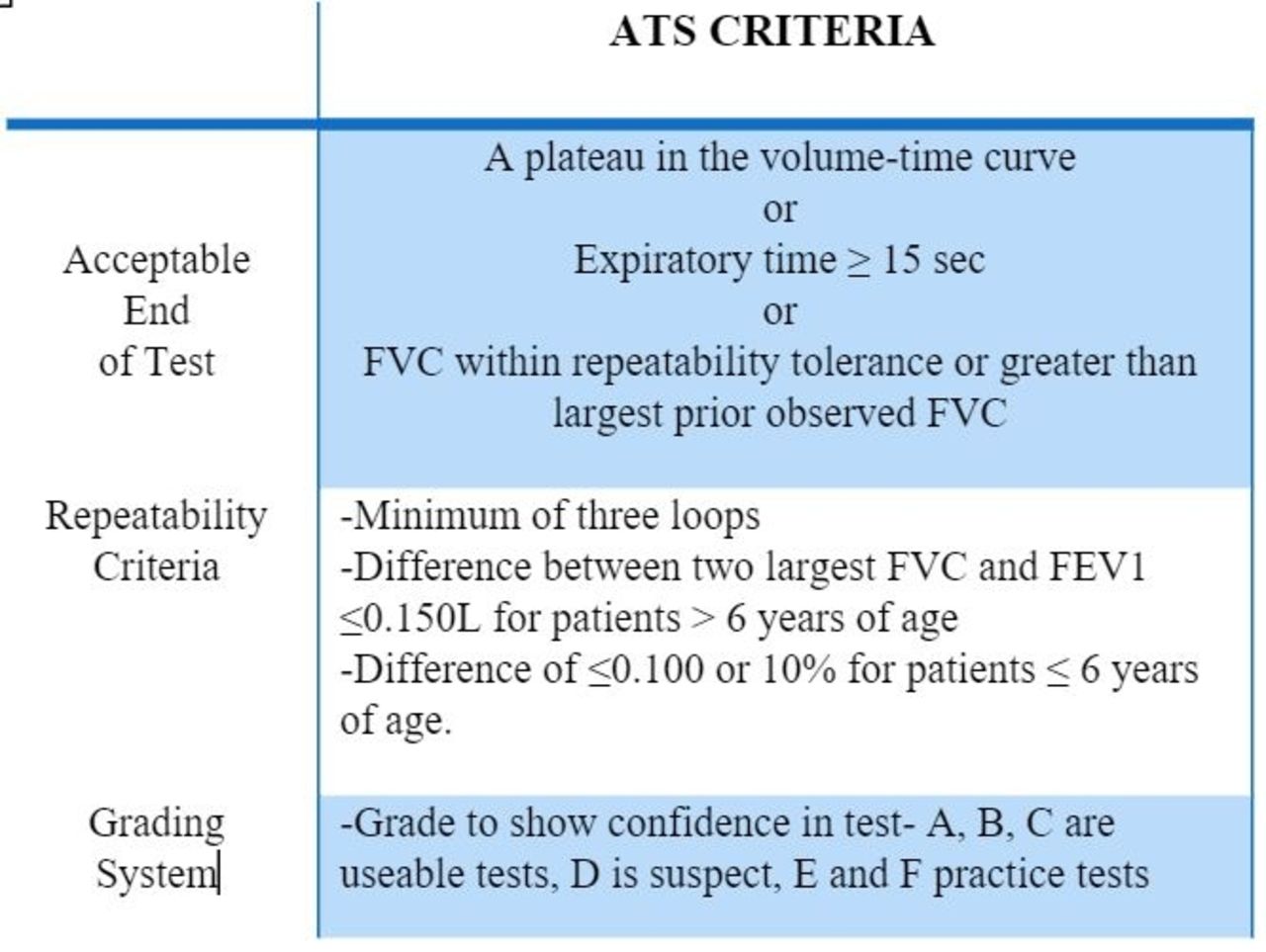
Get full access to this article
View all access options for this article.