




Abstract
Background:
Multiple studies have demonstrated the use of standardized high-flow nasal cannula (HFNC) weaning guidelines have led to decreased length of stay (LOS) and length of time (LOT) on HFNC for the bronchiolitis patient population. In 2019, our facility published similar outcomes using a standardized HFNC weaning guide for this patient population. In 2021-2022, our facility adopted a more aggressive weaning approach using a holiday method. This project was conducted through participation in the Value in Inpatient Pediatrics Network (VIP-N) quality improvement collaboration HI-FLO: High Flow Interventions to Facilitate Less Overuse.
Methods:
A standardized protocol through VIP-N was implemented: once patients met specific criteria, a holiday was performed wherein HFNC was turned off (Figure 1). One of three patient outcomes would occur: pass to room air, pass to low flow nasal cannula, or not tolerated and patient would be placed back on HFNC. Holidays were performed at least once per 12-hour shift. An IRB approved retrospective analysis was completed comparing LOS and LOT for admitted pediatric bronchiolitis patients from January to April 2022 before our facility weaning guideline was developed, after facility guideline implementation, and after VIP-N holiday weaning was implemented. Variables for analysis included LOS, LOT and ICU stay.
Results:
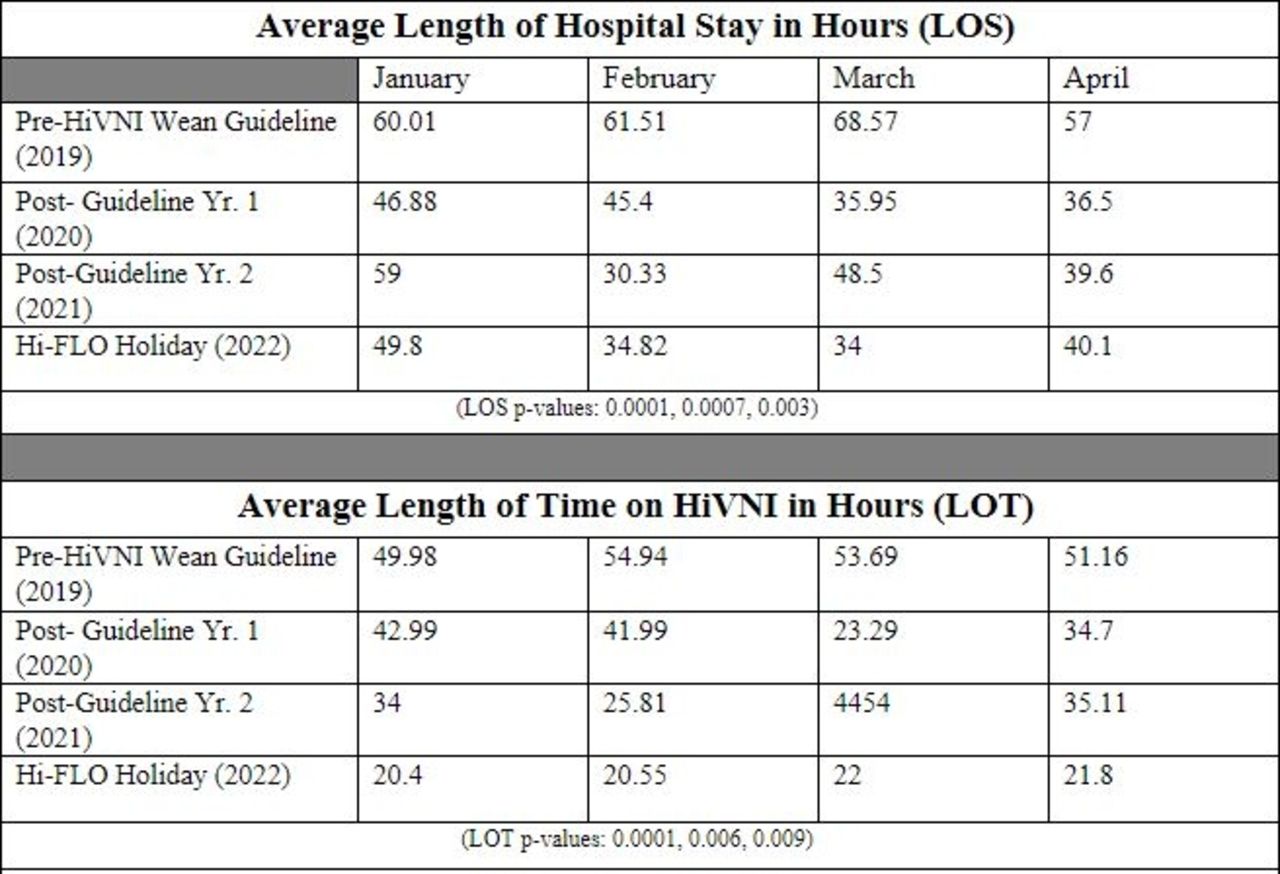
There was a statistically significant decrease in LOS and LOT between pre-HFNC weaning guideline implementation, post-implementation year one and year two when compared to holiday method (Figure 2). There was a maximum decrease of 63% in LOT and 50% in LOS, without an increase in significant events or re-admission rates (30-days). Overall, when patients passed HFNC holiday 73% passed to room air and 27% passed to low-flow nasal cannula.
Conclusions:
Implementation of a holiday approach to weaning HFNC was successful at this institution. There was a decrease of 63% in LOT and 50% in LOS, without an increase in significant events or re-admission rates. There was a slight decrease in the number of patients beginning March 2020 due to COVID-19, but this did not impact statistical values. As a result, our institution has permanently adopted a holiday-method approach for this patient population.
Figure 2. Summary data pre-implementation of facility-specific HiVNI weaning guideline, post-implementation (yrs-1 and 2) and implementation of Hi-FLO Holiday protocol through VIP-N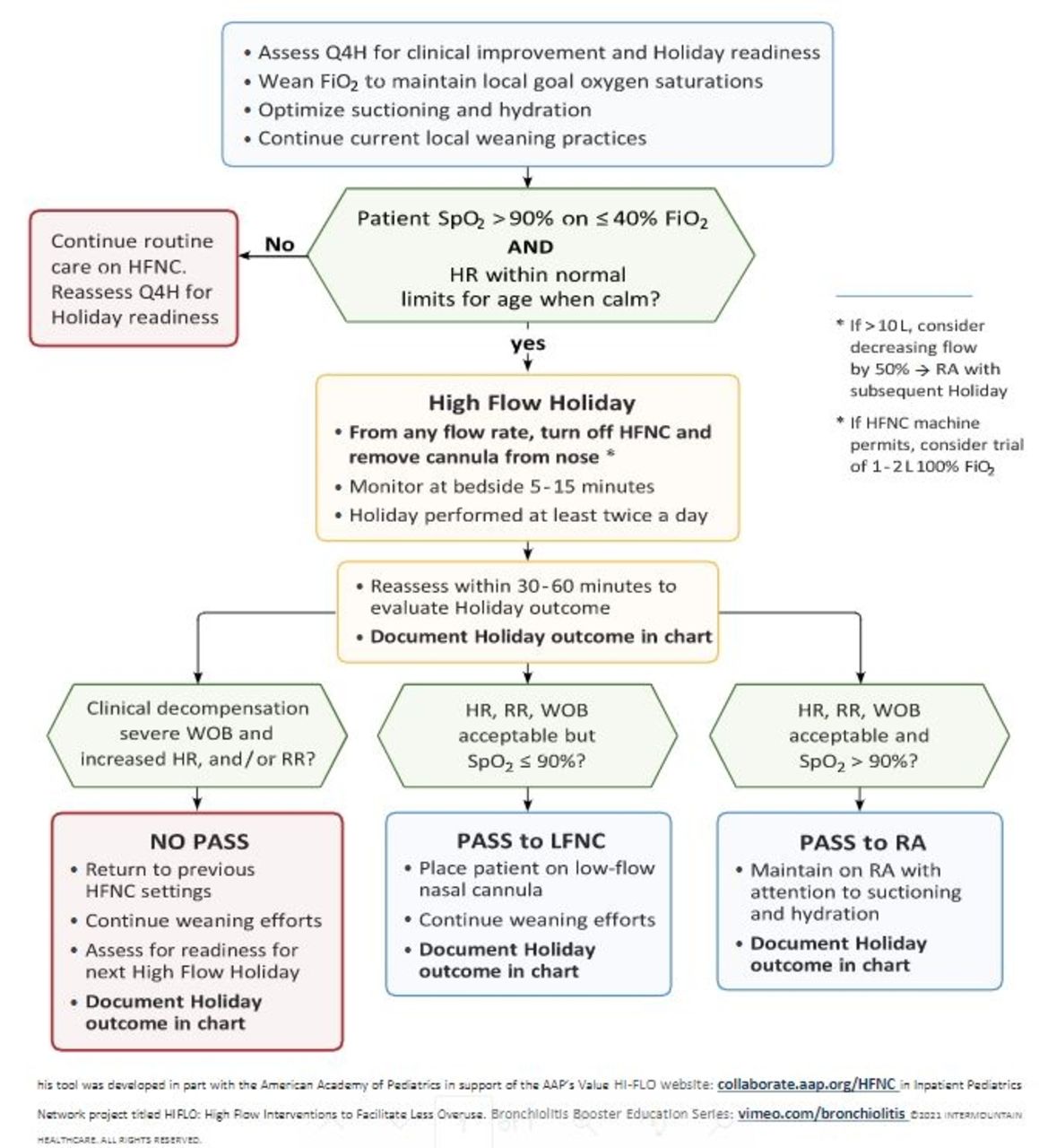
Get full access to this article
View all access options for this article.