




Abstract
Background:
Tobacco use screening and providing tobacco cessation interventions are key to reducing tobacco-related morbidity and mortality. We adopted a rapid cycle plan, do, study, act (PDSA) improvement process to improve the percentage of adults who received screening for tobacco use, provided with tobacco cessation interventions for a positive screening and reduce the time from a positive screening to first scheduled cessation intervention appointment in urban federally qualified health centers (FQHCs).
Methods:
A multidisciplinary focus group was convened to map workflows for screening and referral to clinical pharmacy for tobacco cessation interventions and identify opportunities for improvement. Five improvements were identified and operationalized in 2 phases. Phase 1 reviewed current roles/responsibilities; identified new workflows; educated staff on the new workflows to improve the outcome measures. Phase 2 addressed electronic health record tobacco cessation referral order mapping; developed and implemented a workflow for assigning the referral order to a clinical pharmacist. Tobacco screening and cessation intervention data from all subjects greater than 18 years of age who received care at one of five urban FQHCs were collected from January 1, 2021 to March 31, 2022. Descriptive statistics reported the percentage of subjects screened for tobacco use and who received tobacco cessation intervention if identified as a tobacco user. T-test compared the time lapse from screening to first appointment for cessation intervention pre-and post- interventions.
Results:
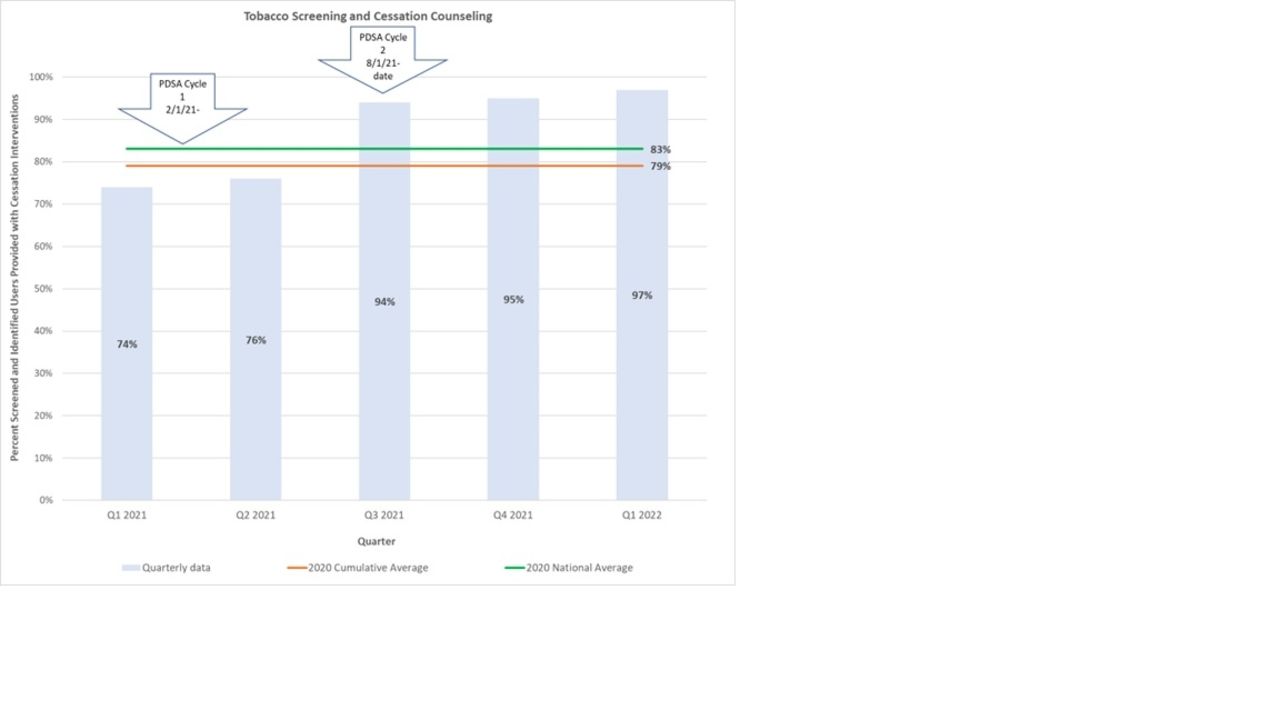
Figure 1 shows trend data pre-and post-interventions. Improvements of 18% over baseline and 14% above the 2020 national average were realized. The average time (± SD) from tobacco cessation order to the first scheduled appointment with clinical pharmacy decreased from 80.8 (± 58.6) to 9 (± 11) days, P = .002.
Conclusions:
Rapid cycle PDSA successfully removed barriers for identifying tobacco users and scheduling cessation intervention appointments.
Get full access to this article
View all access options for this article.