




Abstract
Background:
Nasal CPAP is applied to premature infants in the delivery room to establish functional residual capacity during initial transition, and until work of breathing and oxygenation stabilize. CPAP devices used in the delivery room are typically powered by a flow meter. We sought to determine if the Infant Flow LP Generator produced reliable CPAP levels using a stand-alone gas source/flow meter.
Methods:
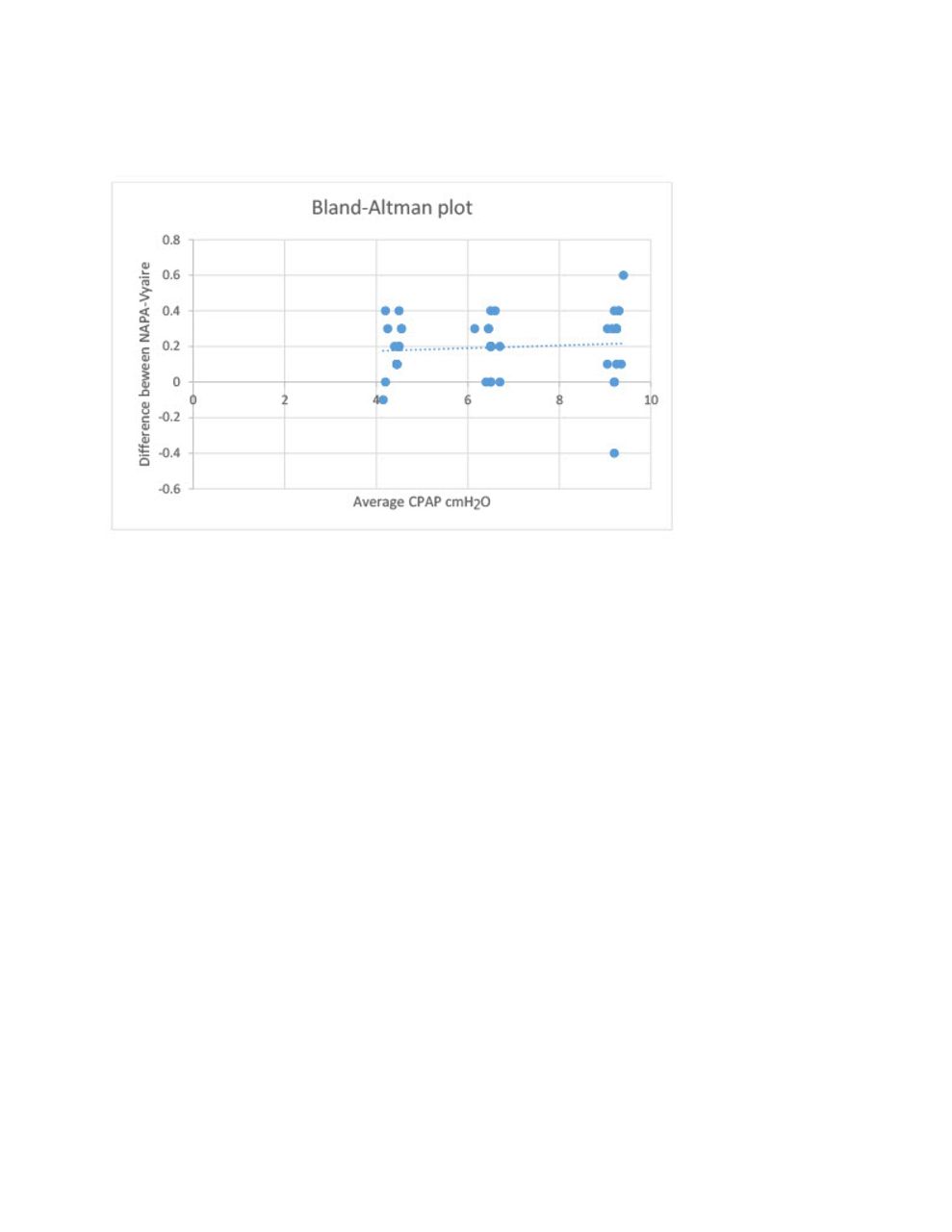
In place of a flow driver, a 15 L/min oxygen flow meter (Mercury Medical, Clearwater, FL) was used to provide flow to a Vyaire (Mattawa, IL) LP Infant flow generator at 8, 10, and 12 L/min. A Drager (Andover, MA) neo-flow sensor was used to determine the percise flow. Stand-alone flow meter CPAP levels were measured by NAPA LP-15 Digital manometer (DRW Medical, Aston, PA) and compared to a Vyaire Infant Flow SiPAP Driver using 3 mask sizes tested at each flow. Differences in mean CPAP pressures between masks were compared using One-way ANOVA with a statical significance set at P < .05. Differences in mean CPAP pressures between devices were compared using Bland-Altman plot.
Results:
There was no statistically significant difference in CPAP pressures between mask sizes. Stand-alone device CPAP pressures are statistically significantly greater than the Flow Driver by an average of 0.1955 cm H2O.
Conclusions:
CPAP pressures delivered by a stand-alone gas source/flow meter measured with a digital manometer is clinically equivalent to the values measured by the LP Infant Flow Driver. Clinical outcomes using a stand-alone gas source/flow meter requires further investigation.
Get full access to this article
View all access options for this article.