




Abstract
Background:
Mechanical ventilator weaning is an important step in the management of ICU patients. Nevertheless, clinicians are striving to find an ideal predictor that simple and accurate. Both the rapid shallow breathing index (RSBI) and SpO2/FIO2 index are the most common indexes used in predicting the success of the weaning trial, however, studies suggested incorporating patients’ clinical parameters would increase the accuracy of those indexes. This study aimed to establish a model that integrates clinical data with common weaning indexes that can predict successful weaning.
Methods:
A cross-sectional study was carried out among adult patients who had mechanical ventilation for more than 24 hours in ICU at King Abdulaziz Medical. The weaning process followed the established ICU protocol. Success extubation was defined as sustaining spontaneous breathing for >72 hours. Patients’ medical electronic data were used to extract information on clinical factors, and ventilator parameters were assessed and included in the predicting model. The performance of the new model was evaluated in areas under the curve (AUC) of the receiver operating.
Results:
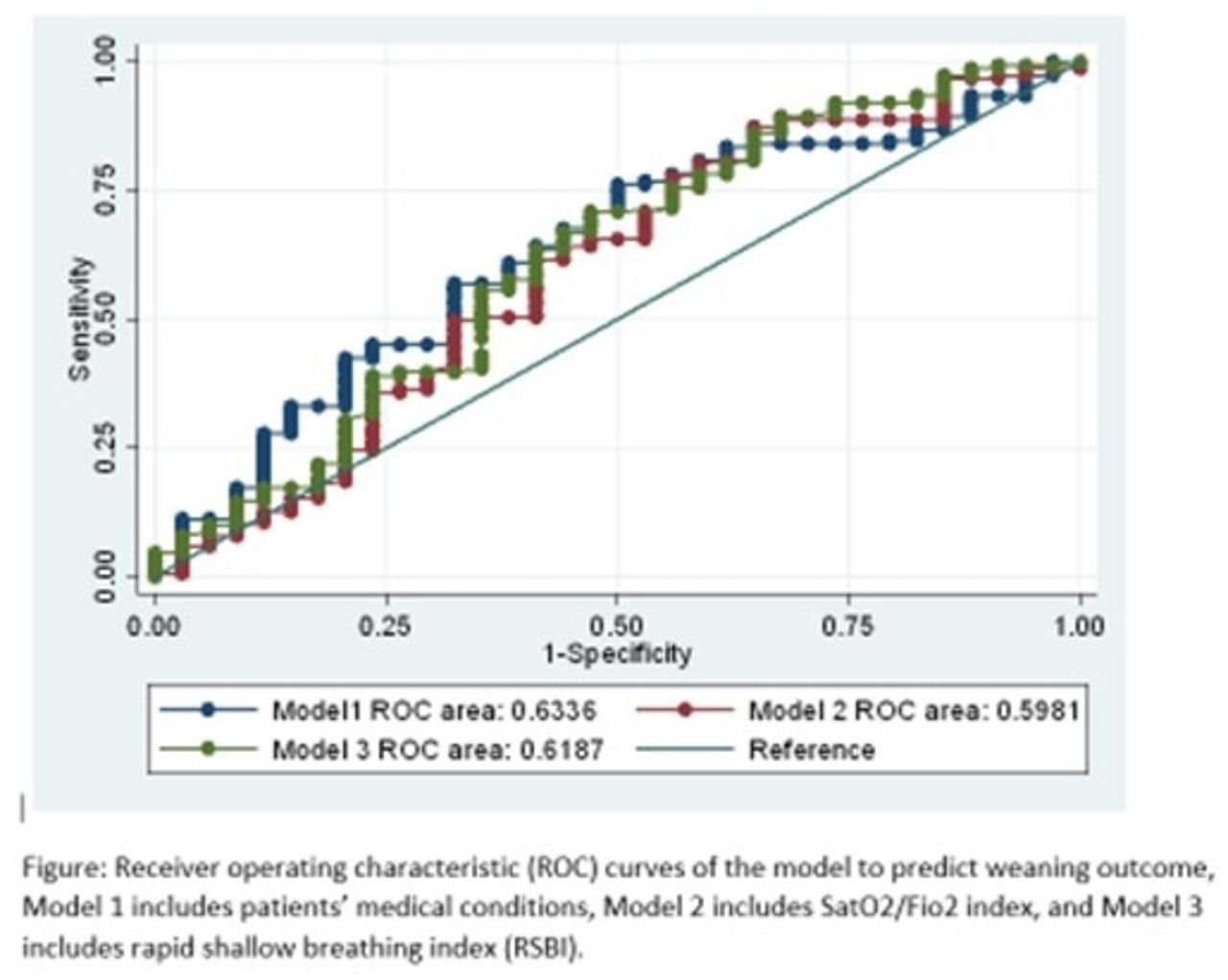
A total of 192 patients were included in this study. The mean age of the study population was 57 ± 19 years and 615 were male. Extubation succeeded was in 158 (82.2%) patients and failed in 34 (17.7%) patients. Patients' basic data and clinical parameters have been modeled using logistic regression. The AUC of this model was 0.633, compared to RSBI and SpO2/FIO2 in which the AUC was 0.598 and 0.618 respectively.
Conclusions:
The findings of this study provide insight into the performance of weaning indexes considering patients' ventilation parameters and patients’ medical conditions. Further studies need to be planned to examine other clinical factors that may affect the extubation process.
Get full access to this article
View all access options for this article.