




Abstract
Background:
The Taiwan government held National Health Insurance Palliative Common Care Pilot Program to provide hospice palliative care for patients in the hospice ward and also outside the hospice ward. Prolonged mechanical ventilation patients have been included in the program since 2013. The prevalence of prolonged mechanical ventilation patients is increasing every year. This study would like to investigate the association of socioeconomic status and hospice palliative care on prolonged mechanical ventilation patients.
Methods:
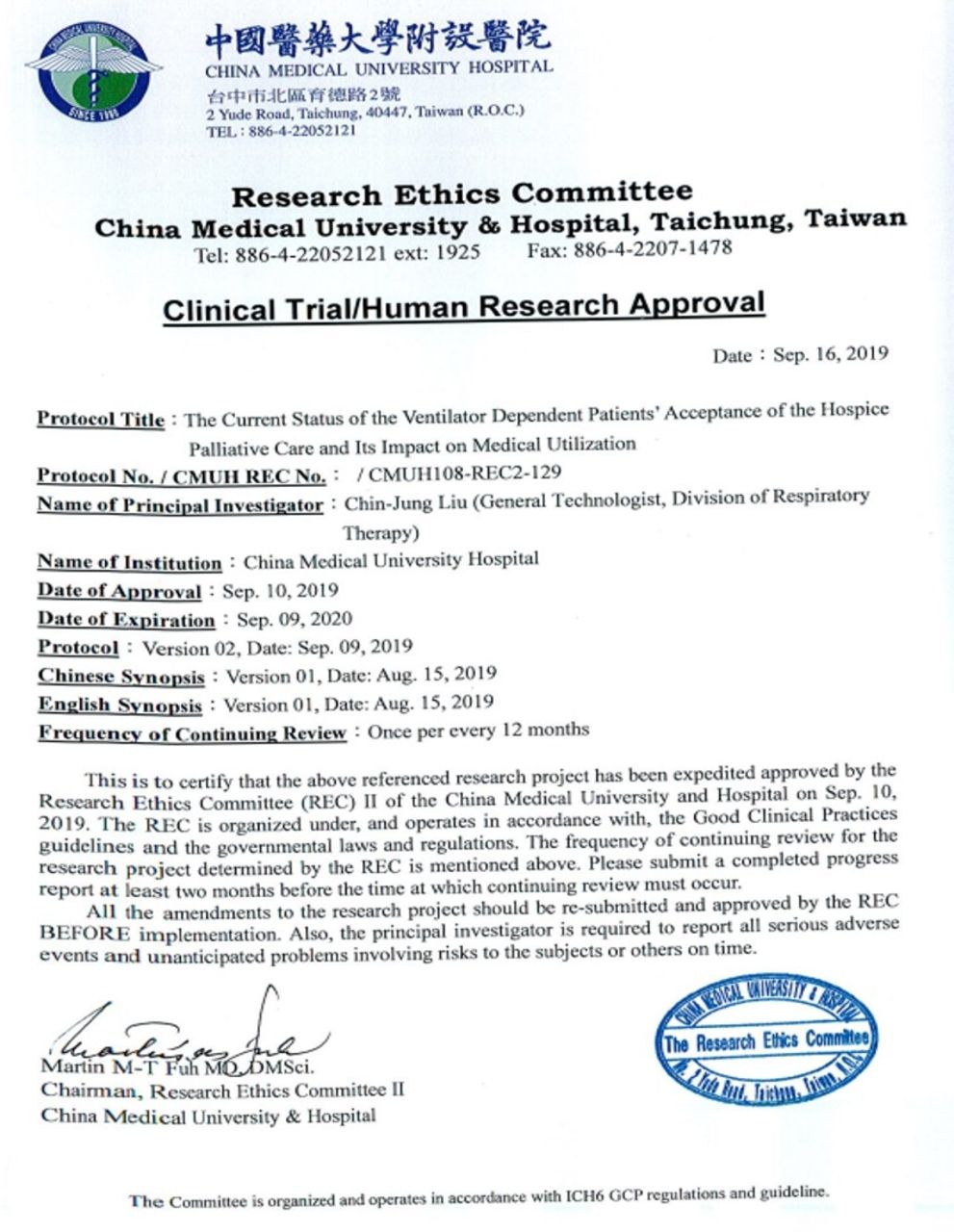
A retrospective cohort study was adopted to selected patients aged 18 or above who used ventilation for ≥21 days (interruption ≤5 days) from 2009 to 2017. Data were obtained from Taiwan Health Insurance Research Database. The education level was stratified into four groups: elementary school or lower; junior high school; senior high school and vocational school; and college, university, or higher education. This study was approved by the Clinical Trials/Human Research Board (IRB) of the Research Ethics Committee of China Medical University and Affiliated Hospitals. This study was grants supported by the China Medical University Hospital (grant numbers DMR-109-015)
Results:
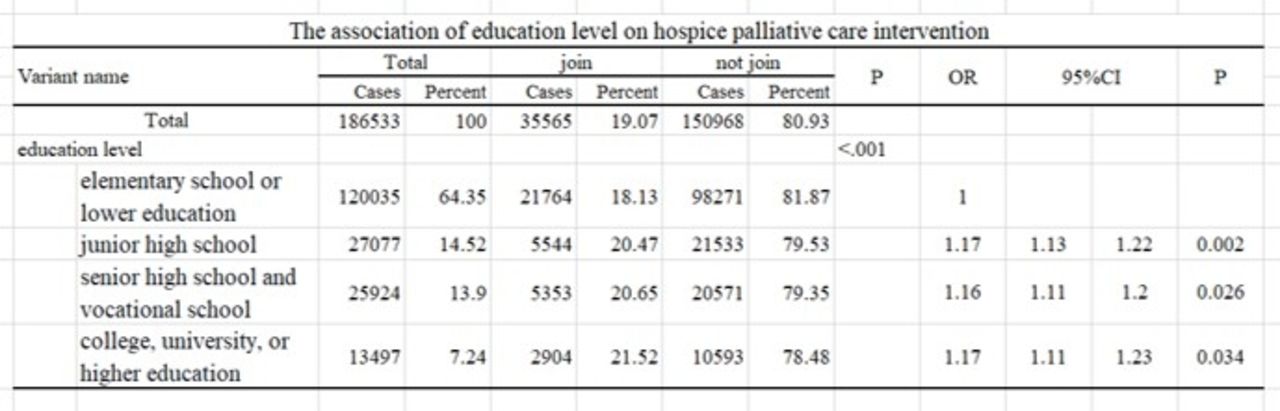
A total of 186,533 prolonged mechanical ventilation patients were included in the study and there were 19.7% (n = 35,565) patients received hospice palliative care. Compared with elementary school or lower education, all other levels had higher ratio of hospice palliative care including junior high school (OR = 1.17); senior high school and vocational school (OR = 1.16); college, university, or higher education (OR = 1.17).
Conclusions:
The higher the education level the higher the rate of receiving palliative care.
Get full access to this article
View all access options for this article.