



Abstract
Background:
In 2011, the Taiwan government promoted National Health Insurance Palliative Common Care Pilot Program to include non-cancer terminally ill patients. The program provided hospice palliative care outside the hospice ward, including prolonged mechanical ventilation patients. The number of prolonged mechanical ventilation patients are increasing year by year. This study would like to investigate the difference between the level of urbanization and patients received hospice palliative care rate.
Methods:
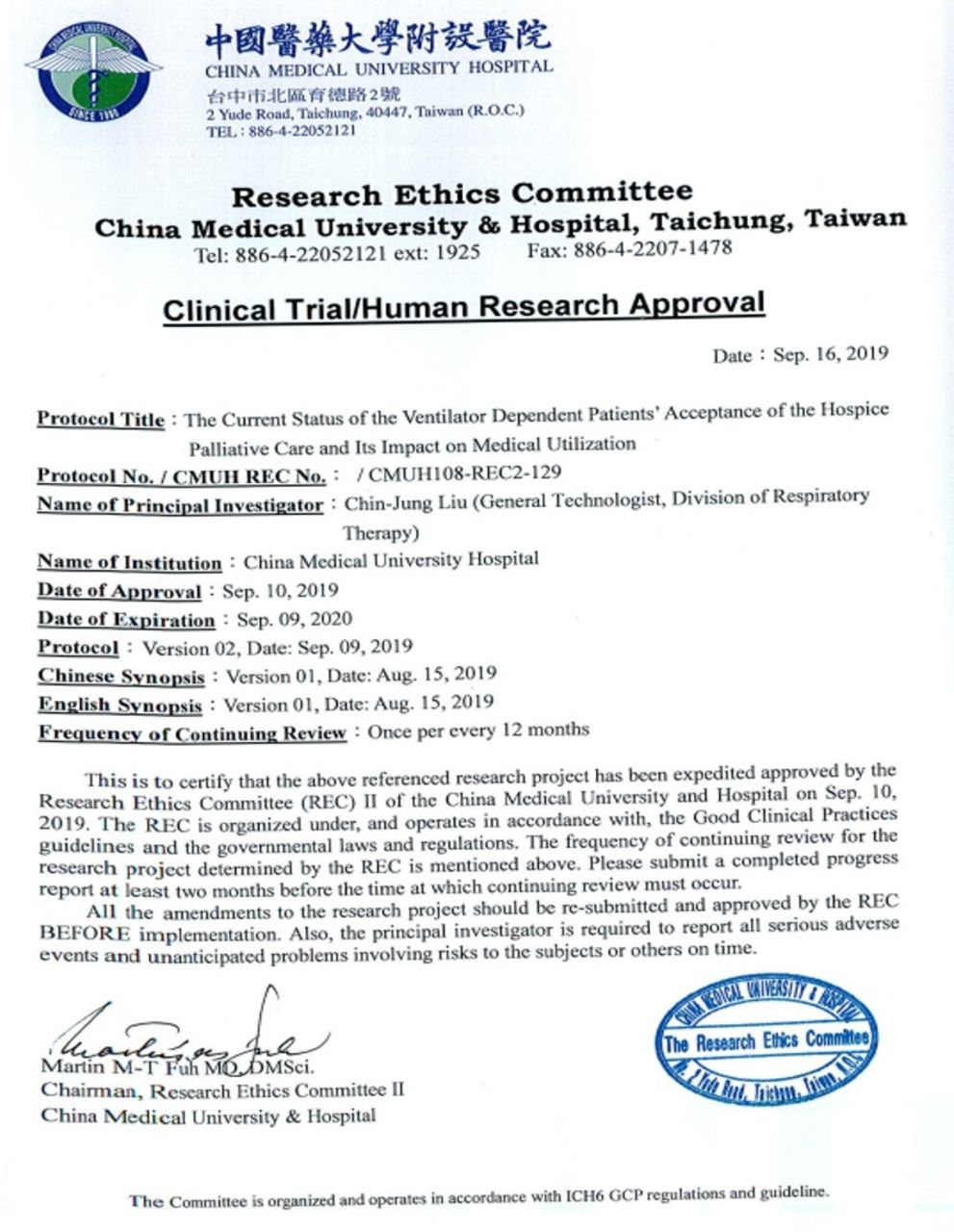
This was a retrospective cohort study using the Taiwan Health Insurance Research Database from 2009 to 2017. The study population included patients aged ≥18 years old who used ventilation for ≥21 days (interruption ≤5 days) and analyzes the level of urbanization. With a total of 359 townships, cities, and districts across Taiwan, the region of residence was divided into one to seven levels based on urbanization, from the highest level 1 to the lowest level 7. This study has been approved by the Clinical Trials/Human Research Board (IRB) of the Research Ethics Committee of China Medical University and Affiliated Hospitals. This study was grants supported by the China Medical University Hospital (grant numbers DMR-109-015)
Results:
From 2009 to 2017, a total of 186,533 prolonged mechanical ventilation patients were included in the study and 19.7% (n = 35,565) received palliative care. Taking the urbanization degree 1 as the reference value, there was no significant difference between the urbanization degree level 1, and level 2 and 3. Compared with level 1, the odds ratio in level 4 to level 7 were 0.86, 0.8, 0.77, and 0.77.
Conclusions:
The higher the level of urbanization, the higher the rate of receiving palliative care.

Get full access to this article
View all access options for this article.