




Abstract
Background:
In 2011, Taiwan's legislation was implemented to include ventilator-dependent patients who cannot be admitted to hospice wards due to terminal illness, so that hospice care is not limited to specific hospice wards. This study aimed to research the impact of Charlson comorbidity index (CCI) in ventilator-dependent patients on the inclusion of palliative care.
Methods:
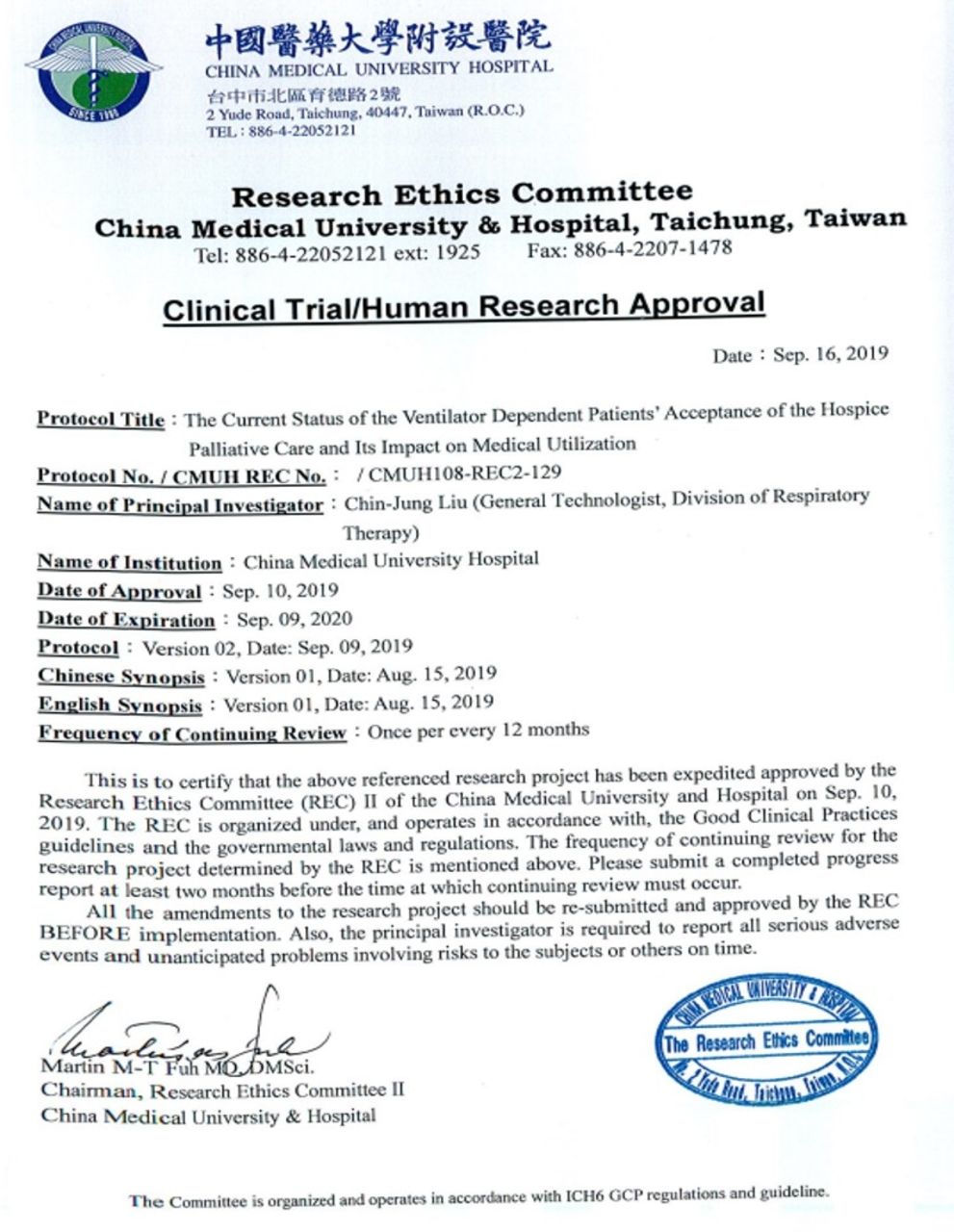
This study uses the entire population profile of the National Health Insurance to research the influence of CCI in ventilator-dependent patients (age ≥ 18 y who used ventilators for more than 21 d during the period 2009–2017) whether they join palliative care or not. CCI is divided into 4 grades, which are ≤3, 4–6, 7–9, ≥10. The statistical software package SAS 9.4 (SAS Institute, Cary, NC,) was used as the analysis tool. This study was approved by the Clinical Trials/Human Research Board (IRB) of the Research Ethics Committee of China Medical University and Affiliated Hospitals. This study was grants supported by the China Medical University Hospital (grant numbers DMR-109-015)
Results:
From 2009 to 2017, there were 186,533 new ventilator-dependent patients, 35,565 people joined palliative care, and the rate of joining palliative care was 19.07%. All 186,533 ventilator-dependent patients were analyzed for characteristics of CCI whether or not they received palliative care. The rate of adding tranquility and palliative care to CCI grade 4 was (CCI ≤ 3: 18.09%; CCI 4–6: 20.73%, CCI 7–9: 26.32%, CCI ≥ 10: 33.74%), of which CCI ≥ 10 points were added to tranquility and palliative care treatment was the highest, which was 1.37 times higher than that of patients with CCI ≤ 3 points who joined palliative care (95%CI: 0.90-0.96).
Conclusions:
The higher the CCI, the higher the rate of receiving palliative care.

Get full access to this article
View all access options for this article.