




Abstract
Background:
Frequent flyer hospital visits account for a disproportionately large share of overall visits and costs. A 2011-2012 Intermountain Healthcare study investigated factors driving high hospitalization rates of asthma frequent flyers. We repeated this study on new subjects for 2019-2021 to detect changes in demographics, treatment, comorbidities, and non-compliance. No initiatives were implemented following the original study, except for the Pulmonary Disease Navigator (PDN) scope being expanded in 2019 to include asthma.
Methods:
For 2019, 2020, and 2021, we extracted adult subjects assigned an asthma exacerbation diagnosis associated with ≥ 4 visits (ER or admission) per year at all Intermountain hospitals. We performed retrospective electronic medical record reviews on these subjects, including all variables from the original study. To assess differences between cohorts in non-compliance issues, each variable was compared with a z-test. We collected an additional year of data for insight prior to COVID-19. We excluded pediatric subjects as the original study found that outcomes were better than for adults.
Results:
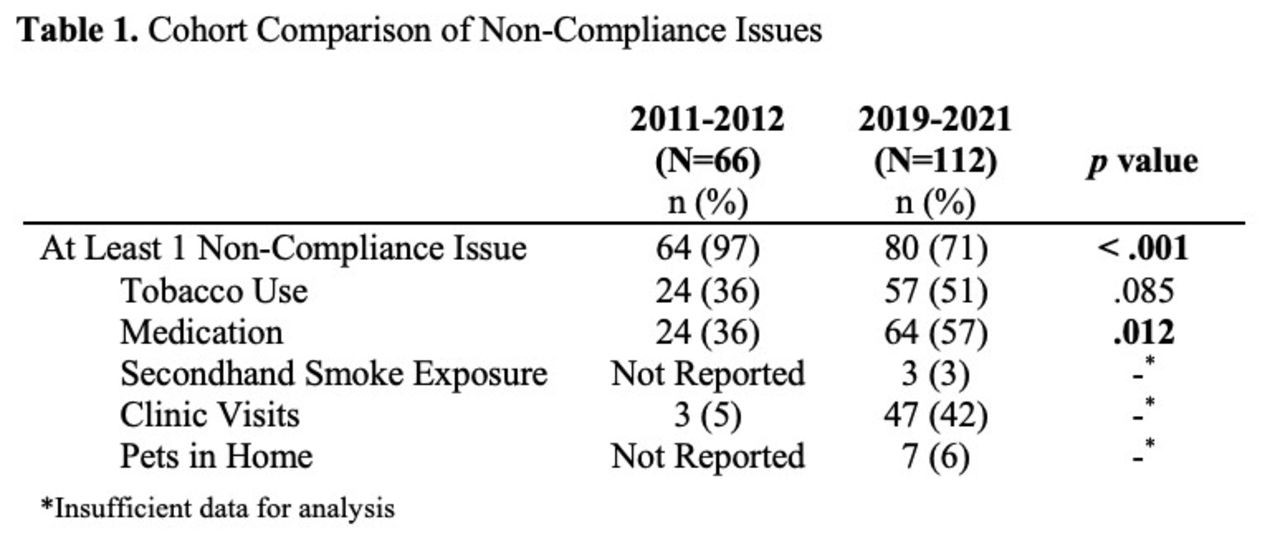
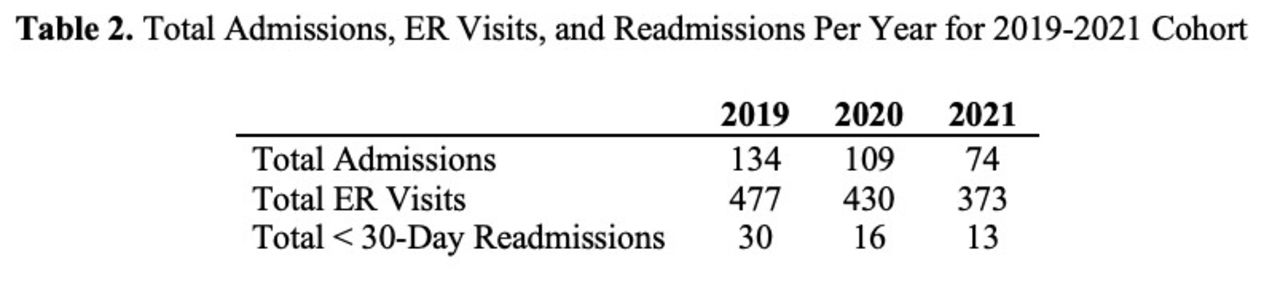
We identified 112 subjects with ≥ 4 visits per year during 2019-2021. There was a significant difference between cohorts in proportions of medication non-compliance. For the 2019-2021 cohort, 12% of the subjects were followed by a PDN, and 39% had both behavioral health issues and medication non-compliance. For 2019-2021, we noted a downward trend in admissions, ER visits, and 30-day readmissions per year. Other results are reported in accompanying abstracts.
Conclusions:
Compared to the previous cohort, a smaller proportion of subjects in the current cohort have at least one non-compliance issue. However, a greater proportion of the non-compliant subjects exhibited medication (and possibly clinic visit) non-compliance, potentially due to a lack of initiatives implemented after the original study. We believe PDN involvement has had little impact as few subjects are followed by a PDN, but perhaps this small amount contributes to the reduction in subjects with at least one issue. Clinic visits and total visit trends may have been influenced by the COVID-19 pandemic. This study was limited by having no access to the original dataset. We conclude that the number of asthma frequent flyers with non-compliance has decreased, but that the issues are magnified among those who are non-compliant. We recommend further involvement of PDNs to identify causes of and solutions to non-compliance.
Get full access to this article
View all access options for this article.