




Abstract
Background:
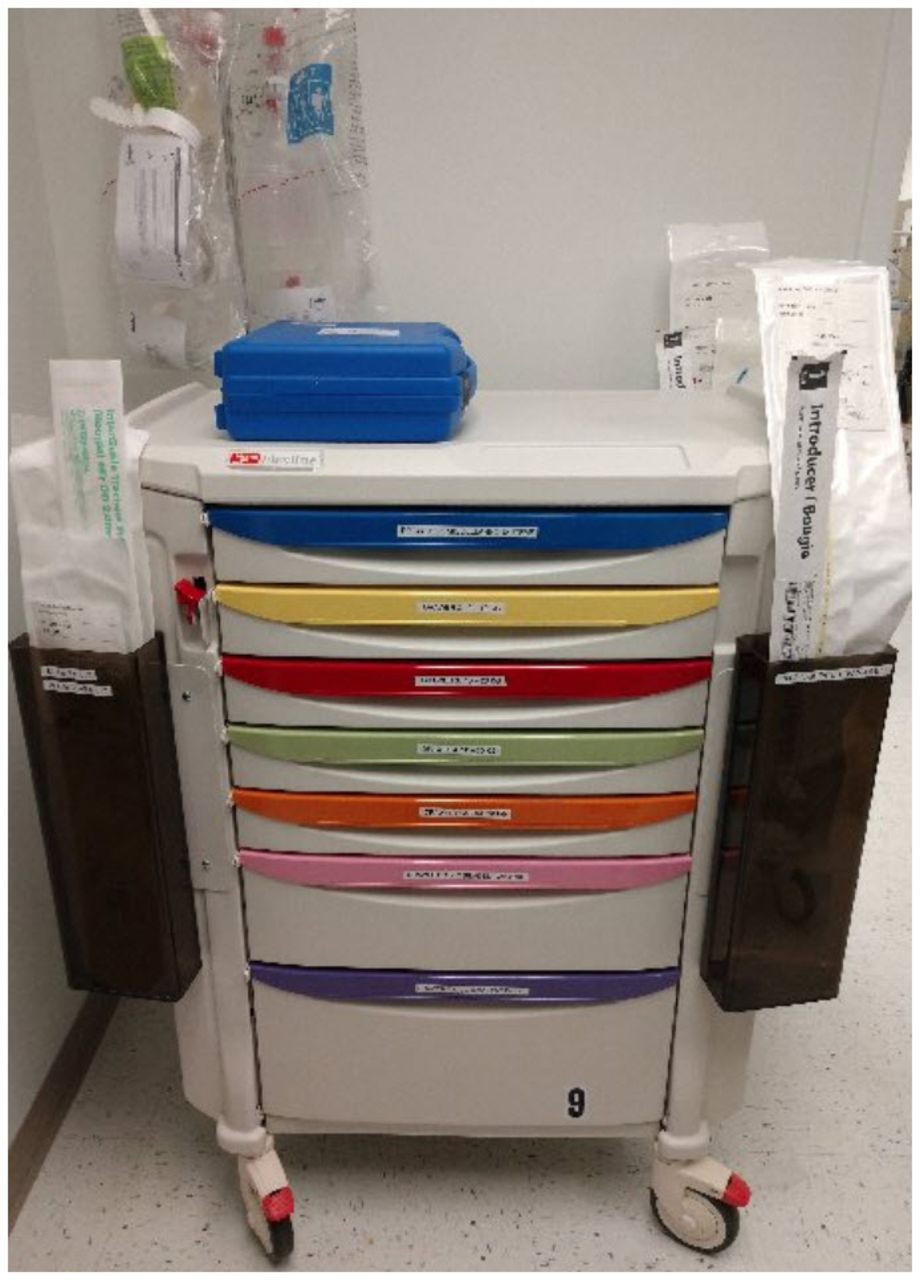
In the past, our institution utilized 4 non-standardized carts to manage difficult airway situations. When specialty providers were called to assist with emergent airway needs, varying factors influenced timeliness of successful airway intubation. In reviewing serious safety events of difficult airway encounters it was documented that the lack of appropriately sized equipment and/or expired supplies substantially impacted outcomes. It was hypothesized that increasing the number of carts across the care continuum, standardizing the contents and placing them in strategic locations would reduce adverse outcomes. A multidisciplinary group of stakeholders determined the implementation strategy would be to align the cart structure with the Broselow Tape to reduce the challenges and facilitate equipment selection. Respiratory care took the project lead and maintained the monthly auditing process for expired supplies. Fifteen standardized carts were launched for bedside use in April 2021 following end user online training.
Methods:
The project aim was to follow-up with end users on experiences with respect to the new carts. Staff were invited by email to complete a brief 5-question electronic survey to identify training, availability, equipment, and barriers with respect to use of the carts. Survey data was collected in REDCap.
Results:
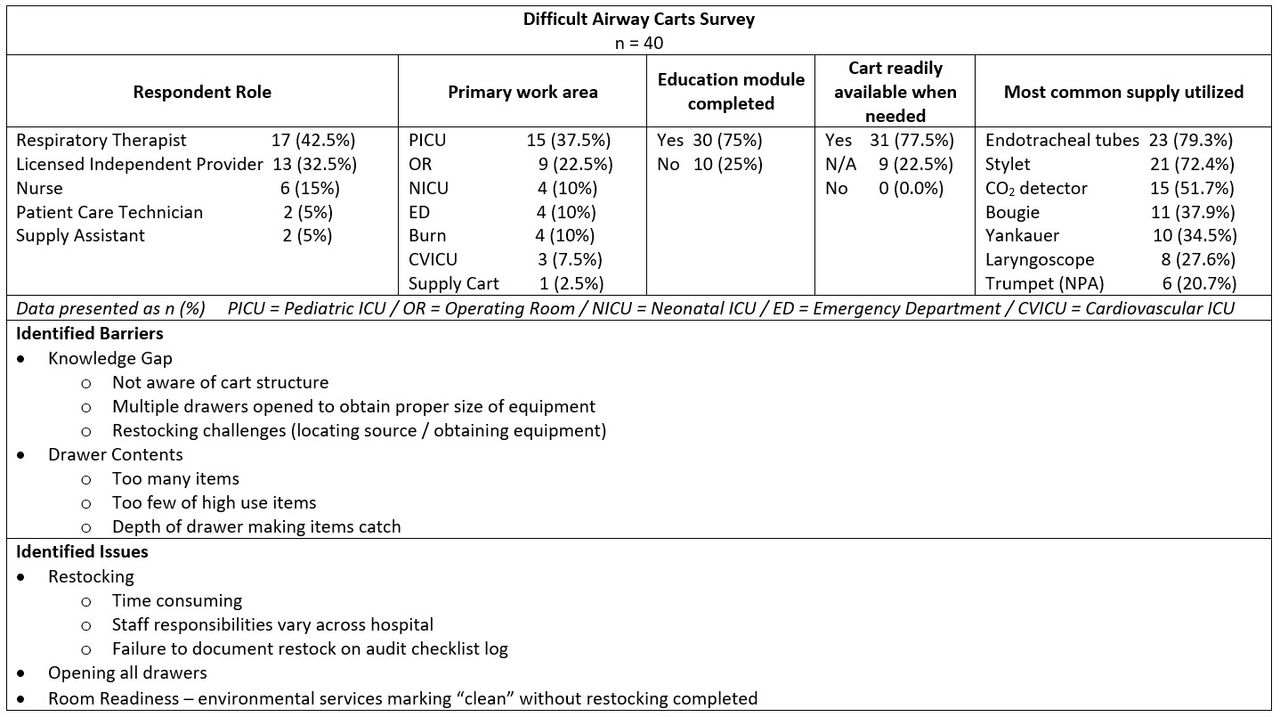
The survey had a 43% (40/93) response rate with the following key findings. Among survey respondents, 75% reported completing the training. Staff who had used the cart found them available when needed for direct patient care. The primary equipment utilized was targeted for obtaining an emergent airway via endotracheal tube. Identified barriers included quantity and organization of contents and noted knowledge gaps with respect to cart structure and restocking. The most common issue expressed was the amount of time needed to obtain the various items during the restocking process.
Conclusions:
Adjustments occurred based on results. Findings were presented to the educator council, which resulted in opportunities for in-person training, as well as inclusion of the airway carts during clinical emergency preparedness training that occurs quarterly during mock code simulations. Training modules were revised to address the identified barriers. A video overview was developed to compliment training. An electronic restocking form with a QR code was developed to assist with time management.
Get full access to this article
View all access options for this article.