




Abstract
Background:
Respiratory therapy students received decreased clinical time due to the COVID-19 pandemic. We developed a pilot team-based learning simulation program to bridge the experience gap, support the new graduate employee, and achieve a successful orientation outcome.
Methods:
Seven new graduates began employment in September 2021. 6 of the 7 graduated from the same respiratory care program. This presented a unique opportunity to partner with the program director of the school to place the new graduates into effective simulation teams based on her knowledge of their psycho-social characteristics and learning aptitude. Participants were divided into one team of 3 and two teams of 2 members. Each team completed a two-day simulation program scheduled at specified intervals during general floor care orientation. The first simulation day included 3 scenarios focused on basic respiratory care topics. The second day consisted of 2 simulations which progressed to more complicated critical patient care scenarios. Scripted pre-briefing, including key learning points and full scenario debriefings were provided. A checklist of expected actions was used to guide the debriefing and the learning experience. Each participant completed a four-point Likert scale evaluation of the sessions after each simulation day. Exemption was granted from local IRB.
Results:
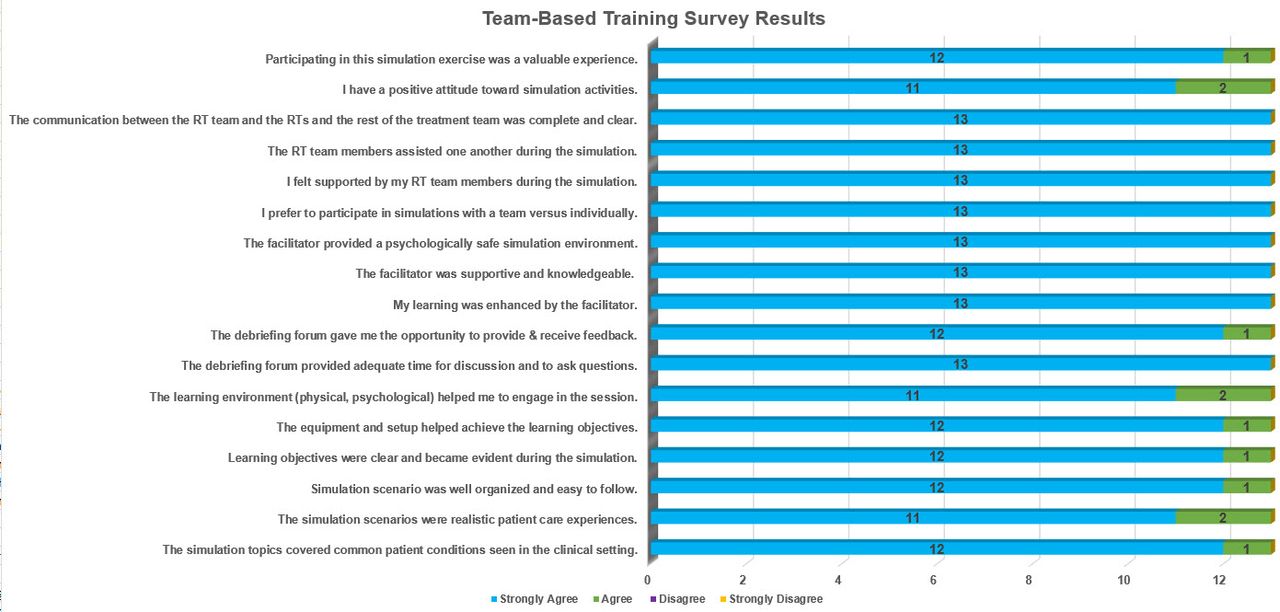
7 new graduates completed 13 surveys (93% response rate). One participant did not complete the day two survey. Participants responded agree or strongly agree to every question. All 7 new graduates completed general floor care orientation. Additionally, 5 advanced and completed ICU orientation, one was terminated due to non-clinical issues, and one was not eligible to advance to the ICU due to work status reduction.
Conclusions:
The pilot team-based learning simulation program was supportive of the new graduate employee and led to successful orientation outcomes. Team-based simulation is now used for all new graduate hires during general floor care orientation.
Get full access to this article
View all access options for this article.