




Abstract
Background:
Alpha-1 antitrypsin (AAT) is a protein that protects the lungs by utilizing anti-inflammatory and anti-proteolytic functions. AAT deficiency is a hereditary disorder that clinically manifests in the lungs, liver, and skin. Pulmonary presentation is primarily displayed as COPD and bronchiectasis. Nationwide, only 5-8% of patients with AAT deficiency have been identified. Due to the lack of routine screening for AAT deficiency, 90% of patients with AAT are believed to be undiagnosed. The American Thoracic Society (ATS) and the European Respiratory Society (ERS) Clinical Practice Guidelines recommend screening patients with a spirometry value of FEV1 less than 70% post bronchodilator, history of COPD, incompletely reversible asthma, chronic liver disease, a family history of pulmonary disease, or if patient prompts a request. This screening can be performed by a respiratory therapist in the pulmonary function testing (PFT) lab during a routine patient visit.
Methods:
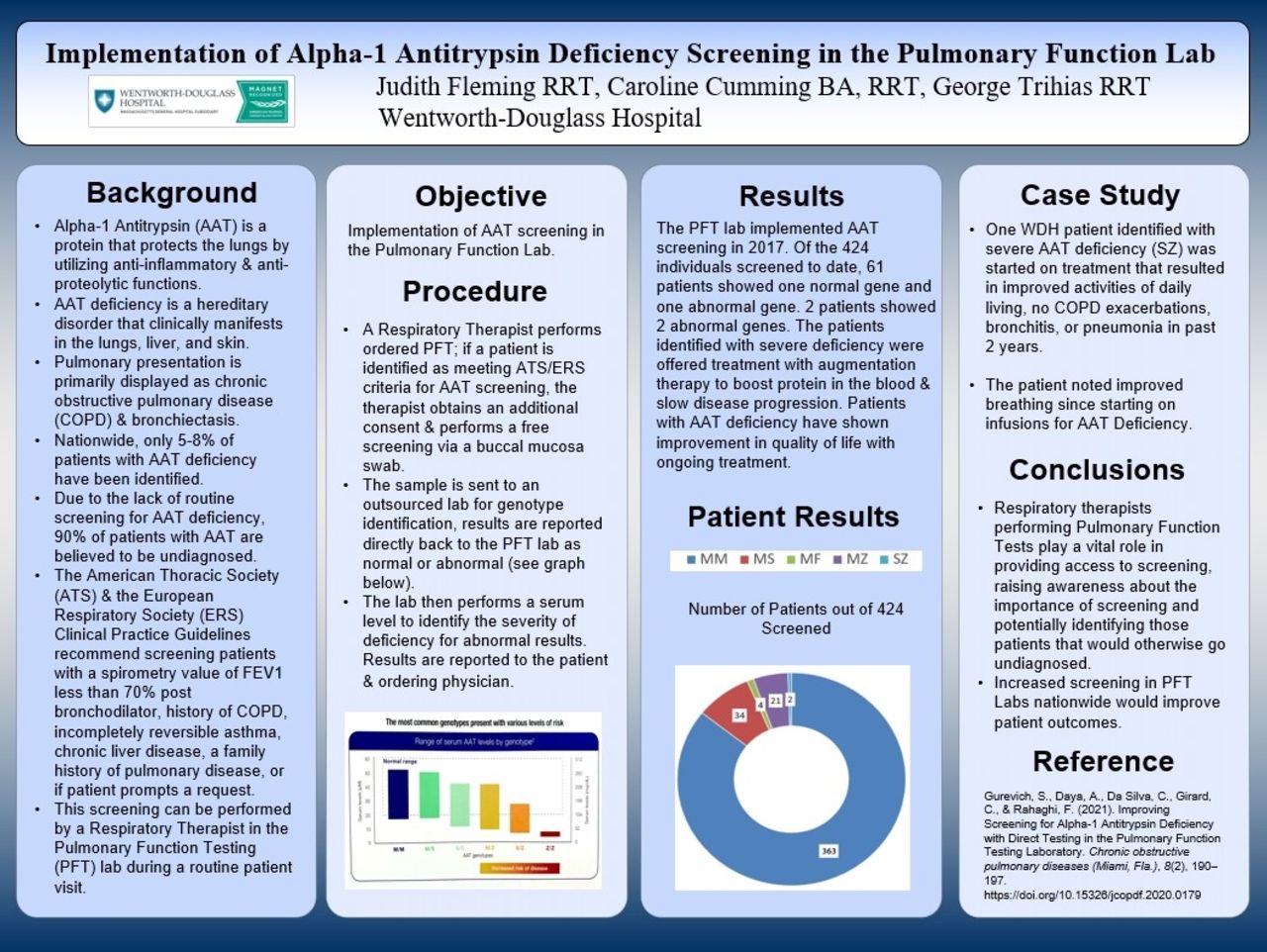
A respiratory therapist performs ordered PFT; if a patient is identified as meeting ATS/ERS criteria for AAT screening, the therapist obtains an additional consent and performs a free screening via a buccal mucosa swab. The sample is sent to an outsourced lab for genotype identification, results are reported directly back to the PFT lab as normal or abnormal (see graph below). The lab then performs a serum level to identify the severity of deficiency for abnormal results. Results are reported to the patient and ordering physician
Results:
The PFT lab implemented AAT screening in 2017. Of the 424 individuals screened to date, 61 patients showed one normal gene and one abnormal gene. 2 patients showed 2 abnormal genes. The patients identified with severe deficiency were offered treatment with augmentation therapy to boost protein in the blood and slow disease progression. Patients with AAT deficiency have shown improvement in quality of life with ongoing treatment.
Conclusions:
Respiratory therapists performing pulmonary function tests play a vital role in providing access to screening, raising awareness about the importance of screening, and potentially identifying those patients that would otherwise go undiagnosed. Increased screening in PFT labs nationwide would improve patient outcomes
Get full access to this article
View all access options for this article.