



Abstract
Background:
Palliative care is the relief of suffering which can be given with both curative therapies and treatment as well as when the care strategy consists of comfort measures only. The purpose of this study was to explore the RTs’ perception of their role as it pertains to palliative care and assess the type of training, degree of knowledge, experience, and comfort they have with palliative care.
Methods:
A secure electronic survey was administered through REDCap in May 2022. The survey link was distributed through social media and reminders were posted twice over a 3-week period. Data collected included demographic information, education experience, comfort level, patient experience with palliative care, and the perceptions of the involvement of RTs during palliative care. Descriptive statistics were used to analyze results. This survey was declared exempt by the Rush University IRB.
Results:
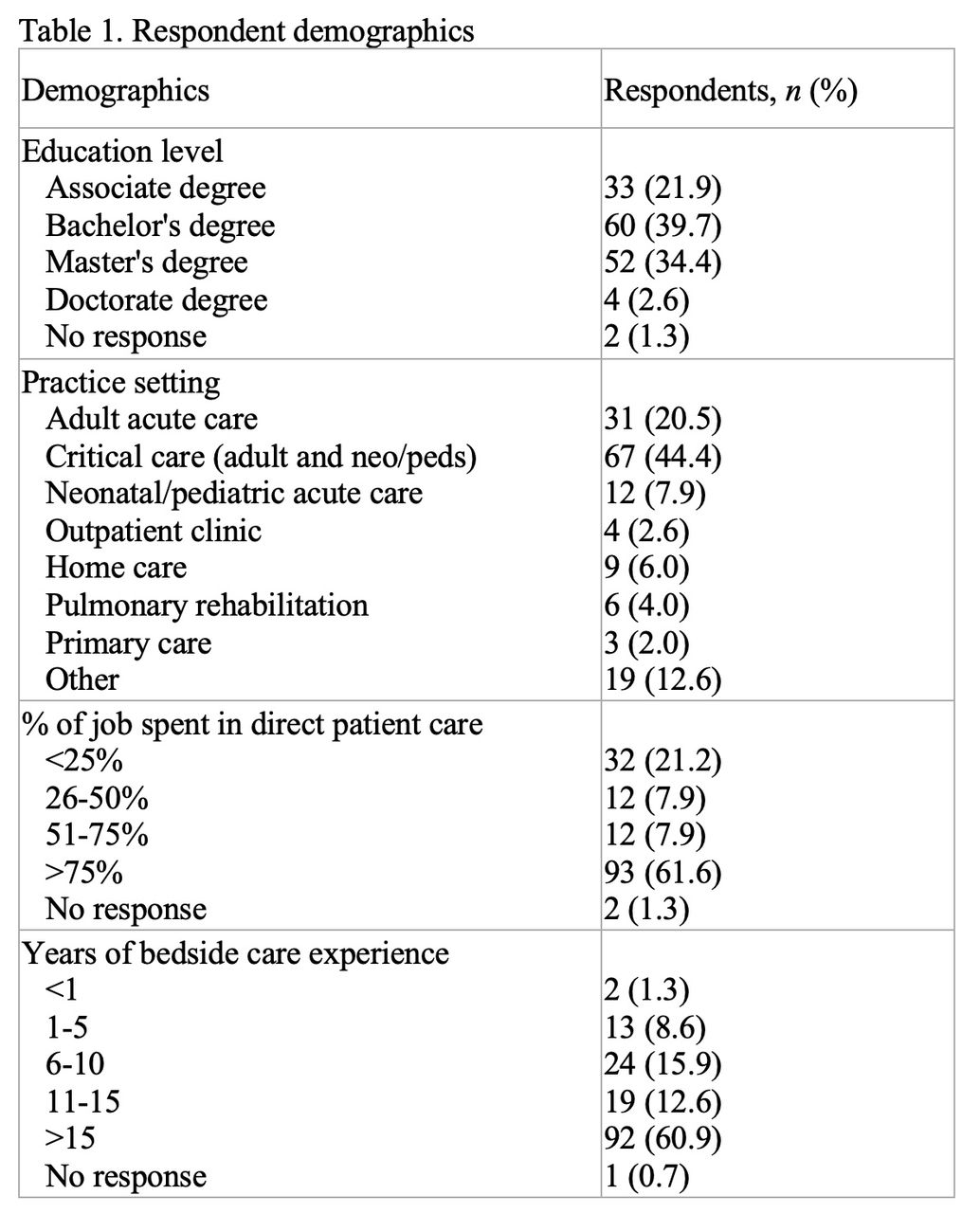
One hundred fifty-one valid responses were received. Most respondents indicated that they had experience with palliative care at the end of life (90.7%), yet only 21.9% received formal instruction during their RT entry to practice education. Although formal training was not provided for most RTs during their entry to practice education, 56.3% reported participation in continuing education courses focused on palliative care. While most respondents (72.9%) reported a high comfort level with participating in their patient’s palliative care plan and with discussing palliative care with the health care team (64.3%), only 41.2% reported a high comfort level in talking about palliative care with patients. In addition, 45% of respondents reported that they do not feel included in their patient’s palliative care plan. Further analysis of the data revealed that those who work in a critical care setting care were more comfortable discussing palliative care with the care team (78.5%) and with the patient (62.1%) than those who work in other care settings, though this was not a statistically significant difference (P = .874).
Conclusions:
As the role of the RT evolves, the opportunity for a more defined role in palliative care is clear. This survey revealed high percentage of RTs who participate in palliative care but lack foundational training for this role. Incorporating palliative care instruction in RT entry-to-practice education and through departmental continuing education could improve the RT’s comfort level with the topic and further the RT’s participation in the palliative care plan.
Get full access to this article
View all access options for this article.