




Abstract
Background:
Over the last 4 years our respiratory department morale level has fluctuated. Working short staffed while opening a critical care tower placed a burden on our staff members. Several factors warranted a continuation on improving and maintaining staff morale at a level that will optimize care.
Methods:
This ongoing QI project began in 2019 with a survey sent out quarterly. Results were becoming stagnate and a survey with specific questions needed to be sent. Results indicated we need to continue the QI project. The goal is to implement interventions that have long-term positive effect on staff morale. Surveys will continue to be sent quarterly to evaluate the effectiveness of interventions implemented throughout the year by shared governance and leadership team.
Results:
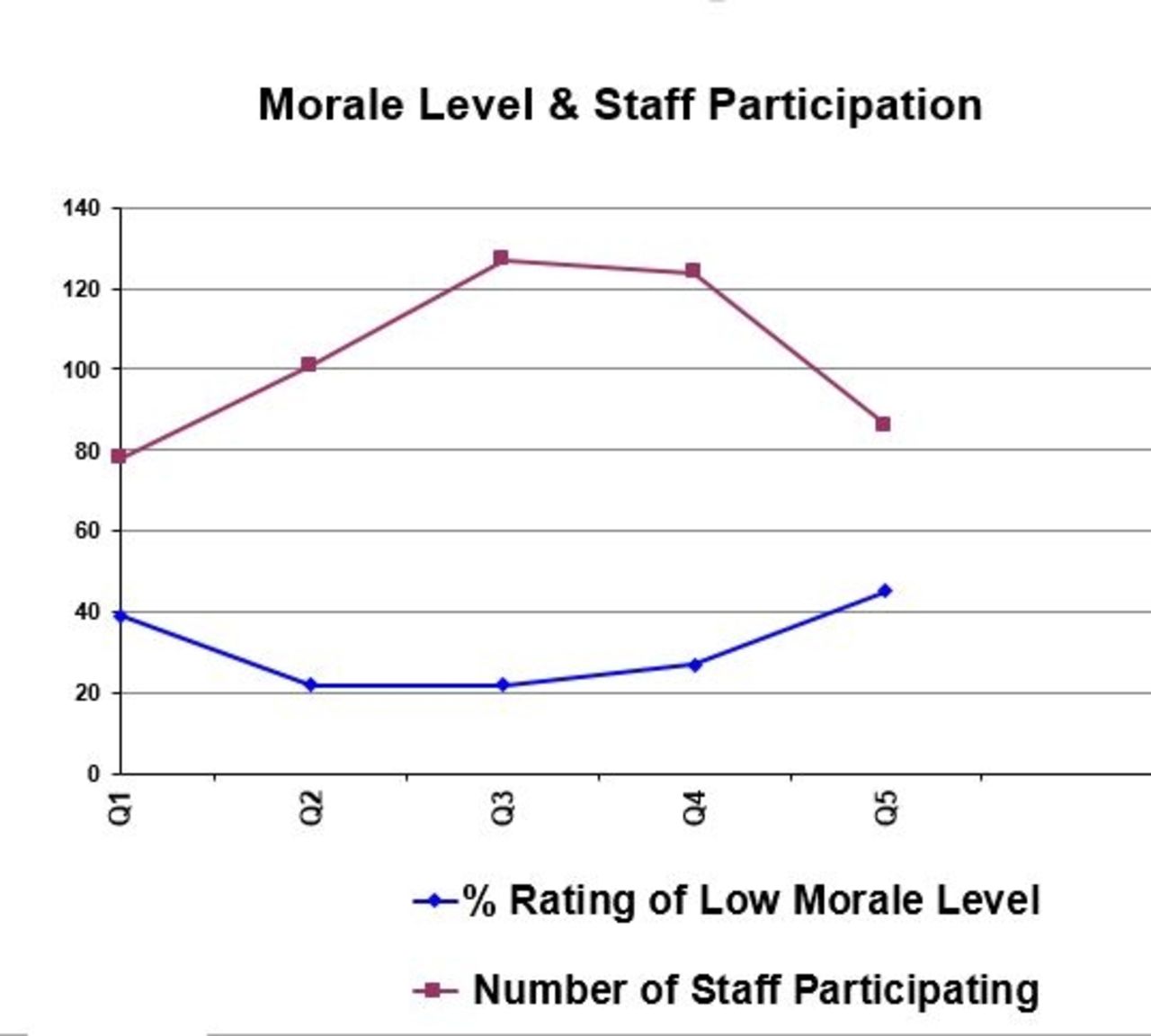
The results of our latest survey showed a 39% decrease in morale level and a 44% reduction in participation. This year presented as a challenge because staff viewed the overall morale as low however the perception of teamwork in their home unit and the division increased. A follow up survey with direct questions was sent to staff to help determine the root cause. Staff requested transparency in regards to base/incentive pay and productivity/staffing model. RTs often feel that our profession is equivalent to nursing and think we deserve equal pay. Face to face positivity from co-workers and managers had a positive effect on morale. The follow up survey showed that 53% percent of employees felt that money isn’t more important than morale. 74% of the RTs felt that they are positivity champions, yet morale remains low. The RTs fault constant toxic conversations surrounding money and staffing shortages as the root cause for low morale. Staff defined morale as a perceived level of the desire, hope, and willingness of employees to complete assignments without hesitation. Happiness comes from within and boosting self-worth produced more productive RTs. Our focus turned towards encouraging sharing raw emotion and transparency. The leadership team and others shared their personal stories on why they come to work every day. Managers began to round and gave face to face praise. A huge factor was getting pandemic pay for critical shifts.
Conclusions:
Programs will continue to be implemented that are within the scope of the shared governance model. The decrease in overall staff morale was influenced by factors that we were a result of the COVID-19 pandemic. Shared governance will continue interventions that target mental health. We will continue to make a positive impact on staff that is willing to embrace our efforts.
Get full access to this article
View all access options for this article.