




Abstract
Background:
End of life care is difficult for all medical professionals, causing struggles with grief during and after the death. Caregivers with higher mastery of care situations have more positive responses to providing care because they perceive themselves as able to meet care demands which can reduce caregiver distress and increase their coping strategies. Very few respiratory therapists (RTs) perceive they are prepared to assist the dying process. These same RTs have to remove life support or stop life sustaining therapy. Objective: To determine if a one hour course on end of life education to RT staff was effective in increasing staff perception of; their knowledge of end of life practices, value to their care of end of life patients, comfort with providing end of life care, and knowledge of long and short term ways to deal with their own grief.
Methods:
A convenience sample of 130 pediatric RTs were provided a one hour end of life education course on the technical and emotional/spiritual aspects of end of life care which served as the intervention for this study. After the education a voluntary online survey was used to collect data. Participants were asked four questions, but each question was optional. Statistical analysis included percent change.
Results:
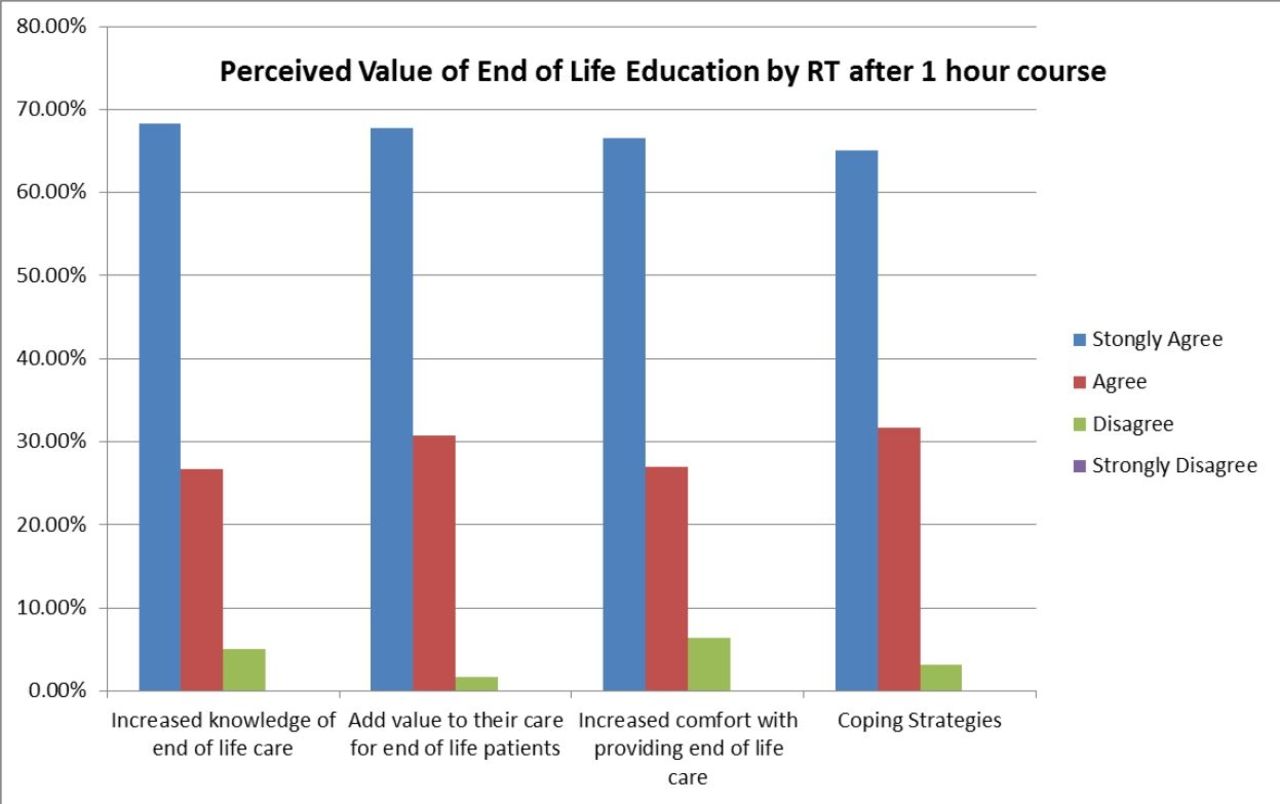
Voluntary online participants (N = 63), 68.3% (n = 41) strongly agreed their knowledge of end of life care increased after this course, 26.7% (n = 16)) agreed, 5% (n = 3) disagreed, and 0% (n = 0) strongly disagreed. 67.7% (n = 42) strongly agreed that this course would add value to their care of end of life patients, 30.7% (n = 19) agreed, 1.6% (n = 1) disagreed, and 0% (n = 0) strongly disagreed. 66.6% (n = 42) strongly agreed that this course made them more comfortable with providing end of life care, 27% (n = 17) agreed, 6.4% (n = 4) disagreed, and 0% (n = 0) strongly disagreed. 65.1% (n = 41) strongly agreed that this course increased their knowledge of long- and short-term ways to deal with grief, 31.7% (n = 20) agreed, 3.2% (n = 2) disagreed, and 0% (n = 0) strongly disagreed.
Conclusions:
RTs perceived an increase in: knowledge of end of life practices, the feeling of value added to the care of end of life patients, increased comfort with providing end of life care, and increased knowledge of long and short term ways to deal with their own grief after the course. End of life care should be included as part of continuing education for RTs. Disclosures: None
Get full access to this article
View all access options for this article.