




Abstract
Background:
Pressure injuries from medical devices have become a key quality initiative for patient care. Endotracheal tubes (ETT) are a lifesaving medical device yet the risk of a medical device-related pressure injury (MDRPI) associated with ETTs can be life threatening if not managed appropriately. From July 1, 2017 to June 30, 2018, the Neuroscience Critical Care Unit (NCCU) fell in third place out of all other clinical units for MDRPIs with a leading cause due to ETT-related pressure injuries. An ETT Repositioning Schedule was created to reposition the medical device every two hours. This responsibility is shared between Nursing and Respiratory Therapy (RT) to enhance collaborative practice and increase awareness of skin breakdown.
Methods:
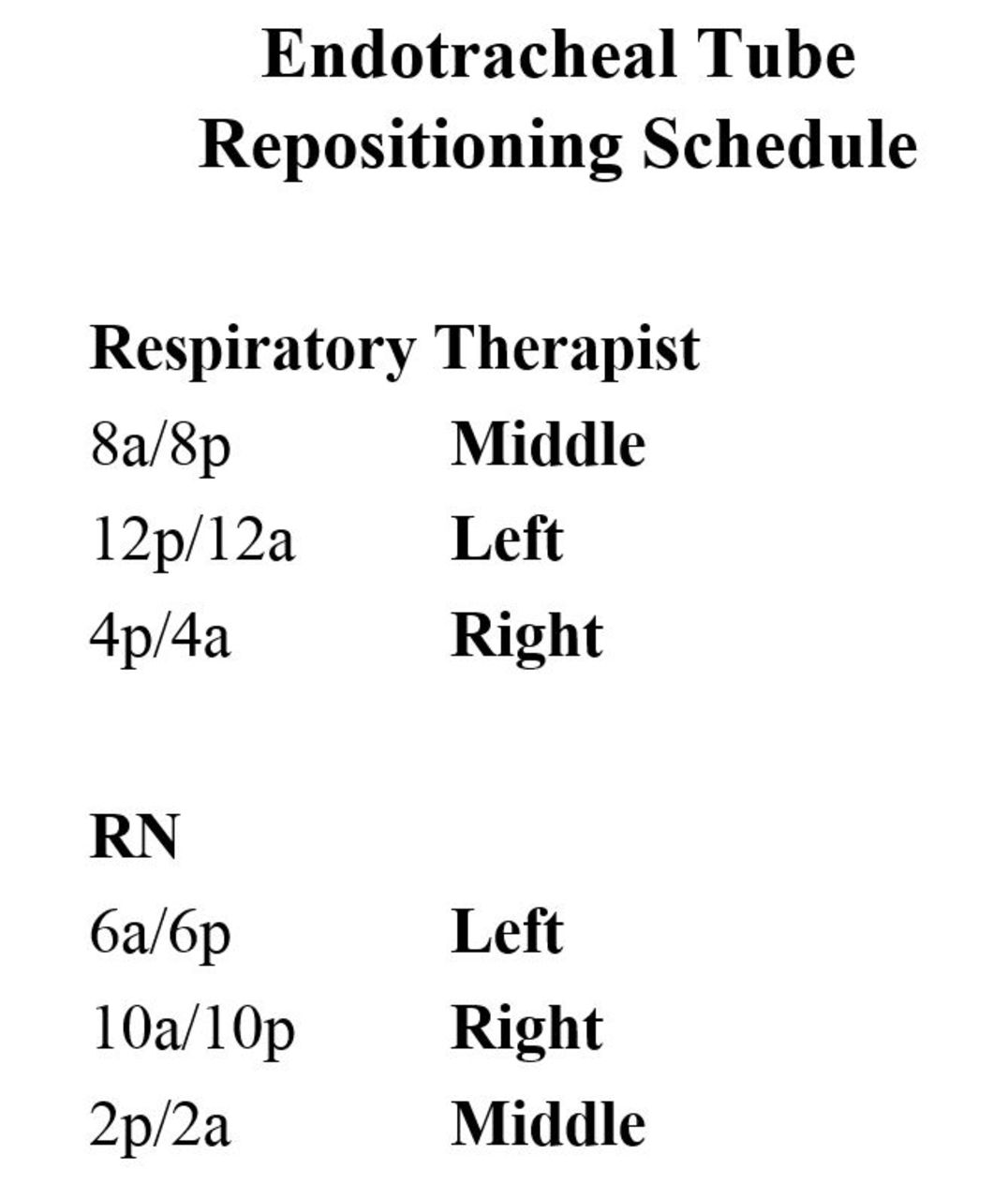
A trial was instituted in the NCCU for three months, July 1, 2018 to September 30, 2018, to evaluate a decrease in MDRPIs specific to ETTs by 50%. Current practice for ETT repositioning is completed by staff nurses every two hours. A laminated Endotracheal Tube Repositioning Schedule was created for both Nursing and RT. RTs reposition the ETT at 0800, 1200, 1600, 2000, 0000 and 0400. Nurses reposition the ETT at 0600, 1000, 1400, 1800, 2200 and 0200. The schedule was hung at the patient’s head of bed as a visual reminder. Education was provided to all nursing and RT staff.
Results:
Data collection occurred from July 1, 2018 to February 28, 2019. The initial three month trial was continued and established in the NCCU. From fiscal year 2018 (FY 2018) to fiscal year 2019 (FY 2019), all medical device-related hospital acquired pressure injuries (HAPI) in the NCCU decreased 10%, from 24 to 13. ETT-related HAPI in the NCCU decreased 50%, 11 to 6. In addition to respiratory device-related HAPI, all categories of medical device related HAPI have decreased in the current FY 2019 as compared to FY 2018.
Conclusions:
The overall goal of the trial was achieved and an unintended benefit resulted in an overall decrease in all categories of MDRPIs. This trial helped to establish a need for collaborative ETT repositioning and visualization of skin in all adult intensive care units in pursing best practice and further reduction in MDRPIs. The success of the intervention was shared throughout the institution and was recently implemented as a standard of care in all adult ICU’s of the hospital. This change has been identified as an opportunity to enhance collaboration between RT and nursing in providing quality care.
Get full access to this article
View all access options for this article.