




Abstract
Background:
Employee engagement is a hot topic in healthcare and a strategic focus in many high performing organizations. Engagement leads to improved performance, higher productivity, and less turnover yet, according to a Gallup poll, 68% of the U.S. workforce is disengaged. The Studer Group, an authority on this topic, believes eliciting employee feedback through rounding is a foundation tactic to improve engagement. But, gathering feedback without mining for solutions delivers no opportunity for improving operational results.
Methods:
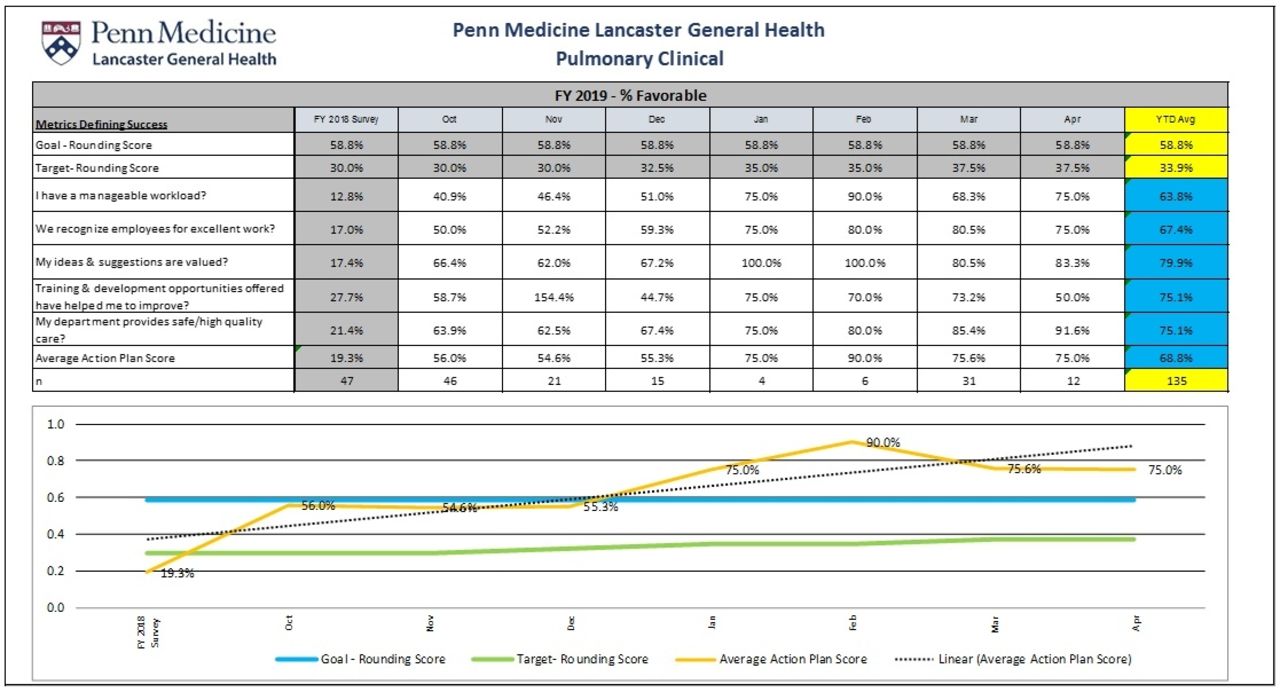
In 2018, the Penn Medicine Lancaster General Hospital's Pulmonary department enhanced their rounding strategy to include focused solution finding. Termed Purposeful Rounding", the department's leadership team added questions to their rounding that focused on lower scoring items from their previous year's organizational employee engagement survey which included: workload, recognition, ideas and suggestions, training opportunities, and safe care (AHRQ question). Using a Likert scale, therapists were asked to rate their feelings on these topics and offer solutions to improve them. The team was continually asked for feedback to measure the impact of improvements made in the department.
Results:
The experiment was measured over 7 months where all therapists were rounded on at least once with a total of 135 individual rounds. The average score of the lowest scoring items of the 2017 survey was 19.3% favorable. As improvements were made and feedback was re-measured, favorable scores improved to 68.8%. Therapist retention rate was measured at 92.8% during the same time period.
Conclusions:
Eliciting feedback, mining for solutions, and idea execution resulted positive changes in the pulmonary department. The use of purposeful rounding provided the department the insight to identify these opportunities while providing an objective measure to the subjective metric of engagement. We hypothesize that these results will predict the results of our next formal engagement survey and improve the overall score by focusing on the lowest scoring items. "
Get full access to this article
View all access options for this article.