




Abstract
Background:
While numerous factors influence employee engagement, communication is considered the cornerstone of an engaged workforce. When department operations run 24/7 and staff work 3 days a week, face to face communication can be limited compared to traditional workplace settings. The primary purpose of this study was to evaluate the effect new communication tools would have on the perception of communication in employee engagement scores, particularly communication drivers.
Methods:
We conducted pre/post surveys of staff perceptions of communication and trend analysis of 2018/2019 employee engagement results. New communication tools included a smart phone app, department newsletter, communication board, start of shift check-ins. We hypothesized an improvement in post-implementation survey results and post-implementation employee engagement survey drivers in communication category, demonstrating improvement in both perception of communication and employee engagement.
Results:
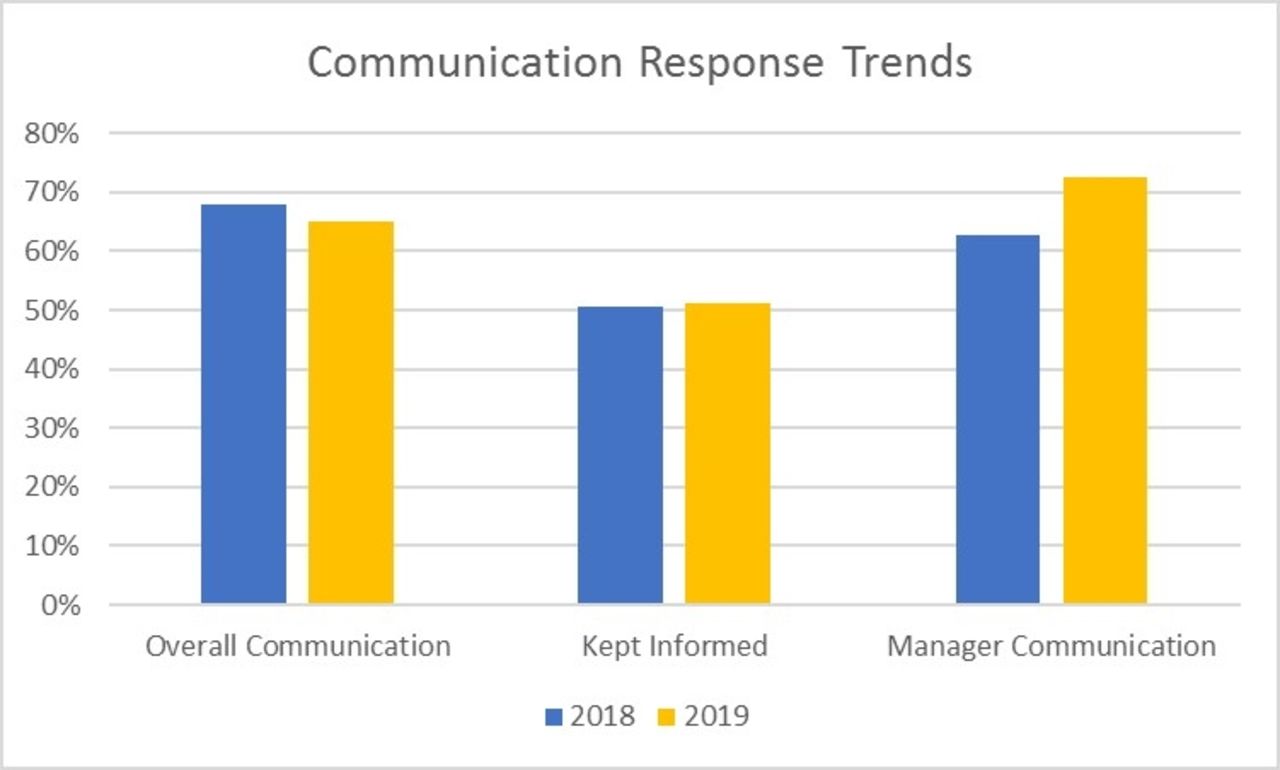
The pre/post implementation surveys showed 68% of staff were satisfied with overall communication pre-implementation compared to 65% post-implementation. While there was a slight decrease in overall satisfaction with communication, the respondents were given an option to provide comments which revealed overall positive opinions about the new communication tools. For the employee engagement survey, two questions in the Communication and Input category were evaluated for positive agreement by answering either Strongly Agree or Agree. 51.3% agreed in 2019 “I am kept informed of the organization’s future plans and direction” compared to 50.6% in 2018, a 0.7% improvement. 72.7% agreed in 2019 “My manager communicates messages that my coworkers need to hear, even when the information is unpleasant” compared to 62.7% in 2018, a 10.1% improvement.
Conclusions:
We did not demonstrate improvement in perception of communication by implementation of these communication tools. We did see improvement in employee engagement responses, however, we cannot conclude that the new communication tools specifically contributed. We identified factors which may have influenced results during this timeframe, including leadership changes, management of confidential HR matters, and general adjustment to change. Ongoing assessment and evaluation of communication methods are needed to determine best approaches as staff demographics change, department needs shift, and technology evolves. Disclosures: None
Get full access to this article
View all access options for this article.