




Abstract
Background:
Current Respiratory Therapy programs incorporate minimal palliative and hospice care education in their curriculum; palliative and hospice care is not included in the respiratory care department orientation process; participation in the Main Line Health (MLH) Palliative Care Fellowship highlighted the need to determine baseline RT knowledge and attitudes towards Palliative and Hospice Care and evaluate potential education and engagement opportunities. Literature Review: Much of the literature obtained focused on terminal extubation and end of life care in the critical care setting; Michaud-Young (2009) noted that patients with chronic lung disease require care by clinicians who will be in a position to support them as they approach end of life; an editorial in the September 2017 Lancet journal remarked that palliative care in chronic lung disease is an important and often neglected part of clinical practice.
Methods:
Respiratory therapists at MLH were invited via email and department posted flyers to participate in a palliative and hospice care pre/post education survey; all RTs who completed the pre survey were sent a link to view a short palliative and hospice care video in-service; as well as, complete a post survey.
Results:
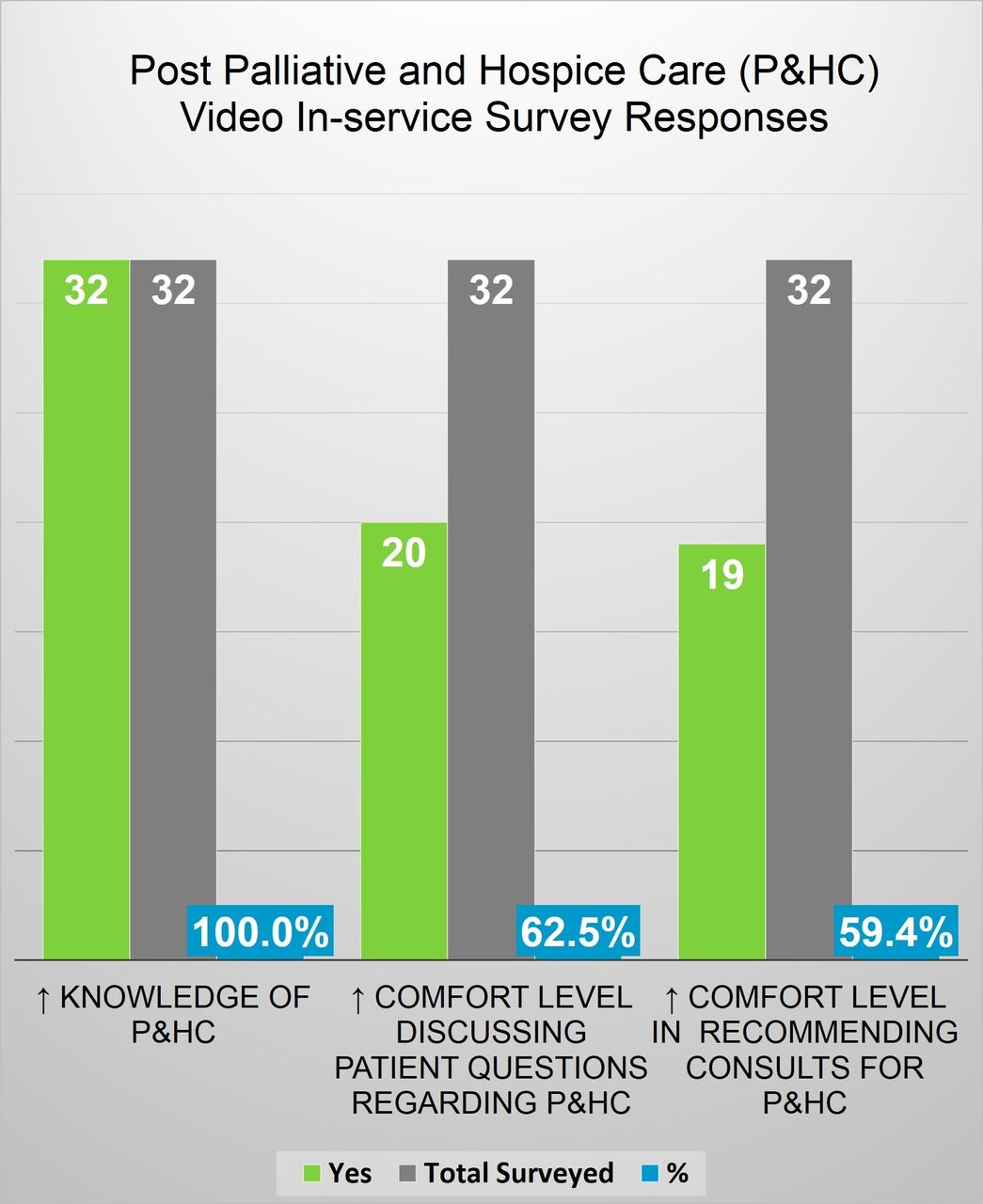
44 of 126 RTs (35%) invited to participate completed the pre-survey, while 32 of 44 RTs (73%) who completed the pre-survey viewed the video in-service and completed the post survey; 91% (40/44) of RTs believe there was not adequate Palliative and Hospice Care education provided during their student training; 98% (43/44) of RTs believe palliative and hospice care should be part of the department orientation process. Post survey/in-service data displayed in chart below.
Conclusions:
Simple education initiatives related to palliative and hospice care may address RT knowledge gaps; as well as, positively impact attitudes related to this topic; incorporating palliative and hospice care into our department orientation process is warranted; with an aging chronic lung disease population there is opportunity for Respiratory Therapists to increase engagement in MLH Palliative and Hospice Care initiatives. Disclosures: None
Get full access to this article
View all access options for this article.