




Abstract
Background:
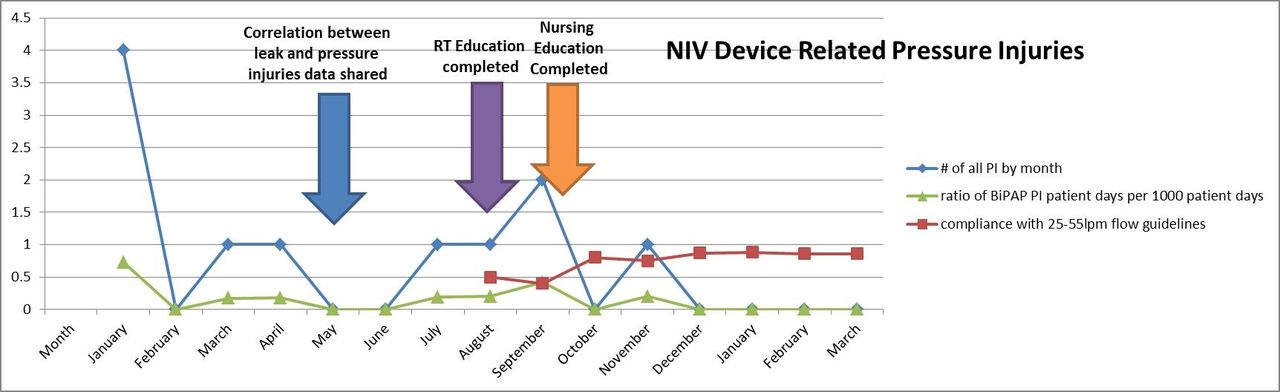
Device related pressure injuries cause pain, disfigurement, morbidity and mortality. Reducing respiratory device related pressure injuries is one of our hospitals operating plan goals. The rate of pressure injuries in January 2018 was 12.46 per 1,000 noninvasive days or 0.70 per 1,000 patient days. A recent study done at our facility revealed a correlation between NIV patient mask leak and pressure injury. Specifically our research identified that there was a correlation with higher patient leaks and pressure injuries. After placing the minimum and maximum patient leaks on the same graph it was noted that there was less pressure injuries in the group with patient leaks >25 L/min and max leaks <55 L/min.
Methods:
An IRB approved prospective interventional design study was conducted on all noninvasively ventilated patients with mask from 02/01/18-2/1/19. We presented the results of our previous correlation study in May 2019. In August and September all respiratory and nursing staff in PICU, ACU, Medical, Hematology/Oncology, and Pulmonary were instructed on the use of leak guidelines for preventing mask device related pressure injuries. Following education, signs were placed on each machine reminding staff of guidelines and weekly audits were implemented to assess compliance. Compliance with flow guidelines reached more than 80% in December 2018.
Results:
Of the 1,932 noninvasive days since education was completed, only one pressure injury has occurred (0.52/1,000 vent days; a 96.79% reduction) or 0.05/1,000 patient days; a 92.86% reduction). Since we reached 80% compliance with maintaining leak guidelines in December 2018, 1,221 noninvasive days has resulted in 0 noninvasive mask related pressure injuries.
Conclusions:
Utilizing flow guidelines to guide mask strap tension on noninvasively ventilated patients with a mask has led to 0 pressure injuries related to this respiratory device. This allowed us to successfully achieve our hospitals operating plan goal within this group.
Get full access to this article
View all access options for this article.