




Abstract
Background:
Retinopathy of prematurity (ROP) and bronchopulmonary dysplasia (BPD) are significant morbidities of the very low birth weight (VLBW) infant. Hyperoxia, hypoxia, and oxygen fluctuations have been implicated in these disease processes. The ideal target SpO2 range has been the subject of discretion in literature; however, any target range within a larger recommended range is prudent for best practice. An individual unit must determine alarm limits and metrics for tracking compliance with oxygen supplementation.
Methods:
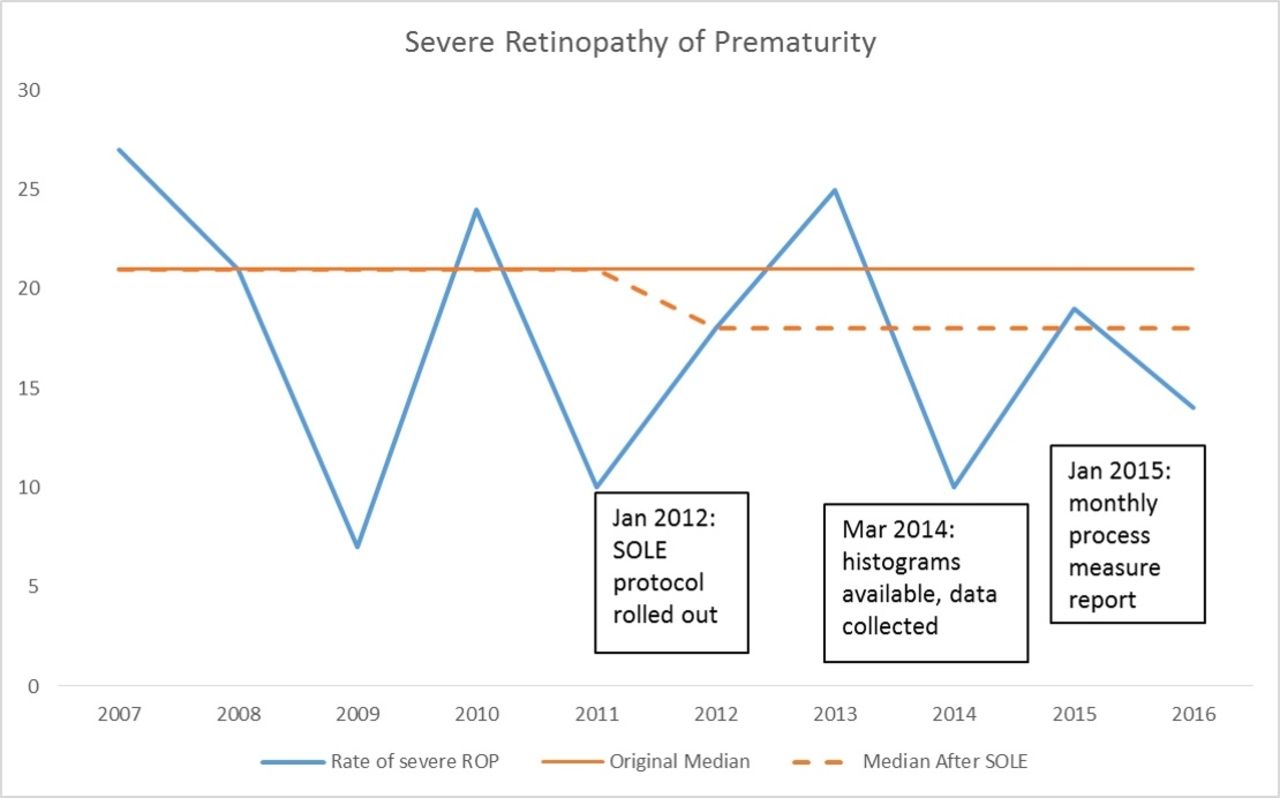
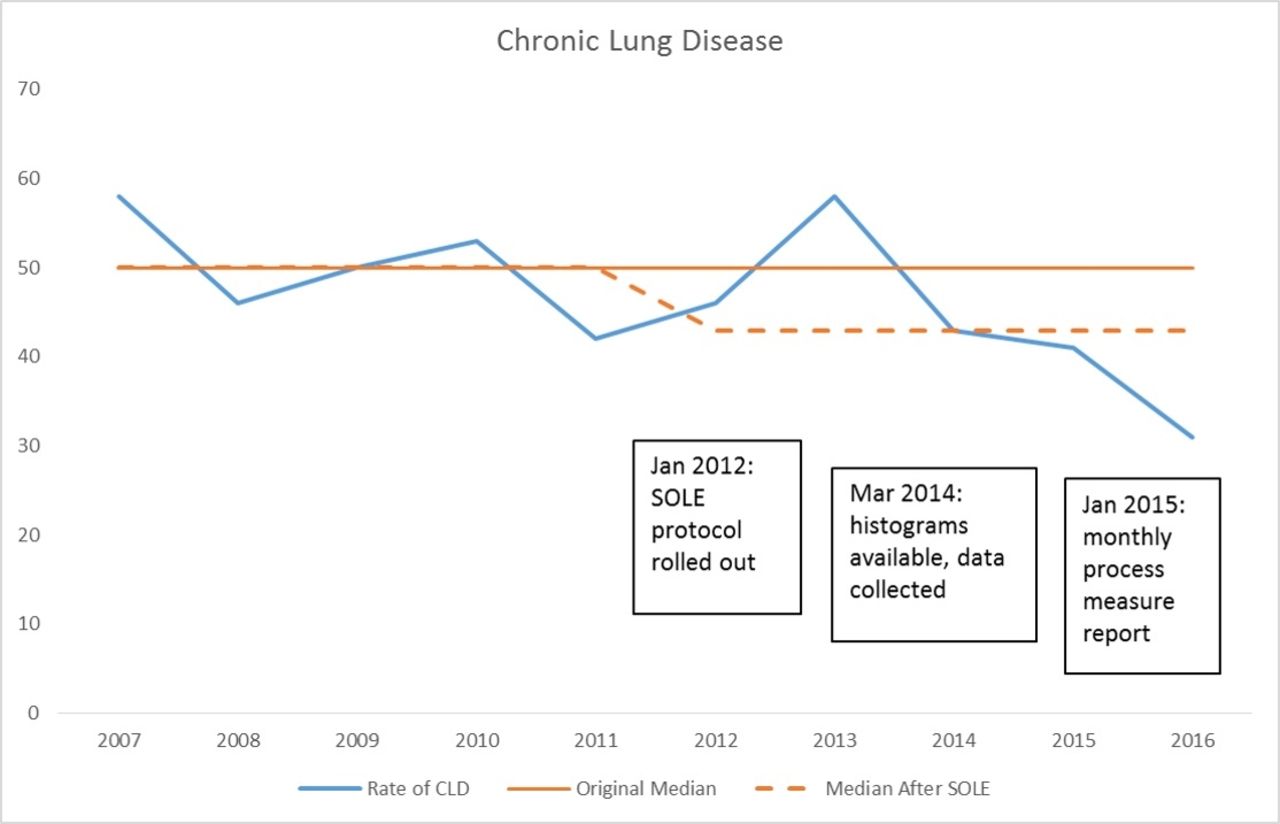
“Save Our Lungs and Eyes” (SOLE) is an oxygen saturation protocol that was implemented to improve SpO2 targeting in VLBW infants. Our unit targets 89 – 94%, and tracks compliance. Histograms for all VLBW patients receiving FIO2 of 30% or more are reviewed every 12 hours and categorized into predetermined oxygen ranges. Using the Model for Improvement, we aim to improve our within range time from an average of 40% of the time to an average of 50% of the time over the next year.
Results:
Since 2014, our within range time was tracked. We averaged 40% of time within range for 2014 and 2015. We increased our time within range in 2016 slightly, but have decreased in 2017.
Conclusions:
Applying improvement science has led to standardization of practice, but high reliability has been difficult to achieve. Our small tests of change, which have included bedside triggers, monitor programming, and education bundles, have led to modest but questionably sustainable improvement. Future directions include peer conversation with other units, further monitor interrogation, and perhaps revisiting our alarms and targets for sustainability of improvement.
Get full access to this article
View all access options for this article.