




Abstract
Background:
Treatment of bronchiolitis with high-flow nasal cannula (HFNC) may alleviate respiratory distress and reduce ICU utilization. However, HFNC use may prolong length of stay (LOS) if weaned more slowly than medically indicated. Using quality improvement methodology, we aimed to reduce HFNC length of treatment (LOT) and inpatient LOS each by 12 hours in 0-18 month old patients with bronchiolitis requiring HFNC on the pediatric hospital medicine service by April 1, 2019.
Methods:
We recruited multidisciplinary representatives from key stakeholder groups to form a Wean Team. Key drivers of prolonged HFNC duration were communication difficulties between respiratory therapists (RTs) and physicians (MDs), overextended RTs and no prescribed weaning plan. Swim lane workflow analysis highlighted variations in weaning practices, which were used to inform PDSA cycles. We introduced an RT-driven weaning protocol, created standardized MD weaning orders, employed nursing and RT huddles, held education sessions, and posted reminders. The impact of interventions on HFNC duration and LOS were plotted over time in a statistical process control chart and compared to baseline rates using the Wilcoxon rank-sum test.
Results:
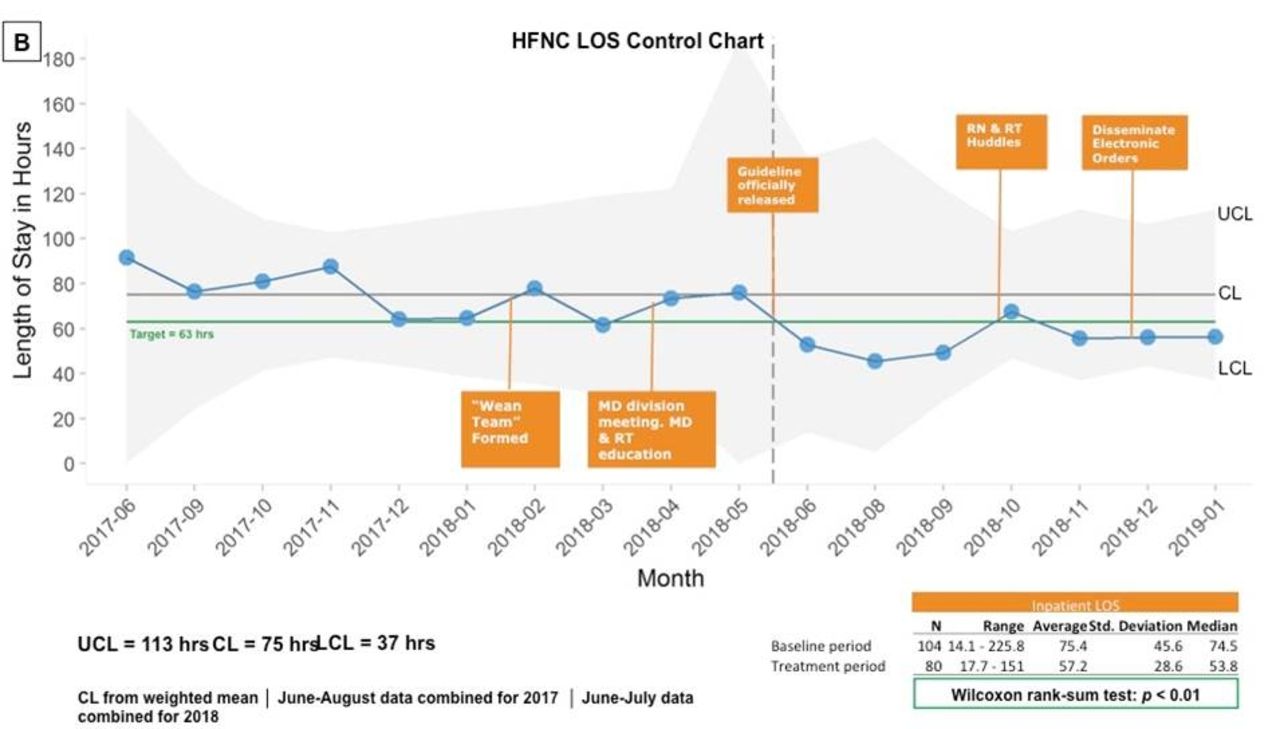
Mean HFNC duration decreased from a baseline of 41.9 hours to 28.9 hours during the intervention period (P < .001); mean LOS decreased from 75.4 hours to 57.2 hours (P < .01). The HFNC duration and LOS control charts (fig. 1) both demonstrate special cause variation with 7 consecutive points below the center line beginning in June 2018. Median-adjusted Levene test demonstrates a trend towards less variation in HFNC LOT (P = .06) and LOS (P = .053) during the intervention period. Balancing measure analyses revealed no post-wean PICU transfers and no change in 72-hour readmission rate.
Conclusions:
This ongoing quality improvement project significantly decreased duration of both HFNC use and LOS for patients with bronchiolitis. Additionally, there was a concomitant reduction in variance, suggesting reduced practice variation. RT-driven HFNC weaning protocols with MD participation can reduce HFNC duration and LOS in bronchiolitis. Future work will focus on sustaining improvements and assessing the cost savings of this approach. “
Get full access to this article
View all access options for this article.