




Abstract
Background:
There have been ongoing challenges with ensuring the appropriate utilization of supplemental oxygen in the acute care setting. Pre-intervention data showed that patients were not being weaned appropriately and oxygen orders were remaining active in patient’s charts for longer than clinically indicated. A recent meta-analysis study showed an increased risk of mortality in acutely ill adults treated with liberal versus conservative oxygen therapy [1]. The study concluded that there was a 21% increase in in-hospital mortality in patients who received liberal oxygen therapy.
Methods:
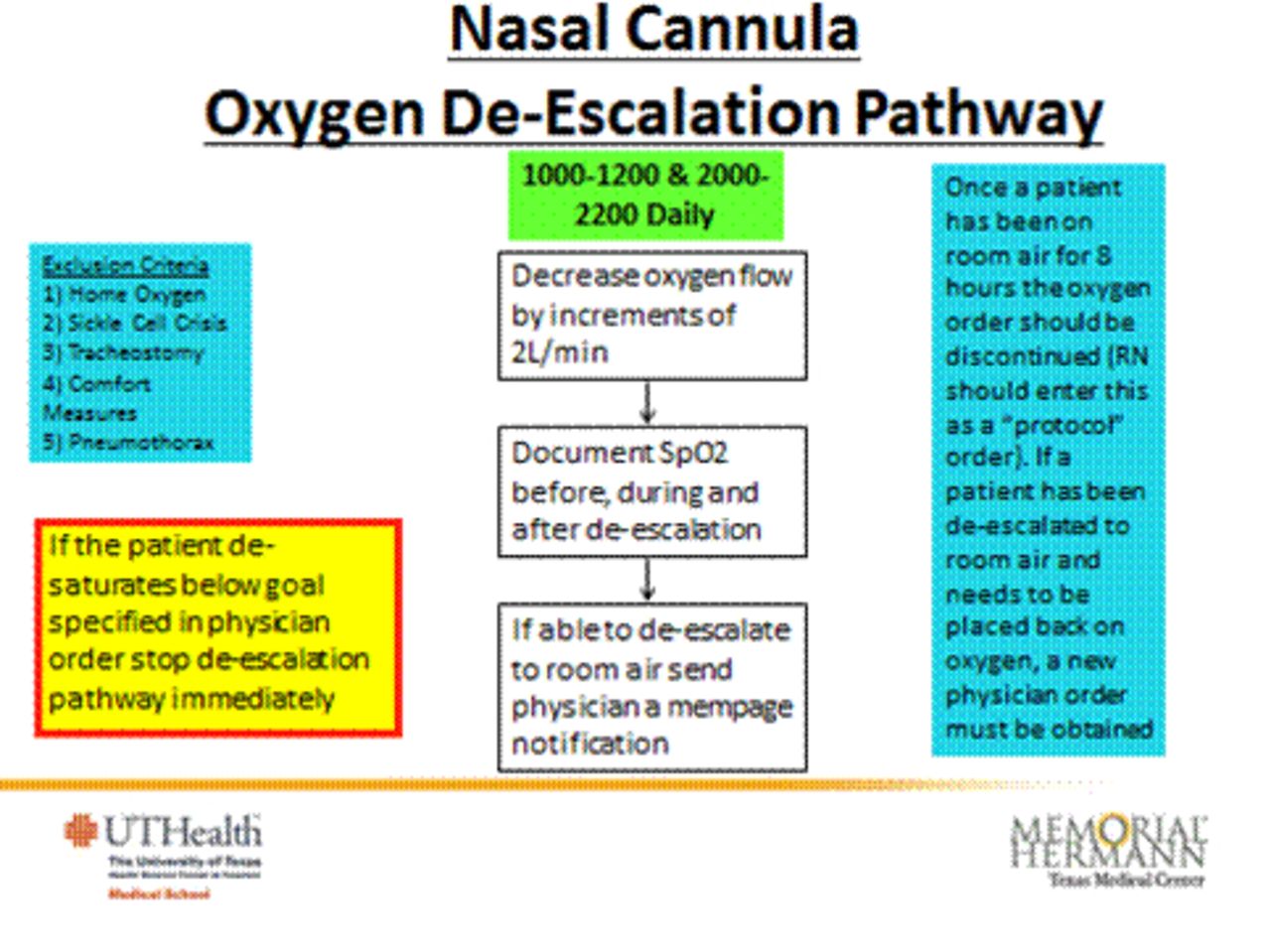
A de-escalation pathway for nursing was created from the current oxygen therapy protocol with nursing, respiratory and physician input. Since implementation in August, we have seen improvement in all three metrics: weaning compliance, appropriate vital sign documentation, and order discontinuation. Initial scope included patients receiving oxygen via nasal cannula on the medicine service line floor units as well as the MIMU at Memorial Hermann Texas Medical Center. Project scope excluded patients receiving supplemental oxygen for pain related to sickle cell crisis, those on home oxygen, comfort measures patients, tracheostomy patients and those receiving oxygen to treat a pneumothorax.
Results:
Increased compliance was noted across all measured metrics following initial education. Oxygen de-escalation/weaning compliance improved from 56% to 63%. Order discontinuation for patients who were weaned improved from 6% to 18%. Vital sign charting with regards to oxygen therapy mode improved from 56% to 86%.
Conclusions:
1) A PIL (PowerPoint and quiz) is being created to address the appropriate use of oxygen therapy which will be used for both nursing and respiratory therapy 2) Data collection is ongoing at the system level 3) Plan to continue data collection and re-evaluate/revise as necessary following PIL module implementation.
Compliance of de-escalation of chosen metrics Nursing de-escalation pathway created to supplement respiratory oxygen de-escalation pathway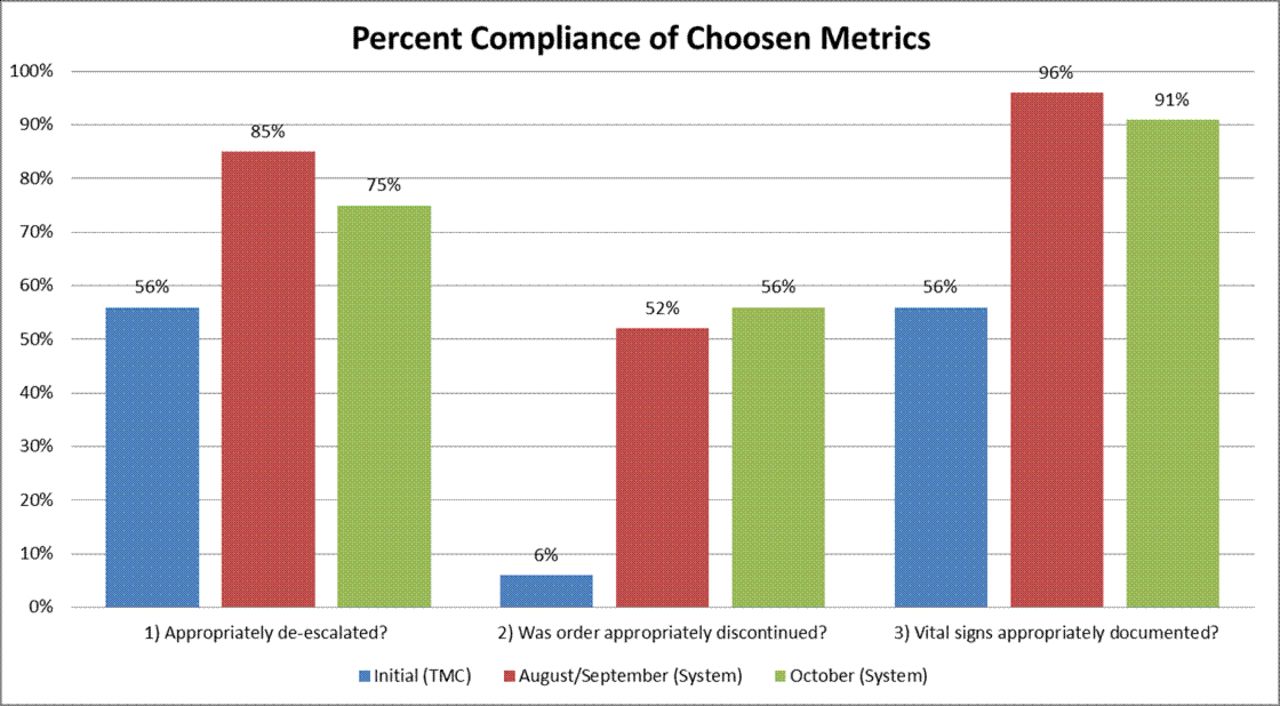
Get full access to this article
View all access options for this article.