




Abstract
Background:
The Schnozzle is a smooth tip adapter, attached to a syringe which forms a seal within the nostrils to enable quick and effective flow nasal lavage. The Schnozzle syringe adaptor improves the ability to routinely clear the nasal passages for all patients with positive pressure reduce upper respiratory symptoms such as, nasal and sinus congestion. The purpose of this project was to analyze if the Schnozzle nasal irrigation product is effective in reducing upper respiratory symptoms related to nasal and sinus congestion in adults, in an urban university population.
Methods:
After Institutional Review Board approval, 29 voluntary participants with nasal or sinus congestion were instructed in the nasal irrigation procedure and completed an anonymous survey. Using a 60 cc syringe with a Schnozzle syringe tip adapter, participants instilled 60 cc of normal saline solution (NSS) into each naris, twice per day for 10 days. Additionally, volunteers were instructed to position their head horizontally and hold their breath as they administered the normal saline solution to ensure they filled the sinus cavity and drain out the opposite naris avoiding the lower airways. Survey assessments included reason for participant interest, compliance, frequency, signs and symptoms, mucus color and changes, comfort, medication use, and alternative outcomes. The 29 adult participants were separated into a compliant and non-compliant group. Compliance for this research was determined as those participants who documented routine nasal irrigation twice per day for 10 consecutive days. Excel (version 2010) was utilized to analyze data and the Chi square test was used to determine significance of reported outcomes within the 2 groups.
Results:
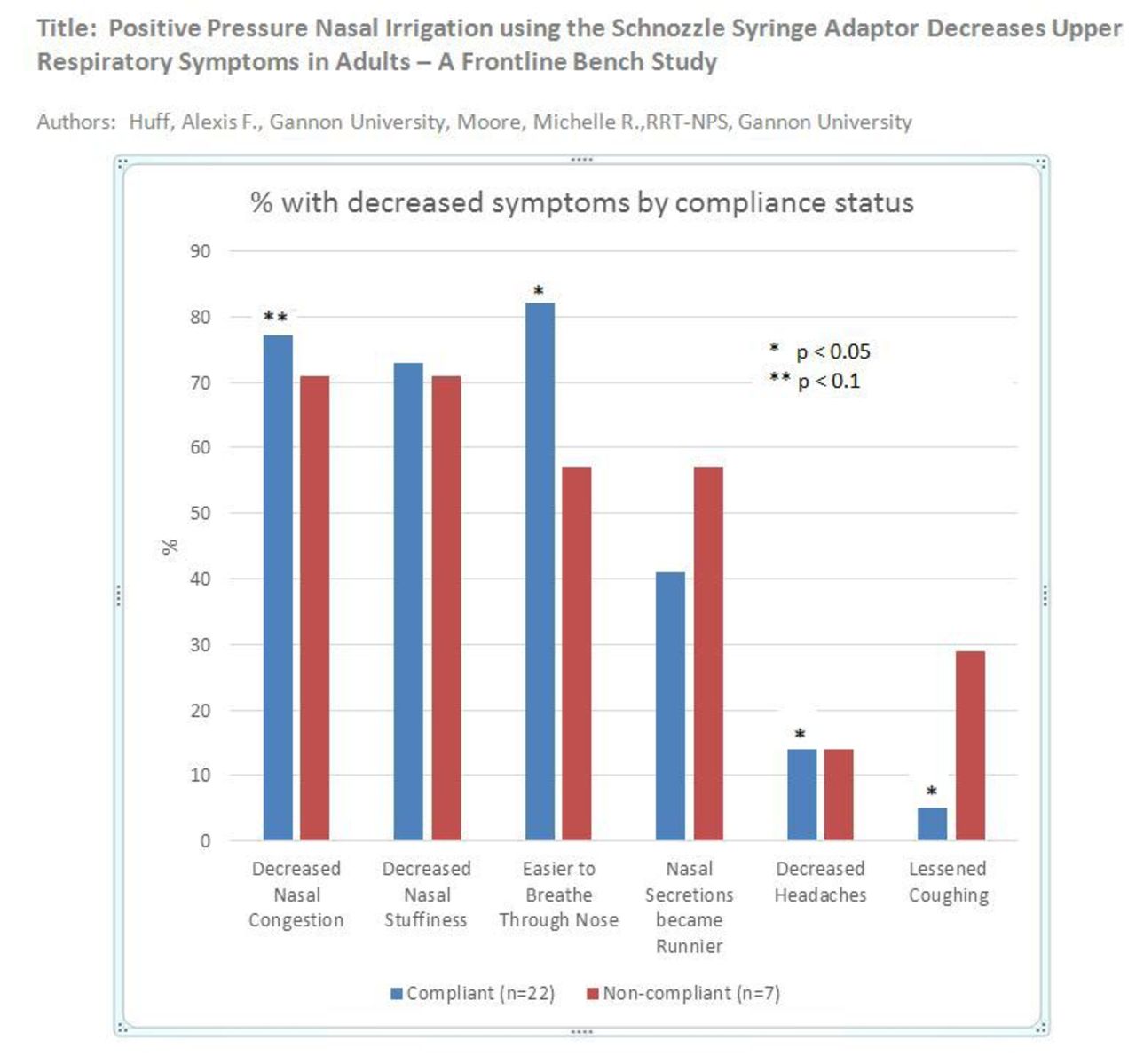
Participants in the compliant group reported a decrease in headaches, coughing, and work of breathing (ie, easier to breathe) which was statistically significant (P<0.05). As well, a decrease in nasal congestion was marginally significant (P=0.073) with use of the Schnozzle. There was no significant difference in nasal stuffiness or reports of runnier nasal secretions.
Conclusions:
Adult using positive pressure nasal irrigation for a 10-day period are more likely to experience a decrease in upper respiratory symptoms and find it easier to breathe. The decrease in upper respiratory symptoms may be related to reduced inflammation and secretions prompted by pushing secretions out of the nasal and sinus cavities.
Get full access to this article
View all access options for this article.