




Abstract
Background:
Asthma and allergies are considered by many physicians as being triggered by different substances in the air we breathe. The lung is the most common site of injury by airborne pollutants. Studying of indoor air quality can provide a method for appropriate remedial action. Research suggests that SHD (Settled House Dust) may be a significant source for indoor exposure. This research study consisted of sampling dust from homes in different area codes. The purpose of this research study will display how sampling household dust is a powerful tool for identifying chemicals that contribute to poor indoor air quality. Over the last few decades, the diagnosis of asthma and allergy cases have increased all over the world. Environmental changes are suspected as a possible cause. Studies suggest pollutants in the indoor environment may contribute to the increase incidence of asthma and allergy cases. These pollutants include chemical contaminants (e. g. pesticides, metals, plasticizers) and biological contaminants (e. g. bacteria, molds, viruses, dust mites). Many of these contaminants combined with particulate matter suspended in indoor air that later settles out as house dust. Inhalation of dust can occur when dust is suspended or re-suspended by activities such as vacuuming, cleaning, playing or simply walking through a room.
Methods:
The study was carried out in Houston and its surrounding areas. The areas were residential with no industrial activities nearby. In the study area, several types of houses were present: multi-story, single floor, houses with many facilities (air-conditioning, air cooling systems, with good ventilation). The occupants of each resident were asked to give background medical history. Dust samples were collected from vacuum bags and air condition filters. Gas chromatography /mass spectrometry was used to analyze all dust samples.
Results:
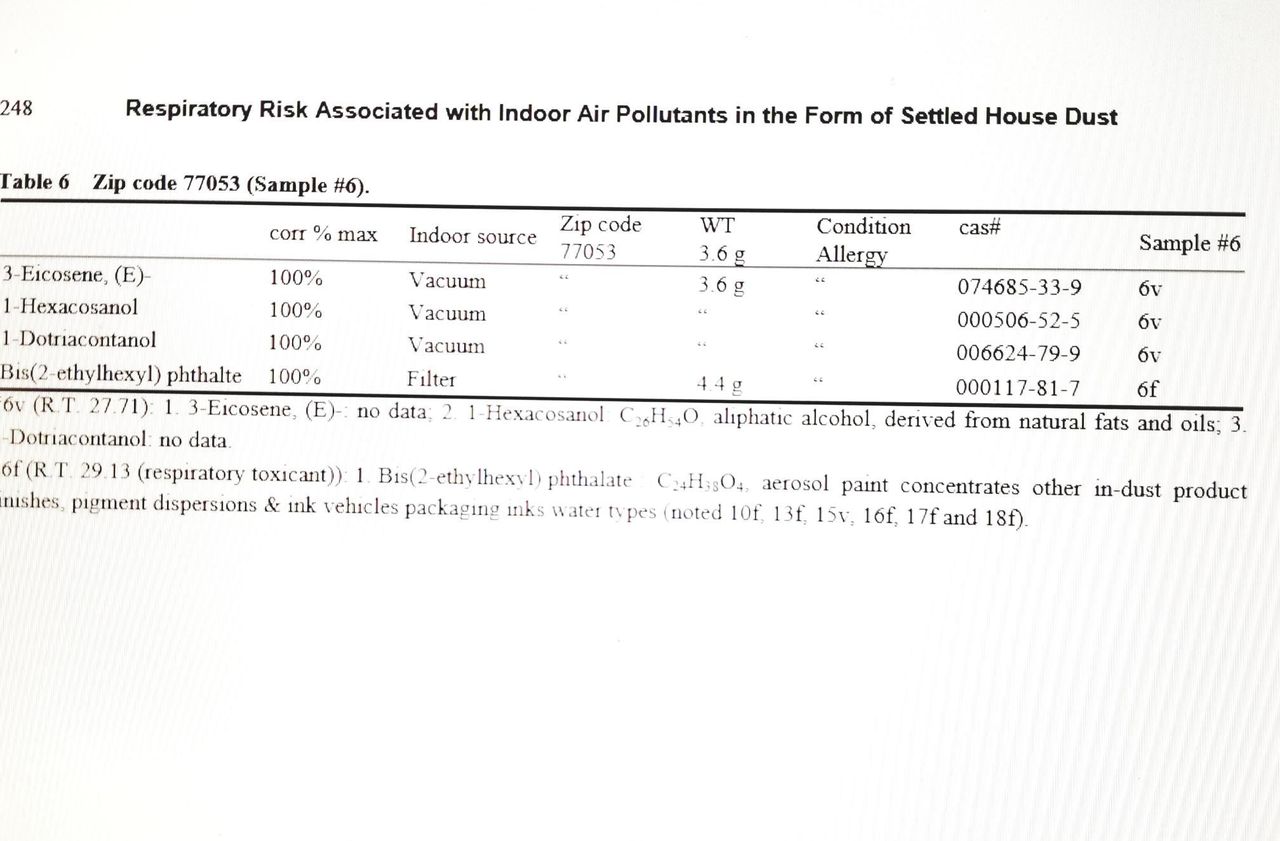
There were a variety of chemicals identified. A majority of chemicals identified were consistent with everyday household products. These products included cleaning agents, oils and fragrances.
Conclusions:
There were several homes in which the chemical phthalates were identified in dust samples. Epidemiological studies have suggested an association between exposure to phthalate plasticizers including DEHP and increased prevalence of asthma, rhinitis or wheezing. It can be concluded; the Settled House Dust Method is a unique and reliable tool for identifying a broad range of chemicals.
Get full access to this article
View all access options for this article.