




Abstract
Background:
Patients with respiratory complications requiring further interventions, such as tracheostomies, often also need routine medications as a part of their care plan. Many of these respiratory medications are delivered in aerosol form via small volume nebulization. The purpose of this study is to determine how the SouthMedic Oxytrach mask (Barrie, Ontario, Canada) aerosol delivery compares to the aerosol delivery of the Teleflex Hudson RCI Trach mask (Morrisville, NC). We hypothesized that there will be no difference in aerosol delivery between the Oxytrach mask and the Hudson mask.
Methods:
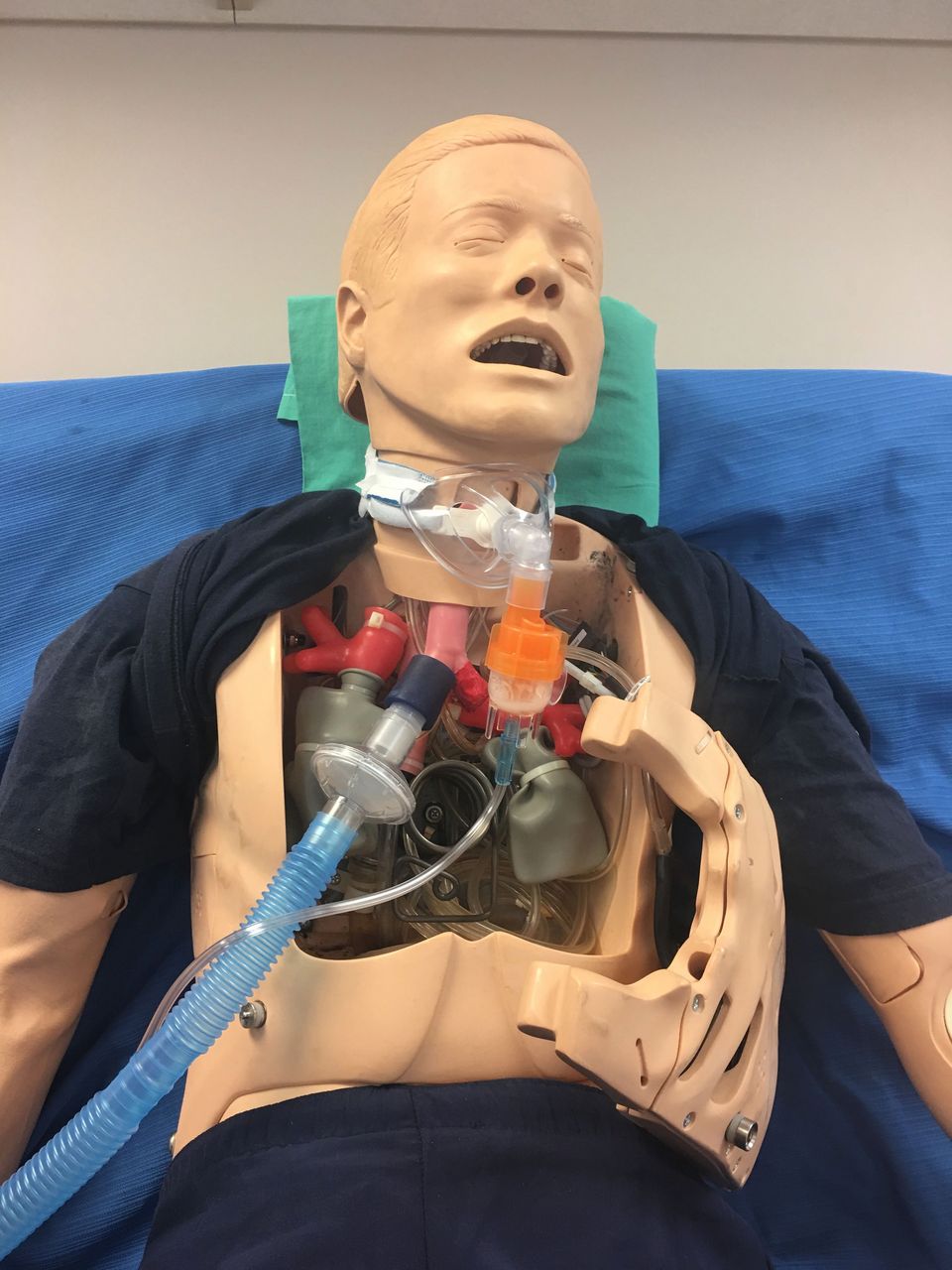
An adult model with a Medtronic 8.0 mm Shiley tracheostomy tube (Minneapolis, MN, US) was attached to a Hans Rudolph, Inc. Series 1101 breathing simulator (Shawnee Mission, KS, US) set to achieve a 500 mL tidal volume, with 16 breaths/min, Raw 5.0 cm H2O/L/s, Compliance 80 mL/cm H2O, and 33% IT. A Teleflex Bacterial/Viral Filter (BFE: 99.999+%, VFE: 99.99+%) (Morrisville, NC, US) was placed distal to the tracheostomy tube on the right main stem bronchi of the model and proximal to the breathing simulator with the left main stem bronchi occluded. For each trial, 6 mL of 10% hypertonic saline solution was nebulized via the Vyaire Medical AirLife Misty Fast nebulizer (Mettawa, IL) at 8 L/min for 4 min. A filter was weighed prior to nebulization, the weight was recorded, and the filter was placed in line on the model. In the first three trials, the nebulizer was attached to the Oxytrach mask and after nebulization; the filter was re-weighed and recorded. In the last three trials, the Hudson masks were used.
Results:
The mean post-nebulization weight of the filters with the Hudson mask was 270 mg. The mean post-nebulization weight of the filters with the Oxytrach mask was 20 mg. There was a statistically significant difference in the amount of aerosol delivery between the two masks (P= .008).
Conclusions:
Based on the results, it was found that the Hudson mask had significantly more aerosol delivery to the filter than the Oxytrach mask. There was an incidental finding during the nebulization trials with the Oxytrach mask. The mushroom shaped Pin and triangular directional Diffuser inside the Oxytrach mask, when placed on the model, fit directly inside the opening of the tracheostomy tube, causing the potential for airway occlusion.
Get full access to this article
View all access options for this article.