




Abstract
Background:
The appropriate delivery of oxygen therapy during patient resuscitation is a critical task for respiratory therapists. Normal textbook guidelines for resuscitation bags instruct oxygen flows to be set at 10-15 L/min during code blues and rapid responses. This conservative approach to oxygen administration seems to be the cultural norm across classroom and hospital settings. Our staff respiratory therapists found benefit to increasing the oxygen flow to >15 L/min as effective tool to reverse or prevent hypoxia during resuscitations, particularly in patients with high oxygen requirements.
Methods:
We took our self inflating resuscitation bag (AmbuBag Spur II) and connected its oxygen tubing to an oxygen flow meter (Timeter) which was plugged into the quick connect hospital wall oxygen outlet. The ventilation side of the bag was then connected to a test lung (Bio-Tek VT-2) with an oxygen analyzer (Mini Ox I) installed in the test lung. Respiratory rate timing for hand bagging was set by using a metronome (Metro Timer). Resuscitation bag was immobilized and compressed fully using a hinged manual compressor. Maximum achieved FIO2 was measured with variable flows of 10 L/min, 15 L/min, >15 L/min "top of valve" (with metal ball floating at very top of flow meter), and "full flush" (oxygen flow meter valve completely open).
Results:
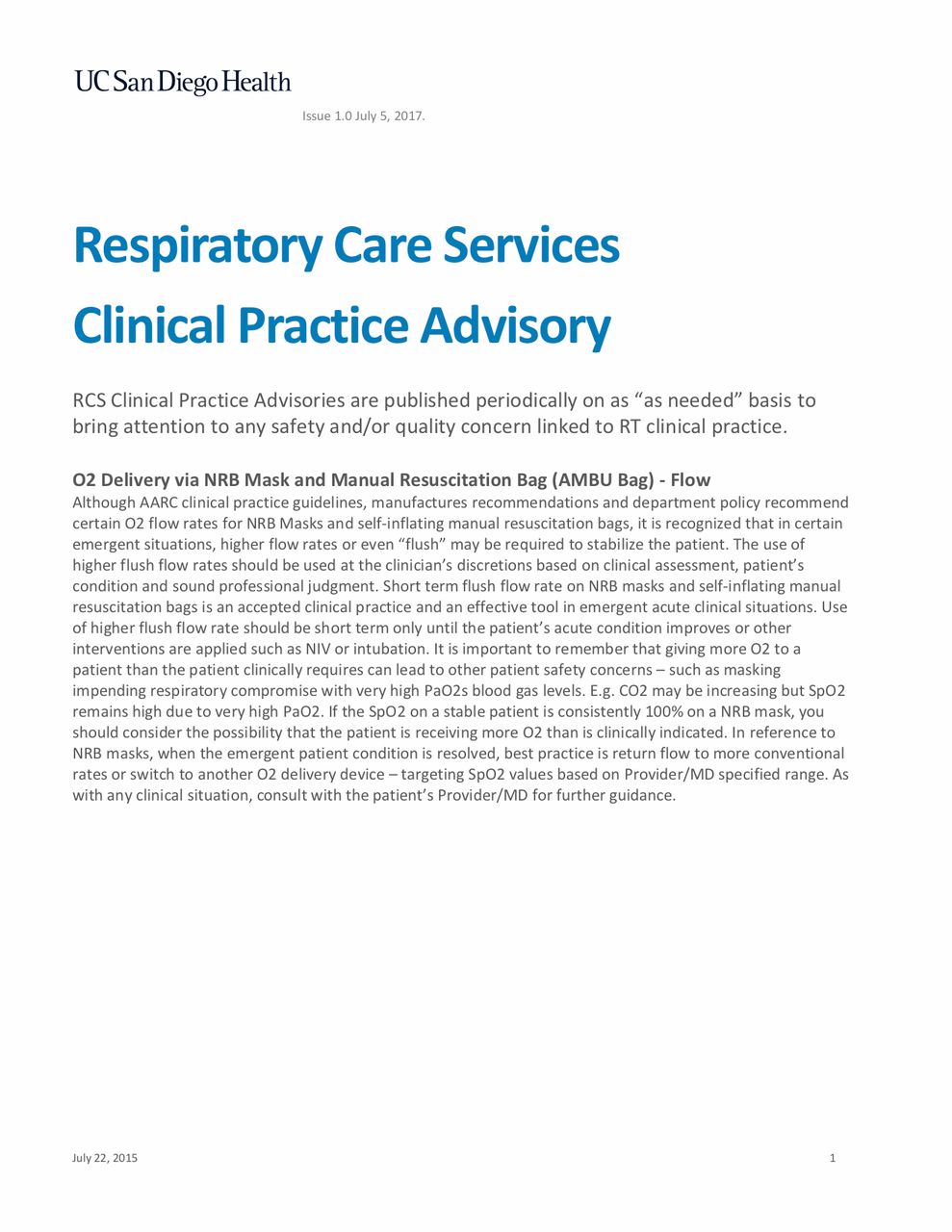
We found a significant increase in measured FIO2 with increased oxygen flows. At 10 L/min, the highest measured FIO2 was 43.2% At 15 L/min, the highest measured FIO2 was 54.5%. At "top of the valve" >15 L/min, the highest measured FIO2 was 74.2%. Lastly, when the flow meter valve was set to "full flush", highest measured FIO2 was 92.2%. This translated into a 113% increase in FIO2 from when going from 10 L/min to full flush. We took a razorblade to one of our resuscitation bags, and after entirely disassembling we discovered the advantage of having a length of corrugated tubing tail that surrounds the oxygen tubing. When flow meter is set to >15 L/min, this tail collects and stores supplemental oxygen that can be drawn from, during vigorous bagging. This study was presented to our Respiratory care leadership and led to our adopting a new clinical practice advisory that supports the delivery of higher oxygen flows when indicated.
Conclusions:
When using certain self inflating resuscitation bags, our data suggests that increasing the oxygen flow to >15 L/min is an effective way for clinicians to dramatically increase FIO2 delivery.
Disclosures:
None.
Get full access to this article
View all access options for this article.