




Abstract
Background:
Humidification to the neonate is a critical part of quality care. However, there is a lack of research on the effectiveness of non-heated nasal cannula humidifiers at flows < 2 L/min. This bench study evaluated the amount of absolute humidity potentially delivered to the neonate at 5 commonly used low flows in the neonatal patient population.
Methods:
A Salter Labs 1601-7 infant cannula was connected to a Hudson RCI AquaPak 340 mL humidifier; an inline CEM DT-321 hygrometer assessed the humidity at the distal end of the cannula. The following flows were selected: 1, 1/2, 1/4, 1/8, and 1/16 L/min. Each flow ran continuously for 24 h with a humidifier inline. Before each test was run, the temperature and relative humidity were measured with the hygrometer and recorded, at the following locations: 1) ambient, 2) at the end of the cannula prior to humidifier being connected, and 3) at the end of the cannula after the humidifier was connected. After each test was completed, the ambient relative humidity and temperature were recorded at each location; the absolute humidity was calculated from the results. The humidifiers were each weighed before and after each test with an AND EJ-610 scale and results recorded in order to determine the total amount of water displaced from the bottle over 24 h. Each trial was repeated twice, at each flow.
Results:
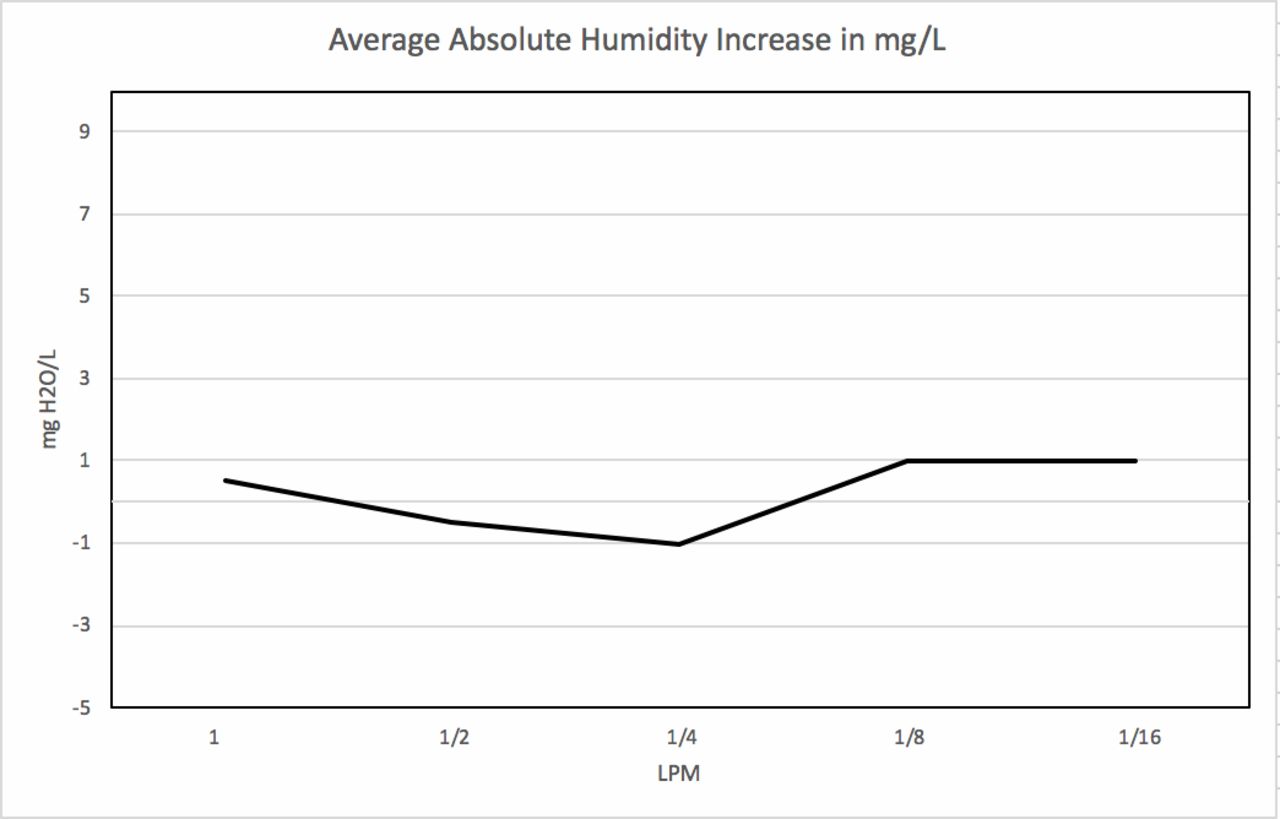
As the flow decreased the weight loss from the humidifier decreased. The absolute humidity prior to the connection of the humidifier and after the connection to the humidifier changed very little, regardless of the flow, averaging between -1 mg/L and 1 mg/L.
Conclusions:
Insensible water loss can vary widely in infants and neonates, but is estimated to average between 15 mL/kg/day and 170 mL/kg/day. Based on the results of this study, there is minimal increase in absolute humidity delivered to the neonate at the low flows relative to expected insensible water loss. The cost and infection risk associated with running a humidifier is likely unnecessary, due to the lack of absolute humidity delivered to the neonate.
Disclosures:
None. Sponsored Research: None.
Get full access to this article
View all access options for this article.